

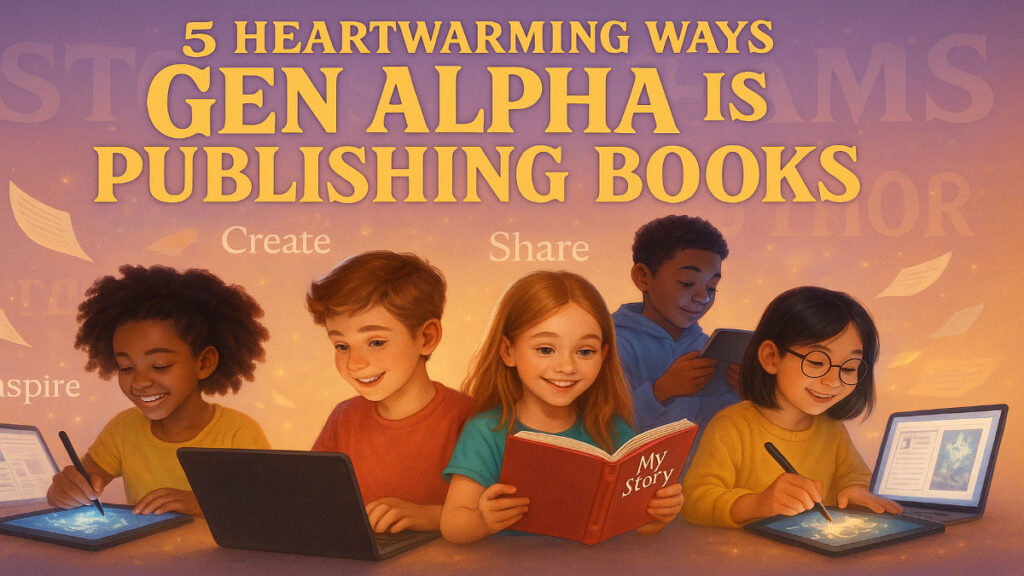
Short answer: Gen Alpha kids are publishing books from their bedrooms using platforms like StoryJumper, Storybird, Wattpad and Amazon KDP. They write, illustrate and market their own stories with tools such as Canva, Procreate and Book Creator, and a BookBaby 2024 survey found over 12% of first-time KDP users were under 18.
Picture a 9-year-old writing a story, designing its cover and sharing it with readers across the world from her bedroom. In 2025, that scene is ordinary. Gen Alpha is publishing books before many of them finish primary school.
From story apps to self-publishing platforms, digital-native kids aren’t waiting for traditional publishers. They’re writing, building small brands and forming reader communities. Here is how they’re doing it.
Which kid-friendly platforms let Gen Alpha publish globally?
You no longer need an agent or a book deal to become an author. StoryJumper, Storybird and Wattpad make it straightforward for kids to write, illustrate and publish their own books. These platforms use drag-and-drop tools and templates that handle the writing and design side of things.
Children can print their stories as hard copies or share them digitally with readers anywhere.
Take 10-year-old Rishika from Bengaluru, who recently uploaded her illustrated short story about space-traveling squirrels on StoryJumper. “I wanted my cousins in Canada to read it,” she says, “and now people from Brazil and Germany have read it too!” That’s the reach of kid-friendly publishing in a connected world.
How do young authors use Amazon KDP to self-publish?
Some Gen Alpha kids push further with Amazon’s Kindle Direct Publishing (KDP). With a little parental help, young authors can format, publish and distribute both eBooks and paperbacks. They choose cover art, write summaries and price their books for global marketplaces.
Middle-schoolers with their own Amazon author pages are no longer unusual. They’re building followings, earning royalties and learning business basics. According to a 2024 survey by BookBaby, more than 12% of first-time KDP users in the past year were under the age of 18.
What digital tools power kid authors in 2025?
Gen Alpha grew up with tablets, styluses and creative apps. That gives them an edge in visual storytelling and design, two parts of publishing that used to need specialists.
With Canva, Procreate and Book Creator, they craft illustrations, play with layouts and finish their stories with polished visuals. YouTube tutorials and AI-powered writing assistants fill in the gaps. The output isn’t only stories; it’s full creative projects.
Why does Gen Alpha’s storytelling feel different?
What sets Gen Alpha apart is authenticity. Their books often reflect what they see and feel, whether that’s navigating friendships, thinking about climate change, or loving dinosaurs.
Instead of chasing trends, they write for their own generation. A whimsical story about a robot who loves pizza. A thoughtful piece on bullying. These young authors find their voice through personal storytelling that resonates with peers in a way adult-authored children’s books often miss. It’s storytelling by kids, for kids.
How are young creators building global communities?
Digital platforms mean Gen Alpha authors aren’t working alone. They engage with global communities of readers, writers and illustrators, offering feedback, collaborating on stories and cheering each other on.
Communities like Wattpad and NaNoWriMo’s Young Writers Program let them share drafts, track progress and join writing challenges. The craft sharpens and the confidence grows.
When 11-year-old Dev from Pune published his first science-fiction short story online, he received comments from peers in Australia and the UK. “It made me want to write more,” he says. That sense of being read, seen and appreciated is priceless.
The future is already being written
In 2025, being a published author isn’t a far-off dream for Gen Alpha. With creativity, confidence and access to powerful tools, these kids are showing you don’t need to be an adult to tell a meaningful story. The next wave of bestselling authors might already be drafting their second book between maths homework and bedtime.
So the next time your child says they want to write a book, don’t smile and move on. Ask when it’s getting published.
FAQs about Gen Alpha publishing books
At what age can a child publish a book on Amazon KDP?
Amazon KDP requires an adult account holder, so children under 18 usually publish with a parent or guardian managing the account. The child still writes, illustrates and decides the creative direction while the parent handles formatting, pricing and royalty setup.
Which platform is best for a kid’s first book?
StoryJumper and Book Creator are the easiest starting points for younger children because they combine writing and illustration in one drag-and-drop interface. Older kids who want a wider audience often move to Wattpad for serialised stories or KDP for paperbacks.
Can kids actually earn money from self-publishing?
Yes. Through KDP, young authors can earn royalties on every eBook or paperback sold. Earnings depend on pricing, cover quality and marketing, but the BookBaby 2024 survey confirms under-18 authors are a growing segment of first-time publishers.
Do Gen Alpha authors use AI to write their books?
Some use AI-powered writing assistants for brainstorming, spellchecks and editing support, alongside YouTube tutorials. The core storytelling usually stays theirs, and platforms like NaNoWriMo’s Young Writers Program encourage original drafting.
How do young writers find readers outside their family?
Wattpad, StoryJumper and Storybird have built-in reader communities where kids receive comments and follows from other users worldwide. Many young authors also share their books on parents’ social media or through school reading clubs to reach a first audience.