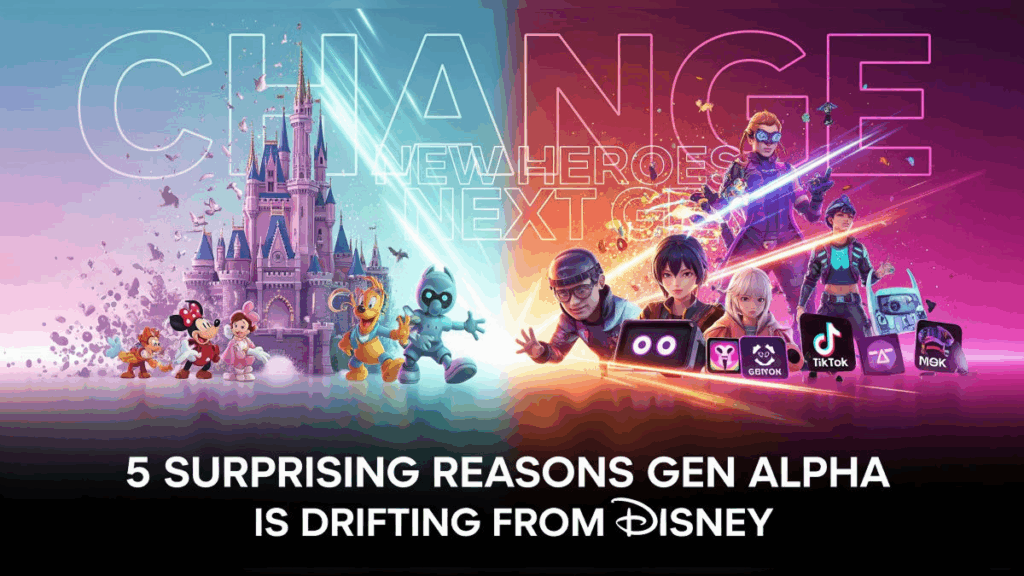
Short answer: Gen Alpha is drifting from Disney in 2025 because short-form video on YouTube and TikTok rules their attention, influencers like MrBeast and Kai Cenat feel more real than Disney characters, legacy fairy tales feel dated, gaming platforms like Roblox and Fortnite act as social worlds, and nostalgia-driven reboots do not land with kids raised on-demand.
For generations, Disney was the undisputed titan of children’s entertainment. From Mickey Mouse to Frozen, it shaped imaginations, childhood memories, and pop culture. In 2025, Generation Alpha — those born roughly after 2010 — is rewriting the rules of fandom. Disney still carries nostalgic weight for millennials and Gen Z parents, but for many younger kids, the sparkle is fading.
So what is really going on? Here are five reasons Gen Alpha’s love for Disney is evolving, and why it matters.
Why does short-form content beat Disney for Gen Alpha?
TikTok, YouTube Shorts, and snackable videos rule their world.
Unlike previous generations who grew up watching 90-minute movies on DVDs or cable, Gen Alpha’s entertainment diet is built on short, dynamic, scrollable content. YouTube, TikTok, and YouTube Kids have trained young minds to expect immediacy.
“My 9-year-old daughter would rather watch a 5-minute slime video on YouTube than sit through a movie,” says Rhea, a parent from Pune. “She just doesn’t have the patience anymore.”
Disney has tried to adapt with short-form clips and spin-offs on YouTube. In this attention economy, though, user-generated creators are winning. The numbers back it up: Disney Channel’s viewership has dropped by over 70% in the last decade, while YouTube remains Gen Alpha’s top platform (Common Sense Media, 2023).
Why are influencers the new role models for Gen Alpha?
Forget Cinderella — say hello to Kai Cenat and MrBeast.
Disney used to define “cool.” Today’s kids are more likely to idolise digital creators who live-stream games, prank their friends, or donate thousands of dollars to strangers. MrBeast, IShowSpeed, and Kai Cenat dominate Gen Alpha’s attention with unpredictable, unpolished, and hyper-engaging videos.
Why the switch? Authenticity. These influencers feel more “real.” They talk straight to their audiences, reveal flaws, and often respond to fans in real time.
“Disney characters feel scripted,” says Aarav, a 12-year-old in Bengaluru. “But Speed and Kai are funny and wild. It’s like watching your older cousin mess around online.”
This new breed of fame is more interactive, more responsive, and for Gen Alpha, more relatable.
Does Disney’s content feel dated to today’s kids?
Fairy tales don’t hit the same anymore.
Today’s kids are growing up in a different world. They want stories that reflect their lives, not castles and glass slippers. Disney has made strides in representation with Encanto and Turning Red, but much of its legacy content still leans on formulaic narratives that do not always feel relevant.
Meanwhile, shows like Bluey or content from independent YouTubers present everyday experiences, sibling dynamics, and relatable school drama in a way that feels fresh and genuine. Gen Alpha wants real over royal.
How is gaming replacing traditional Disney entertainment?
Interactive, immersive, and impossible to ignore.
Ask any Gen Alpha kid what they love most, and you will hear Minecraft, Roblox, or Fortnite. These are not just games. They are worlds kids live in. They create avatars, build virtual homes, socialise with friends, and even attend concerts online.
Disney has dipped into this space with limited-time Fortnite collaborations and themed experiences in Disney World. In the race to gamify entertainment, though, Disney is playing catch-up.
“In Roblox, I can be a superhero, build a city, or start my own fashion line,” explains 10-year-old Ruhi. “Disney just doesn’t let me do stuff like that.”
To captivate Gen Alpha, interactivity needs to be at the centre, not an afterthought.
Why does nostalgia not work on Gen Alpha kids?
What wowed their parents may not work for them.
Disney’s strength has always been its multi-generational emotional pull. What happens when the current generation does not share that nostalgia? Millennials might cry during The Lion King, while their kids may just yawn.
Gen Alpha was not raised on VHS tapes or Saturday morning cartoons. They grew up in an on-demand world and are far more critical consumers. Reboots like The Little Mermaid or Peter Pan & Wendy have not always clicked with younger audiences, who want new stories, not recycled ones.
Can Disney win Gen Alpha back?
The good news for Disney: it is not out of the game. The brand is still beloved by millions and has vast resources to pivot. By investing in influencer collaborations, gaming integrations, and culturally resonant content, it can regain lost ground.
Disney’s own efforts, from Strange World streaming strategies to Disney+ Originals for kids and smart theme park upgrades, show it understands the need to evolve. The question is whether a century-old giant can keep up with a generation raised in the algorithm.
Magic must evolve to stay magical
Disney’s castle may still sparkle, but Gen Alpha is looking for something else: a mirror to their fast-paced, hyper-connected, diverse world. If Disney can speak their language, meet them on their platforms, and reflect their stories, the magic can be rekindled.
FAQs about Gen Alpha and Disney
Why is Gen Alpha losing interest in Disney?
Short-form video on YouTube and TikTok dominates their attention, influencers feel more authentic than scripted characters, legacy fairy tales feel dated, gaming platforms like Roblox act as social worlds, and nostalgia-driven reboots do not resonate with kids raised on-demand.
What does Gen Alpha watch instead of Disney?
They watch short-form clips on YouTube, TikTok, and YouTube Kids. They follow creators like MrBeast, IShowSpeed, and Kai Cenat. They also watch relatable shows like Bluey and independent YouTubers who reflect everyday school and family life.
How much has Disney Channel viewership dropped?
Disney Channel’s viewership has plummeted by over 70% in the last decade, while YouTube remains Gen Alpha’s top platform (Common Sense Media, 2023).
Why do Gen Alpha kids prefer Roblox and Fortnite to Disney?
Roblox, Minecraft, and Fortnite are social worlds, not just games. Kids create avatars, build homes, socialise with friends, and even attend concerts. Disney has made small moves into gaming, but interactivity is still an afterthought rather than a centre.
Can Disney win Gen Alpha back?
Yes, with effort. Disney has the resources to pivot through influencer collaborations, gaming integrations, and culturally resonant content. Moves like Strange World streaming, Disney+ Originals for kids, and theme park upgrades show a willingness to evolve.