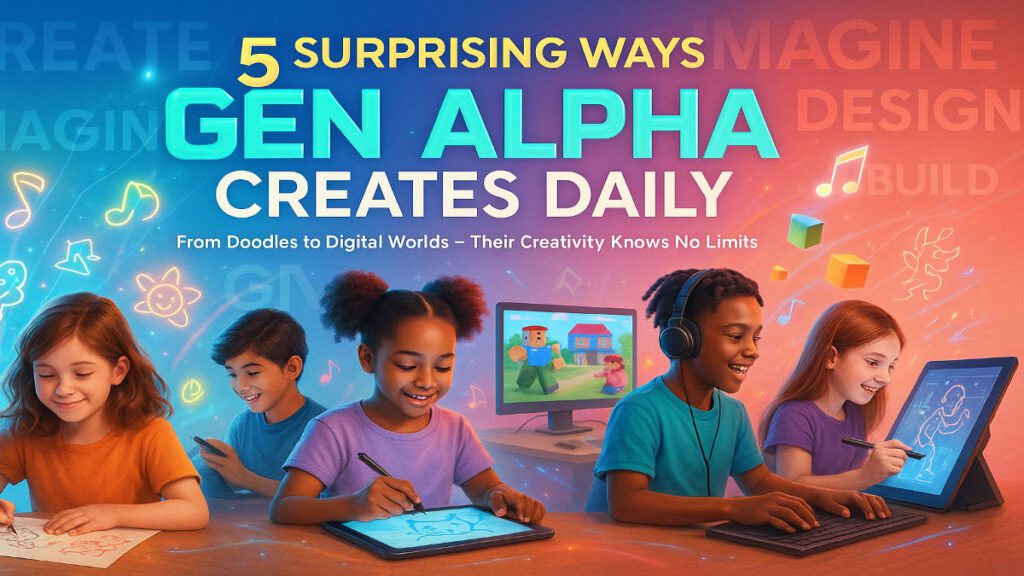
Short answer: Gen Alpha creates daily by blending paper and pixels. Kids sketch in notebooks and finish in Procreate, design multimedia projects in Canva, code games in Roblox and Scratch, tell stories on Wattpad and with LEGO, and compose music in Soundtrap and GarageBand.
From doodles to digital worlds, their creativity knows no limits.
In bedrooms, classrooms, and cozy nooks around the world, children as young as six are crafting vibrant universes. Not just with crayons and construction paper, but through tablets, styluses, apps, and code. Welcome to 2025, where Gen Alpha’s creativity runs on pixels and imagination.
Born into a digital-first world, Gen Alpha is unlike any generation before. Art, stories, games, and music unfold on devices as much as on paper. Instead of abandoning traditional creativity, they blend the tactile with the tech, breathing new life into making.
Here are five ways Gen Alpha creates every day and reshapes what creativity looks like.
1. How do they merge paper and pixels?
Many Gen Alpha kids still begin with the humble pencil. They doodle in notebooks, sketch cartoon characters, or scribble designs for imaginary worlds. Then they take those paper ideas and digitize them.
Using tools like Procreate, Tayasui Sketches, or Adobe Fresco, kids refine rough drawings with vibrant colors, textured brushes, and layers that allow endless experimentation. A mistake? One tap and it is gone. Digital art lets them iterate without fear.
Take Ananya, a 12-year-old from Chennai. She sketches comic characters in a diary, then scans and colors them on her iPad. “I like drawing on paper first because it feels real,” she shares, “but I finish them digitally because it looks cooler.”
2. Why are multimedia projects replacing single pictures?
Gen Alpha does not stop at static drawings. They craft digital collages, GIFs, Instagram posts, and animated shorts using apps like Canva or Flipaclip. For them, a story is motion, sound, and visuals combined, not just words.
AI-powered and kid-friendly design tools put complex creative tasks within reach of a 9-year-old. Whether building avatars, designing logos, or preparing a classroom presentation, multimedia is their canvas.
A 2024 Common Sense Media report found that over 60% of kids aged 8 to 13 have used at least one digital design tool in the past year. They are not dabbling. They are producing.
3. How do they code to create, not just to solve problems?
For Gen Alpha, coding is storytelling, world-building, and design in one. Roblox Studio, Minecraft Education Edition, and Scratch let them build interactive games, animated stories, and simulations with drag-and-drop simplicity.
Arjun, a 10-year-old in Delhi, built a game on Roblox where a tiger runs through Indian forests to protect endangered species. “I made the trees, the animals, the music, everything,” he explains with pride. That is not just coding. That is digital artistry.
These kids are creators, not just consumers of technology. With logic and creativity entwined, they prove that the future of tech lies in playful expression.
4. How do they tell stories through words, blocks, and bots?
Gen Alpha are prolific storytellers, and they mix methods. From traditional journaling to digital fan fiction on Wattpad, and interactive tales built with LEGO Mindstorms or Scratch, they experiment with how stories are shared and shaped.
Some write together with friends using Google Docs. Others narrate bedtime stories into AI-powered apps that animate them on screen.
By blending physical play like LEGO builds with code and sensors, they create hybrid narratives that can move, speak, or react. It is part storytelling, part engineering, all imagination.
5. How are they mixing beats, loops, and soundscapes?
Digital music and sound design are becoming new playgrounds for Gen Alpha. Free tools like Soundtrap, GarageBand, and BandLab let kids compose soundtracks, remix songs, and design audio for their animations and games.
From beatboxing into a mic to layering piano loops, these young creators learn rhythm and emotion in ways that feel intuitive and experimental. Some sync music to their digital art, turning visual stories into immersive experiences.
In classrooms that once centered on recorders and tambourines, students now mix ambient beats for their short films. Educators and parents are celebrating the shift.
The digital creators of tomorrow, already creating today
Gen Alpha is not waiting for permission to be creative. They embrace tools their parents barely understand, fuse tradition with innovation, and build entire worlds from their bedrooms. From paper doodles to digital dreams, their creative process is dynamic, fearless, and unfiltered.
In 2025, the question is not if kids can be creators. It is how many worlds they have built before lunch.
So whether you are a parent, teacher, or fellow creator, take note: the next masterpiece might be loading on a tablet right now.
FAQs about Gen Alpha creativity
What apps does Gen Alpha use to draw and design?
Gen Alpha often uses Procreate, Tayasui Sketches, Adobe Fresco, Canva, and Flipaclip for drawing, collages, GIFs, and animated shorts. Many kids start on paper and finish digitally.
How many Gen Alpha kids use digital design tools?
A 2024 Common Sense Media report found that over 60% of kids aged 8 to 13 have used at least one digital design tool in the past year.
Which platforms does Gen Alpha use to code games?
Roblox Studio, Minecraft Education Edition, and Scratch are the most popular. They let kids build interactive games, animated stories, and simulations with drag-and-drop simplicity.
How does Gen Alpha create music?
Kids use free tools like Soundtrap, GarageBand, and BandLab to compose soundtracks, remix songs, and design audio for animations and games.
How do Gen Alpha kids combine physical and digital storytelling?
They blend journaling, Wattpad fan fiction, Google Docs collaborations, LEGO Mindstorms builds, Scratch interactions, and AI-powered apps that animate narrated bedtime stories.