Short answer: Classrooms for the iPad generation are moving from lectures to interactive, student-led learning. Five shifts define it: smart tech as standard (interactive whiteboards, VR, 1:1 devices), active methods like project-based learning with Minecraft and adaptive platforms like Khan Academy or DreamBox, flexible seating, teachers as tech mentors, and a balanced approach to screen time and digital citizenship.
Walk into a classroom in 2025 and you might mistake it for a modern tech hub. Interactive whiteboards replace chalk-dusted blackboards. Students tap on tablets instead of flipping through dog-eared textbooks. Welcome to the new age of learning, designed with the iPad generation in mind.
Generation Alpha, born after 2010, is the first to grow up with touchscreens in hand and voice assistants at home. To them, technology is not novel. It is normal. Schools are rethinking how lessons are taught and how classrooms are designed. This is more than putting devices in kids’ hands. It is a shift in mindset, pedagogy, and purpose.
Here are five ways today’s classrooms are changing to meet this screen-savvy generation.
1. How Are Smart Technologies Standard Tools in Classrooms?
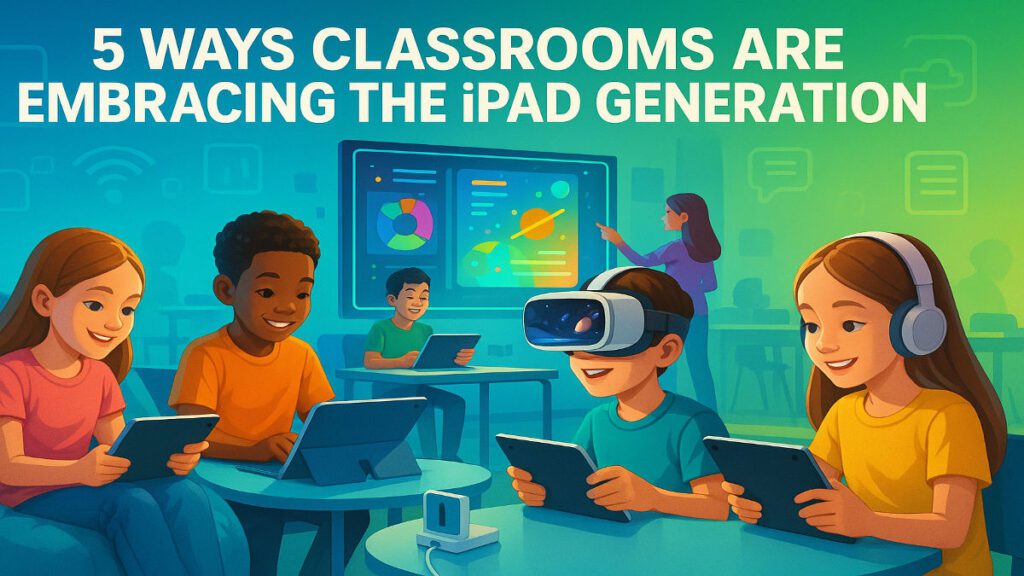
Classrooms today are charged with innovation. Interactive whiteboards and digital display screens let educators bring lessons to life using videos, real-time simulations, and dynamic visuals. Concepts that were once abstract become tangible when students watch them unfold on screen.
One middle school science teacher I spoke with shared how her students now “travel” to space via virtual reality headsets during astronomy lessons. “They remember the constellations not because I showed them a diagram, but because they stood among the stars,” she said.
Schools are rolling out 1:1 device programs, ensuring every student has access to a tablet or laptop. This creates equal footing for digital learning, letting students explore content, complete quizzes, and collaborate on group projects from a single device.
With augmented reality and virtual field trips becoming accessible, students can dissect a frog, explore ancient Rome, or visit a coral reef without leaving their desks.
2. Why Are Teaching Methods Getting a Digital Makeover?
The iPad generation does not just consume content. They interact with it. Educators are shifting toward experiential and active learning. Project-based learning (PBL), where students build, create, and solve real-world problems, is gaining popularity.
Picture a classroom where students design eco-friendly cities in Minecraft or simulate global trade using online role-play tools. That is happening now.
Personalized learning platforms like Khan Academy or DreamBox adapt to each child’s pace and level. For a student struggling with fractions, the platform slows down. For one soaring ahead in geometry, it accelerates. No more one size fits all.
Flipped classrooms are also on the rise. Students watch lectures at home on their devices and spend class time on discussions, problem-solving, and experiments. It flips the schedule and the purpose of classroom time.
3. Flexible Spaces for Flexible Minds
Gone are the rows of desks and stiff seating plans. Today’s classrooms feature cozy nooks for quiet reading, open tables for collaboration, and bean bags for brainstorming sessions. This flexibility encourages movement, creativity, and comfort, something Gen Alpha values.
Schools are setting up digital learning hubs: spaces with charging stations, headphones, and screens. These areas help students move between group tasks and solo digital work with ease.
With many schools going paperless, assignments, worksheets, and parent-teacher communications now live in the cloud. This aligns with sustainability goals and makes organisation simpler for students and teachers.
4. Teachers Are Becoming Tech Mentors
Teaching in the age of Gen Alpha means being digitally fluent, not just a subject expert. Educators are taking on professional development to integrate edtech, manage digital distractions, and foster deeper engagement.
Many teachers now see themselves as facilitators rather than lecturers, helping students find credible sources online, analyse information critically, and collaborate.
One primary teacher shared her transformation: “I used to be the answer-giver. Now, I’m the guide. My students ask better questions than I ever did at their age, and that’s a win.”
5. How Do Schools Navigate Challenges in a Digital World?
Adapting to this new normal has hurdles. The digital divide persists, with some students lacking reliable devices or internet at home. Schools and governments must continue to prioritize equity so no child is left behind.
Then there is screen time. Balancing tech-based learning with face-to-face interaction is critical. Educators are incorporating regular breaks, offline activities, and mindfulness sessions to counter screen fatigue.
With greater online access comes greater responsibility. Schools teach digital citizenship, covering cyberbullying, online safety, and ethical behaviour. For Gen Alpha, who may one day code apps or run digital businesses, these lessons are essential.
Preparing for the Future Starts Now
The transformation of classrooms for the iPad generation is a necessity. Gen Alpha does not only learn differently. They think differently. To prepare them for the complex, interconnected world they will inherit, education must keep evolving.
Schools that embrace technology thoughtfully, empower teachers, and prioritize meaningful learning experiences create environments where Gen Alpha absorbs information, creates, and leads.
It is not about teaching kids with technology. It is about teaching kids for a tech-driven world. That future starts in today’s classroom.
FAQs on iPad Generation Classrooms
What is a 1:1 device program in schools?
A 1:1 device program gives every student access to their own tablet or laptop during school. It creates equal footing for digital learning and lets students explore content, complete quizzes, and collaborate on projects from a single device.
Which digital tools are popular in Gen Alpha classrooms?
Interactive whiteboards, VR headsets for field trips, Minecraft for project-based learning, and adaptive platforms like Khan Academy and DreamBox that adjust to a child’s pace.
How is a flipped classroom different?
Students watch lectures at home on their devices, then use class time for discussions, problem-solving, and experiments. It flips both the schedule and the purpose of classroom time.
How do teachers manage screen time in digital classrooms?
With regular breaks, offline activities, and mindfulness sessions. Teachers balance tech-based learning with face-to-face interaction to counter screen fatigue.
What is digital citizenship and why is it taught?
Digital citizenship covers cyberbullying, online safety, and ethical online behaviour. Schools teach it because Gen Alpha will grow up coding apps and running digital businesses, and they need the responsibility to go with the access.