

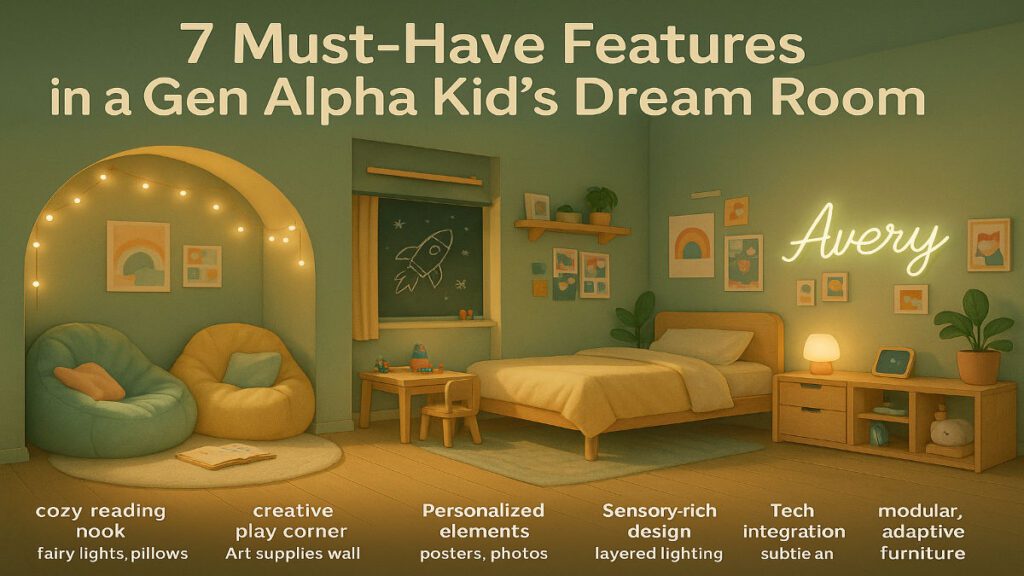
Short answer: A Gen Alpha dream room in 2025 is a cozy, sensory-rich sanctuary that balances comfort, creativity, nature, and subtle tech. Kids born after 2010 want personalized, flexible spaces that grow with them rather than flashy smart-home setups.
The blueprint for a Gen Alpha kid’s dream room has moved past gadgets and flashing screens. Despite growing up in a hyper-digital age, today’s youngest generation, those born after 2010, crave something more meaningful than high-tech toys. They want a room that feels like them. A cozy, expressive, sensory-rich space that fuels imagination, offers emotional comfort, and still keeps a quiet nod to tech.
Here are the seven essentials that make up the ultimate Gen Alpha bedroom, not just as a place to sleep, but as a creative sanctuary.
Why do Gen Alpha kids want comfy corners that hug them back?
Forget stiff, picture-perfect Pinterest aesthetics. Gen Alpha wants cozy nooks that offer warmth and a sense of belonging. Think oversized bean bags, fluffy throw pillows, faux fur rugs, and layered lighting. According to a 2024 survey by Interior Youth Trends, 72% of Gen Alpha kids said they felt “most at peace” in spaces that were soft, warm, and comfortable.
Take it from 10-year-old Aarav in Bengaluru who transformed his reading nook into a tent with fairy lights, blankets, and plush toys: “It’s my secret camp. I go there when I feel mad or when I just want to dream.”
How do imagination stations and play zones shape their rooms?
If there’s one thing Gen Alpha values, it’s the freedom to be imaginative. Their rooms aren’t just sleeping quarters. They double as art studios, forts, mini theatres, and sometimes even science labs. An accent chalkboard wall, rearrangeable desks, craft trolleys, or LEGO building zones allow for unstructured play and learning.
This generation thrives when given room to create. A 2023 study by the Global Childhood Design Forum found that kids who had access to flexible play zones at home reported 40% higher self-expression and emotional regulation.
Why is personalization the new aesthetic for Gen Alpha?
Cookie-cutter themes are out. Gen Alpha prefers rooms that speak their story. From galaxy ceilings and dinosaur murals to displaying their art, trophies, or favorite anime posters, individuality is everything.
One mom shared how her daughter, 9-year-old Siya, created a photo wall of her friends and pets: “She wanted her room to feel like a scrapbook of her life. It makes her feel seen.”
Customizable LED name signs, pinboards, and buildable shelving let kids design and redesign their space as they grow and change, because identity isn’t static, especially at that age.
How does nature-inspired décor replace Wi-Fi in Gen Alpha rooms?
What Gen Alpha craves isn’t more Wi-Fi. It’s more green. Nature-inspired rooms are trending across TikTok and Pinterest, not because they’re aesthetic, but because they ground kids in a world that often feels overstimulating.
Indoor plants like snake plants or succulents, nature-themed wallpapers, wooden accents, and aquariums bring a sense of calm. One Gen Alpha boy in Pune proudly declared that his spider plant was “his roommate that listens.”
Science backs this up. Exposure to nature-based décor can reduce anxiety and increase focus, according to findings from The Journal of Child Environmental Psychology (2024).
What sensory surfaces and sounds matter most?
For Gen Alpha, it isn’t just about how a room looks. It’s how it feels. They’re surprisingly sensitive to lighting, sound, textures, and scents. Dimmable LED lights, calming color palettes like pastels or earthy tones, soft wool blankets, and essential oil diffusers with lavender or peppermint are becoming mainstream.
Think of it as interior design meets emotional well-being.
How should tech show up in a Gen Alpha dream room?
Yes, they’re tech-savvy. Yes, they love screens. But their dream room doesn’t scream “smart home.” Tech is integrated subtly. A Google Nest for bedtime music, smart bulbs that shift color for moods, a tablet for drawing or digital schoolwork.
A balance is key. As 12-year-old Vihaan shared, “I love playing Minecraft, but I don’t want my whole room to feel like a computer lab.”
Parents are leaning into this too. Modular tech spaces like a pull-out gaming setup or foldable VR corner give kids a dose of digital joy without overwhelming their senses.
Why do Gen Alpha rooms need to grow with them?
More than any previous generation, Gen Alpha is used to change. Their interests shift fast, from dinosaurs to dance videos, from K-pop to coding. That’s why adaptability is essential.
Modular furniture, movable desks, expandable storage, and reversible bed frames help their rooms grow with them. According to IKEA’s 2025 Kids’ Design Report, “flexibility” ranked as the number-one priority among Gen Alpha respondents when designing a personal space.
Let kids curate their calm
A Gen Alpha dream room isn’t a showcase. It’s a sanctuary. It reflects their curiosity, calms their overstimulated minds, and gives them a place to truly be themselves. It’s emotional. It’s expressive. And most importantly, it’s theirs.
So here’s a thought: when was the last time you asked a child what they wanted in their space? Let’s start listening more and decorating less, so every kid has the room they dream of, not just one that looks good on Instagram.
FAQs about Gen Alpha dream rooms
What age group is Gen Alpha?
Gen Alpha includes kids born after 2010. In 2025, they are roughly up to 15 years old, and their design preferences already shape kids’ furniture and tech trends.
Do Gen Alpha kids want smart-home bedrooms?
Not really. They prefer subtle tech like a Google Nest, smart bulbs, or a tablet corner, balanced with cozy, sensory-rich, nature-inspired details rather than a full smart-home aesthetic.
What colors work best for a Gen Alpha dream room?
Calming pastels and earthy tones paired with dimmable LED lighting tend to suit their sensory preferences, supporting both creative play and emotional regulation.
How can parents make a bedroom that grows with their Gen Alpha child?
Choose modular furniture, movable desks, expandable storage, and reversible bed frames. IKEA’s 2025 Kids’ Design Report ranks flexibility as the top priority for Gen Alpha spaces.
Why is nature important in a Gen Alpha bedroom?
Nature-based décor helps reduce anxiety and improve focus. Indoor plants, wooden accents, and aquariums bring calm to a generation that often feels overstimulated by screens.