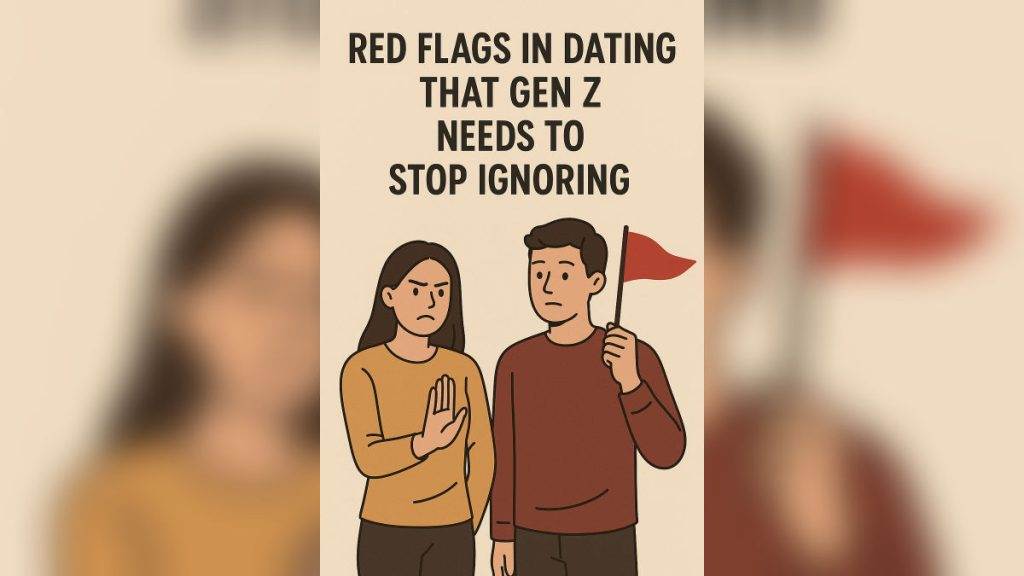
Short answer: The red flags in dating Gen Z keeps ignoring are boundary breaches, gaslighting, possessiveness, love bombing, communication shutdown and casual cruelty toward strangers. Per Pew Research Center, nearly 67% of Gen Z singles have hit some form of toxic relationship behaviour. Trust the gut.
Dating in the 21st century is a whirlwind. Apps, DMs, situationships, ghosting, a whole new vocabulary of love. For Gen Z, the first generation raised fully inside the digital age, dating’s more accessible than ever, and also messier. Endless choices, constant exposure, and it’s easy to get swept up in the surface and miss the part that’s quietly off.
Let’s get one thing straight. Red flags aren’t quirks. They’re warning signs. Sometimes subtle, sometimes glaring, always worth a second look. Ignoring them doesn’t make them vanish, it just makes the fallout uglier.
1. Lack of respect for boundaries
This is the biggest, boldest red flag. And the most commonly ignored.
Whether it’s pushing physical boundaries or steamrolling emotional ones, a partner who can’t respect your “no” doesn’t deserve your “yes.”
Examples to watch out for
- Constantly texting or calling when you’ve said you need space.
- Criticising what you wear or who you hang out with.
- Dismissing your feelings with phrases like, “You’re being dramatic” or “It’s not that deep.”
- Showing up uninvited to “surprise” you after you’d asked for the evening alone.
A friend once told me her ex would “joke” about how she should “stop dressing like she’s single.” Sounded minor at first. Until she caught herself slowly changing her style to dodge the next argument. That isn’t love. That’s control wearing the costume of concern.
2. What does emotional manipulation look like day to day?
When someone refuses to own their actions and twists every argument into your fault, that’s not a communication gap. It’s manipulation.
Spot the signs
- Gaslighting. You’re told things didn’t happen the way you remember, or worse, that you’re “too sensitive” to handle the truth.
- Blame-shifting. They always have a reason for their bad behaviour, and somehow that reason is you.
- Lack of empathy. Your feelings get ignored or mocked, especially when you’re vulnerable.
According to psychologist Dr. Stephanie Sarkis, gaslighting is a common trait in emotionally abusive relationships and can lead to anxiety, depression, and even PTSD over time. If you constantly question your own perception of reality around someone (and you didn’t before), that’s the cue to step back.
3. Communication gaps and avoidance
Gen Z gets praised, fairly, for being emotionally aware and outspoken. But in love, even the most articulate person can fall for someone who shuts down the second things get hard.
Healthy relationships run on uncomfortable conversations. Not silence.
Red flags here include
- Avoiding serious discussions, especially about the future.
- Using passive-aggressive behaviour instead of honesty.
- Refusing to take accountability after arguments.
If your partner ghosts emotional conversations and then floods you with memes and selfies 10 minutes later, it isn’t cute. It’s avoidance dressed in good lighting.
4. Possessiveness and jealousy
Jealousy gets mistaken for passion all the time. But let’s be clear, possessiveness isn’t love, it’s insecurity with a leash.
Be cautious if they
- Constantly question who you’re texting or hanging out with.
- Make you feel guilty for spending time with friends or family.
- Insist on sharing passwords or tracking your location “just in case.”
Isolation is a key tactic in controlling relationships. It usually starts subtly, one missed hangout, one guilt-tripped group dinner. Over time your circle shrinks and you’re left feeling dependent on the very person doing the damage. Slow burn. Hard to spot from inside.
5. Love bombing and rushing the relationship
Ever had someone shower you with affection, compliments, gifts and grand plans within days of meeting? It feels amazing. It might also be love bombing, a manipulation tactic built to fast-track intimacy and, eventually, control.
Warning signs include
- They say “I love you” way too soon.
- They make long-term plans (moving in, marriage) before they actually know you.
- They get upset if you don’t reciprocate the intensity.
Psychologist Dr. Ramani Durvasula describes love bombing as “over-the-top courtship behavior” that often leads to emotional dependence. If it feels like a fantasy that’s moving too fast, press pause. Ask whether you’re being loved, or being lured.
6. Other red flags that get excused too often
Sometimes the red flags aren’t about how they treat you. They’re about how they treat everyone else.
Look out for
- Disrespecting service staff or being rude to strangers. It says a lot about someone’s character.
- Constant negativity or criticism. If they always have a complaint or a put-down ready, eventually that energy turns on you.
- Substance abuse. Love doesn’t “fix” addiction. If your partner is struggling and refuses help, the relationship can become emotionally unsafe or chaotic, and that’s not your project to manage.
Why does trusting your gut matter?
Red flags often start as gut feelings. You sense something’s off. You feel drained after interactions. You catch yourself justifying their behaviour more than enjoying their company.
And yet many of us stay. Hoping things will get better, or blaming ourselves when they don’t.
Here’s the truth: your intuition isn’t paranoia. It’s wisdom in disguise. If something feels wrong, it probably is, and if you’re constantly uncomfortable or anxious in a relationship, no amount of love is worth sacrificing your peace of mind.
A generation that deserves better
Gen Z is rewriting the rules of love. You’re more open to therapy, more vocal about mental health, more accepting of diverse relationship dynamics than any generation before you.
But that openness has to come with boundaries. Because love should challenge you to grow, sure, never at the cost of your self-worth.
According to a Pew Research Center report, nearly 67% of Gen Z singles have experienced some form of toxic relationship behaviour, from manipulation to control to emotional withdrawal. That number shouldn’t be normal.
Final thoughts: don’t normalise red flags
Love isn’t supposed to hurt. It isn’t supposed to confuse, belittle or control you.
Next time you find yourself brushing off a red flag, ask: If a friend told me this was happening to them, what would I say?
You deserve a relationship built on respect, communication, support and joy. Don’t settle for less. Don’t excuse the inexcusable. And don’t ignore the red flags that are screaming in silence.
Your worth is not up for debate.
If you’re in a relationship that feels wrong, talk to someone you trust. Reach out to a counsellor, a friend, even an anonymous helpline. You don’t have to navigate it alone, and you never have to stay where you’re not seen, valued or respected.
FAQs about red flags in dating
What are the most common red flags in dating Gen Z misses?
Love bombing, subtle gaslighting, location tracking framed as “care,” partners rude to waiters or delivery staff. They feel small in the moment and stack up. Boundary disrespect is the umbrella over most of them.
Is love bombing the same as being romantic?
No. Romance unfolds at a mutual pace. Love bombing is intense, one-sided and pushes commitment in days. Dr. Ramani Durvasula calls it “over-the-top courtship behavior” that produces emotional dependence. The test: whether your hesitation upsets them.
How do I know if I’m being gaslit?
You doubt your memory of recent conversations, apologise for things you didn’t do, feel “crazy” around one specific person and nowhere else. Per Dr. Stephanie Sarkis, sustained gaslighting can produce anxiety, depression and PTSD symptoms.
Should I leave at the first red flag?
Not always. One off-day isn’t a pattern. The real question is whether it repeats after you’ve raised it, and whether they take ownership or flip it back on you.
What’s the first step if I think my relationship is toxic?
Tell one person outside the relationship you trust completely. Friend, counsellor, helpline. Naming it out loud breaks the spell. From there you decide what distance you need.