Short answer: Social media’s dark side isn’t just cyberbullying or doomscrolling. It’s algorithmic manipulation, mass data harvesting, and harmful content normalised for engagement. MIT research found false news spreads 70% more than true news on Twitter, and a 2021 Oxford Internet Institute report tracked organised manipulation campaigns in over 80 countries. The platforms are working as designed, the design is the problem.
Social media changed how we connect, communicate and consume information. From sharing milestones and memes to organising real movements, platforms like Instagram, X (formerly Twitter) and TikTok are stitched into our daily routines.
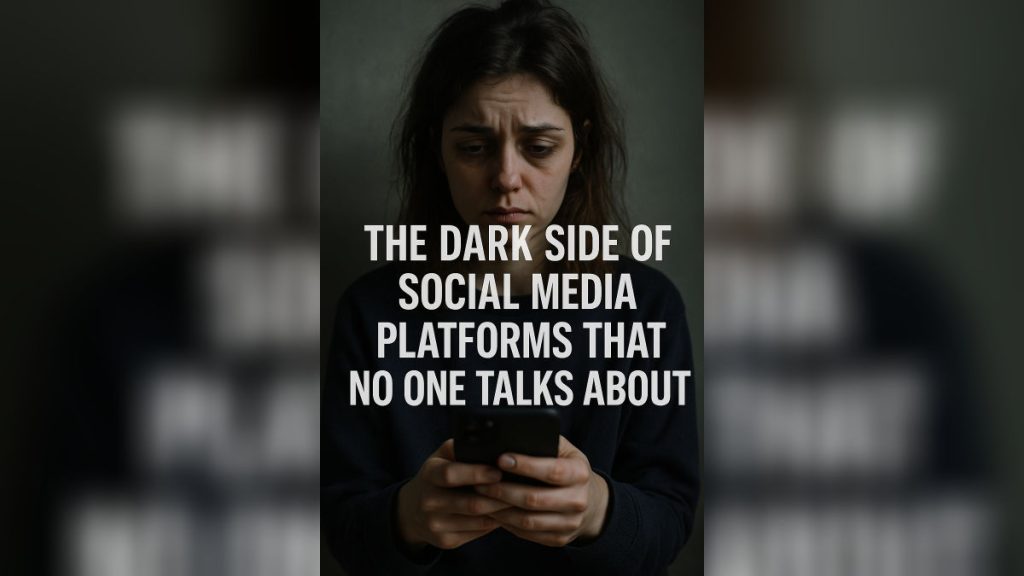
But beyond the surface conversations about cyberbullying, privacy breaches and doomscrolling, there’s a more insidious undercurrent. A darker side of social media that rarely makes headlines.
Time to pull back the curtain on the hidden mechanisms baked into the design of these platforms. We’ve been treating them as neutral tools for too long. They’re not. They’re highly sophisticated systems built for profit, influence and control.
How do social media algorithms manipulate you?
Curated for engagement, not your well-being
Ever noticed how your feed feels eerily tailored to your moods, not just your interests? That’s no coincidence. Social media algorithms are engineered to maximise one thing, engagement. The more time you spend, the more ads you see, the more money the platform makes. Simple economics with brutal consequences.
And to keep you engaged, algorithms prioritise content that triggers strong emotional reactions. Rage, fear, envy. These drive clicks, comments and shares far harder than calm or reasoned posts ever will. According to a study by the Yale School of Management, content that evokes moral outrage spreads significantly faster than neutral content. We’re being emotionally manipulated for profit. That’s the whole model.
Welcome to the echo chamber
As algorithms learn more about you, they begin feeding you content that aligns with what you already believe. This creates a filter bubble, an echo chamber where like-minded voices get amplified and dissenting ones get drowned out. Over time it leads to more polarised thinking, less empathy, and a real loss of the ability to engage in critical discourse.
You might think you’re exploring new ideas. You’re being shown a mirror of your own biases. The more polarised your content gets, the more “engaged” you are, which only feeds the loop.
What is the hidden economy of your data?
You are the product
It’s often said that if you’re not paying for the product, you are the product. Nowhere is this truer than on social media. Platforms collect staggering amounts of data, your location, browsing history, likes, time spent on each post, even how long you hover over a video, often without your full awareness or informed consent.
That data gets packaged and sold to third-party advertisers or used to target you with surgical precision. Harmless when you’re being nudged to buy sneakers, sure. But the same tools are used to shape political opinions, public sentiment and even election outcomes.
How does this undermine democracy?
Social media has been weaponised, not only by marketers but by state actors and malicious groups. Disinformation campaigns, bot-driven propaganda, the platforms have become digital battlegrounds. The 2016 U.S. elections and the spread of COVID-19 vaccine misinformation are two of the most prominent cases of platforms being exploited to manipulate behaviour at scale.
According to a 2021 report by the Oxford Internet Institute, organised manipulation campaigns on social media were found in over 80 countries. When algorithms prioritise virality over veracity, truth becomes collateral damage.
How does harmful content get normalised?
Dangerous trends disguised as “content”
In the chase for likes and followers, some creators take real risks or push problematic ideas. Algorithms don’t differentiate between helpful and harmful content. They just reward what’s engaging.
So platforms can quietly normalise behaviours like self-harm, eating disorders or substance abuse. A 2023 study published in JAMA Pediatrics found that youth frequently exposed to self-harm content on TikTok were more likely to report mental health issues. The link wasn’t subtle, it was direct.
The rise of unverified health advice
TikTok therapists. Instagram nutritionists. YouTube life coaches. Some creators do offer something genuinely useful, but many lack any formal training or credentials. The ease of going viral has led to a flood of unverified diagnoses, miracle cures and DIY mental health advice with zero scientific backing.
This fuels misinformation and erodes trust in actual experts. In a world where an influencer’s opinion outweighs a doctor’s advice, public health pays the price.
Why is misinformation so profitable?
Attention is the currency
Every scroll, like, share and comment is data, and that data feeds the advertising machine. Social media isn’t a space for connection, not really, it’s a marketplace where your attention is the most valuable commodity going. Platforms design every element, infinite scroll, autoplay, push notifications, to keep you hooked. The model isn’t built for your wellness. It’s built to maximise screen time.
Misinformation pays
Misinformation spreads faster than truth. False news stories are 70% more likely to be retweeted than true ones, according to research from MIT. Lies often come wrapped in sensationalism, which makes them more clickable, and clicks pay.
Content creators learn quickly that controversy and clickbait pull more views, so many start prioritising engagement over ethics. This not only distorts public discourse, it actively rewards the worst behaviour.
So what can we actually do?
It’s easy to feel powerless against something this systemic. But awareness is step one.
Be a critical consumer
Don’t take everything at face value. Fact-check before sharing, question the source and diversify your media diet. Stepping outside your algorithmic bubble strengthens your critical thinking, fast.
Push for ethical design
Advocacy matters. Push for platform accountability, transparent algorithms and stronger data protection laws. Organisations like the Center for Humane Technology are already working towards ethical tech reform, but they need public pressure to actually move the needle.
Set your own boundaries
Take back control. Turn off non-essential notifications. Unfollow accounts that drain you. Use screen-time tools. Protect your mental space the way you’d protect your physical space.
Behind the screen lies a system
Social media isn’t inherently evil. It can inform, inspire and unite, all of that’s real. But it’s time we acknowledged the full picture, one that includes manipulation, exploitation and the steady erosion of truth.
The platforms we trust to connect us are quietly shaping our thoughts, feelings and behaviours, often in ways we don’t fully understand. Recognising this dark side doesn’t mean abandoning social media altogether. It means using it with eyes wide open.
Awareness is power. And once you see behind the screen, you can never quite unsee it.
FAQs about the dark side of social media
How do social media algorithms actually manipulate users?
Algorithms prioritise content that triggers strong emotional reactions because rage, fear and outrage drive clicks far better than neutral posts. A Yale School of Management study found morally outrageous content spreads significantly faster than calmer content, keeping users hooked while ad revenue flows.
Why does misinformation spread faster than truth on social media?
MIT research found false news stories are 70% more likely to be retweeted than true ones. Lies tend to be sensational, which makes them more clickable, and clicks generate ad revenue. The financial incentive favours misinformation.
What does “you are the product” actually mean?
If a platform is free, your attention and data are the product being sold. Social media tracks your location, browsing history, likes, hover time and more, then packages it for advertisers, political campaigns and sometimes state actors.
Has social media really been used to influence elections?
Yes. The 2016 U.S. elections and the spread of COVID-19 vaccine misinformation are well-documented examples. A 2021 Oxford Internet Institute report tracked organised manipulation campaigns in over 80 countries.
How can I protect myself from algorithmic manipulation?
Fact-check before sharing, follow voices outside your usual bubble, turn off non-essential notifications and use screen-time limits. Treating your feed as something to question rather than absorb is the most effective single change.