
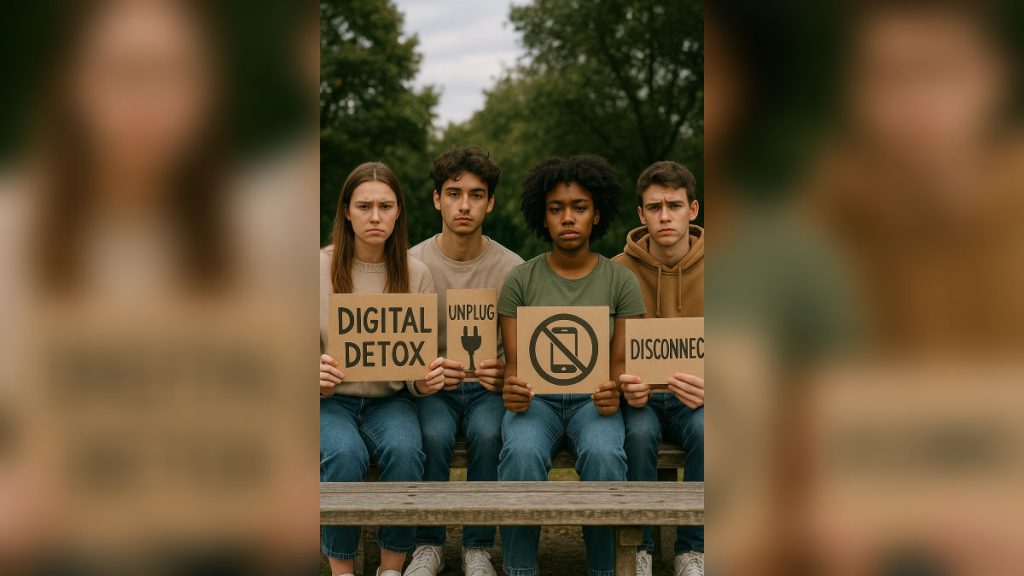
Short answer: A Gen Z digital detox isn’t a tech breakup. It’s a deliberate reset, no-phone hours after waking, tech-free zones, and one swap, screen time for soul time, that quietly fixes sleep, focus, and mood within a week.
For Gen Z, the line between digital and real life has always been a smudge. We’re the first cohort raised on smartphones, group chats, and Wi-Fi from the cradle. Being plugged in is the default setting, not a choice. And yet the same connectivity that opens up friendships, scholarships and side hustles can quietly drain you, one notification at a time. That’s where the digital detox comes in. Not as a tech boycott. Just as a way to take the wheel back from the algorithm.
This guide walks through what a detox looks like for our generation, why it matters more in 2026 than it did even two years ago, and how a few small shifts compound into something genuinely freeing.
What is a digital detox, really?
A digital detox doesn’t mean nuking your accounts. It’s a reset. You create deliberate space between you and your devices so your nervous system stops running on adrenaline. Think of it less as rejection, more as renegotiation. You decide when the phone speaks. Not the other way around.
“I used to wake up and check my notifications before brushing my teeth,” says Aisha, 20. “Now, I wait an hour before touching my phone in the morning. That one change made my entire day calmer.”
Why does Gen Z need a digital detox more than ever?
1. The comparison trap
Social media is highlight reels, never the rough cuts. When you’re scrolling past someone’s perfect Goa weekend at 1 a.m., your brain treats it as data, not performance. Studies have linked heavy Instagram use with lower self-esteem and body dissatisfaction in teens and young adults (APA, 2022). The maths is simple. The effect isn’t.
2. The FOMO epidemic
Missed concert. Skipped trend. A meme cycle you didn’t catch. Fear of Missing Out is a real, anxiety-shaped thing for Gen Z, and the irony bites, the more you scroll to stay in the loop, the lonelier the loop feels.
3. Focus? What’s that?
Push notifications, dopamine loops, infinite scrolls, they erode attention spans the way water carves rock. Slowly. Then suddenly. According to a Microsoft study, the average attention span has dropped to 8 seconds, less than a goldfish. That stat is widely quoted for a reason. It tracks.
4. Sleep, fragmented
Blue light suppresses melatonin. Late-night doomscrolling chops your sleep into ribbons. You wake up groggy, reach for the phone, and the cycle starts again before your feet hit the floor.
The Gen Z detox toolkit
Start small. Stay consistent.
You don’t need to vanish into a Himalayan ashram. Begin with bite-sized detoxes:
- A no-phone hour after waking up
- A weekend off social media
- Notifications muted during meals or class
Tiny wins compound.
Create tech-free zones
Set physical boundaries with your devices. The bedroom, the dining table, the bathroom (obviously) are good starting points.
“I stopped taking my phone to bed,” says Arjun, 18. “Now, I sleep better and wake up feeling more refreshed.”
Replace screen time with soul time
When you reduce screen time, you have to fill that gap with something that actually feeds you:
- Journaling or sketching
- A walk, or a slow yoga session
- Picking up an instrument you abandoned in Class 9
- Real, in-person catch-ups with friends
This isn’t about cutting out joy. It’s about choosing engagement over escape.
Use tech, don’t let it use you
Be picky about what you consume. Follow creators who make you think or laugh, mute the ones who make you spiral. Set app limits via Screen Time on iOS or Digital Wellbeing on Android. Try grayscale mode for a week, the drop in scroll-pull is wild.
Track your screen time
You can’t change what you don’t measure. Seeing a weekly report that says you spent four hours a day on TikTok hits differently than guessing. Try shaving 15 minutes a week. It adds up faster than you’d think, give or take.
Find an accountability buddy
Tell a friend you’re trying a detox. Better yet, do it together. Shared goals stick, and having someone to text when you’re itching to scroll makes the weird first week bearable.
JOMO: the antidote to FOMO
FOMO drives the scroll. JOMO, the Joy of Missing Out, gently invites you to find pleasure in the stillness. In not knowing every group chat update. In realising your peace is worth more than being looped in.
“Logging out gave me time to log in, to myself,” reflects Sneha, 21. “I finally started writing poetry again.”
Real joy isn’t always trending. Sometimes it’s just a quiet cup of chai on the balcony.
What are the actual benefits of a digital detox?
Pulling back from screens, especially socials, pays out in ways that are easy to feel within a week:
Less stress, less anxiety
Less curated perfection means more contentment with the version of life you’re actually living.
Sleep, restored
Switching off early lets your circadian rhythm find its footing again.
Sharper focus
Fewer pings. Deeper work. Hobbies you actually finish.
Creative space
The mind needs boredom to make new things. Constant input doesn’t leave room.
Real connection
Face-to-face beats double-tap. Always.
Self-awareness
Quiet gives you back the volume on your own thoughts.
Be kind: detox is a journey, not a test
If you relapse, you haven’t failed. You’re human. New habits take time, missteps and a fair bit of grace.
“I deleted Instagram for a week, but reinstalled it during finals,” admits Dev, 19. “Still, that one week made me realise how much it was affecting my self-image.”
Progress isn’t a straight line. Every step toward balance counts, even the wobbly ones.
Disconnect to reconnect
The digital world isn’t going anywhere. But your peace shouldn’t be the entry fee. A detox is about more than unplugging, it’s about reclaiming attention, time, and a sense of self that the feed quietly chips away at.
So ask yourself:
- When was the last time I spent a full day offline?
- What would I gain by being more present?
- Who am I when the screen is off?
Take the pause. Breathe. Log off, just for a while. The world on the other side is more vivid, more present, and more you. Your screen will wait. Life won’t.
FAQs about digital detox for Gen Z
How long should a digital detox last to actually work?
Even a single weekend off socials moves the needle on mood and sleep. For lasting change, aim for daily mini-detoxes (a no-phone first hour, no devices in bed) plus one full screen-free day a week. Most people notice calmer mornings within seven to ten days.
Will I miss something important if I unplug?
Almost certainly not. Anything genuinely urgent will reach you via call or text. The “missing out” feeling is FOMO talking, not your real life signalling a problem. Try it for 24 hours and see what actually slipped through.
Are screen-time limits on iOS and Android enough on their own?
They help, but they’re not magic. App limits work best paired with physical changes, charging your phone outside the bedroom, keeping it face-down at meals, deleting the most addictive app from your home screen. Tools nudge. Habits decide.
Is a digital detox different for students versus working professionals?
Slightly. Students benefit most from notification-free study blocks and a tech-free wind-down before sleep. Working Gen Z usually needs to negotiate Slack and email separately, work apps off-hours, personal apps muted during deep work. Same principle, different fences.
Can JOMO really replace the dopamine hit of scrolling?
Not at first. Scrolling delivers fast, cheap dopamine, JOMO offers slower, deeper satisfaction (a finished book, a real conversation). Give it two to three weeks. Your brain rewires, and the pull of the feed genuinely fades.