
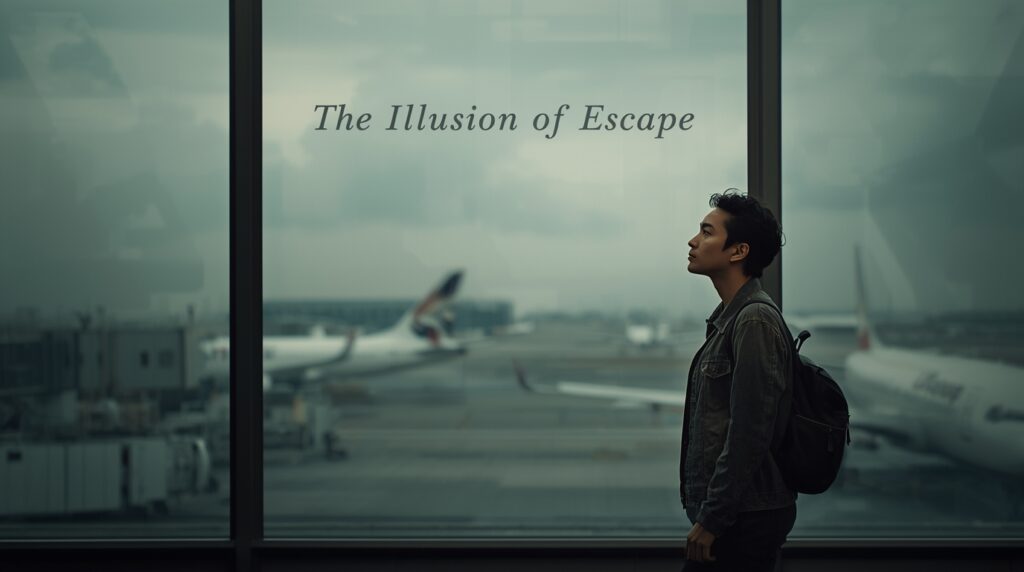
Short answer: Travel does not fix burnout, confusion, or heartbreak the way we hope. It interrupts stress but rarely resolves it. Geography changes your surroundings, not your patterns, so travel works best when treated as a temporary shift in perspective, not a cure-all for unresolved inner work.
At some point, travel stopped being about curiosity and started being about relief.
We book trips not just to see places, but to escape versions of ourselves we are tired of carrying. Burnout, confusion, dissatisfaction, restlessness, all neatly packed into carry-on luggage, hoping altitude or ocean air will loosen their grip.
We tell ourselves we need a break. A change of scenery. A reset. Sometimes that works, briefly.
But there is a quieter truth most travelers realize once the novelty fades: geography can interrupt stress, but it rarely resolves it. You can outrun routine. You cannot outrun patterns. No matter how far you go, you still wake up inside the same mind.
When did travel become emotional medicine?
Travel used to be rare. Intentional. Hard-earned. Now it is accessible, curated, optimized, and often framed as a solution.
Stressed? Travel. Heartbroken? Travel. Lost? Travel. Burned out? Travel.
Social media reinforced this idea: transformation arcs compressed into reels, healing montages set to sunsets, captions promising clarity through distance.
But travel does not heal the way we imagine. It reveals. It removes familiar distractions and routines, forcing you to sit with yourself in unfamiliar places. Sometimes that feels freeing. Sometimes it feels unsettling.
When the trip ends, reality does not disappear. It resumes.
Why does travel feel like a temporary suspension of responsibility?
One reason travel feels intoxicating is that it suspends obligation. No meetings. No deadlines. No expectations.
You exist outside your usual roles. You are not the employee, the student, the caretaker, the achiever. You are a person moving through space.
That freedom is real, but temporary. The danger is mistaking relief for resolution. When responsibility returns, unresolved tensions often return with it, sometimes louder than before.
The trip did not fail. It was not designed to do what we asked of it.

Does travel actually change you?
We love the idea that travel changes people permanently. It does, but not dramatically, not instantly, not cleanly.
Travel shifts perspective. It softens assumptions. It widens context. But growth happens in integration, not movement.
A new insight means nothing if it is not carried back into daily life. A broadened worldview still has to coexist with routine, pressure, and compromise.
Becoming someone new does not happen on the road. It happens when you return and choose differently.
When does travel become avoidance?
There is an uncomfortable pattern some people fall into: constant movement as emotional avoidance. New cities instead of difficult conversations. New countries instead of hard decisions. New experiences instead of inner work.
Movement feels productive. Stillness feels threatening. So you keep going, not because you are curious, but because stopping would require confrontation.
Travel can be expansive. It can also be a beautifully disguised delay.
Why does travel now come with its own pressure?
Ironically, travel now carries its own pressure. You are supposed to transform. To discover yourself. To come back “changed.” If you do not, it feels like wasted opportunity.
This expectation turns experiences into performance. Instead of presence, you chase meaning. Instead of curiosity, you chase narrative.
Not every trip needs to be profound. Sometimes travel is rest. Sometimes it is joy. Sometimes it is distraction. And that is okay. Not everything has to reshape you to be worthwhile.
What does travel actually do well?
Travel excels at one thing: perspective. It reminds you that your world is not the world. That your problems exist within a much larger context. That different ways of living are not only possible, they are real.
This perspective does not fix problems. But it changes how heavy they feel. Sometimes that lightness is enough to begin again.
Why is returning the hardest part?
The most difficult moment of travel is not leaving. It is coming back.
Back to routines that feel tighter now. Back to questions that did not disappear. Back to responsibilities that feel heavier after freedom.
This is where travel’s real test begins. Do you let the experience fade into memory, or do you let it inform how you live? The value of travel is not in distance. It is in application.
How do you build a more honest relationship with escape?
Maybe the problem is not that we expect too much from travel. Maybe we expect it to do our work for us.
Travel can inspire. It can interrupt. It can refresh. But it cannot decide for you. It cannot change your boundaries. It cannot restructure your life.
Those changes happen at home, slowly, intentionally, imperfectly. Travel does not replace inner work. It supports it.

Where this leaves us
There is nothing wrong with wanting to escape. Wanting relief does not make you weak. It makes you human.
Travel works best when it is not burdened with unrealistic expectations. When it is not treated as a cure-all. When it is allowed to be what it is: a temporary shift in perspective.
You do not need to go far to fix your life. You need to come back willing to live differently.
When travel helps you do that, not dramatically, not instantly, but honestly, it has done its job. Not by changing who you are, but by reminding you that change is possible, wherever you are standing next.
FAQs about travel and the illusion of escape
Why doesn’t travel fix burnout?
Travel interrupts the stressors that cause burnout but does not resolve their source. Workload, boundaries, and internal patterns follow you. Real recovery usually requires changes at home, not just a trip.
Is it okay to use travel as an escape?
Short-term escape is healthy. Travel can refresh perspective and give you breathing room. It becomes a problem only when it replaces hard conversations, decisions, or inner work you keep postponing.
Why do I feel worse after a trip ends?
Post-travel low is common. Responsibilities return, unresolved issues resurface, and the contrast between freedom and routine feels sharper. Plan a soft re-entry with lighter days and time for reflection.
Does travel really change you?
Travel shifts perspective and widens context but does not transform you on its own. Lasting change happens when you bring insights home and apply them to daily choices.
How do I travel without expecting it to fix my life?
Set smaller intentions: rest, presence, curiosity, joy. Drop the idea that every trip must be profound. Let travel be support for inner work, not a replacement for it.