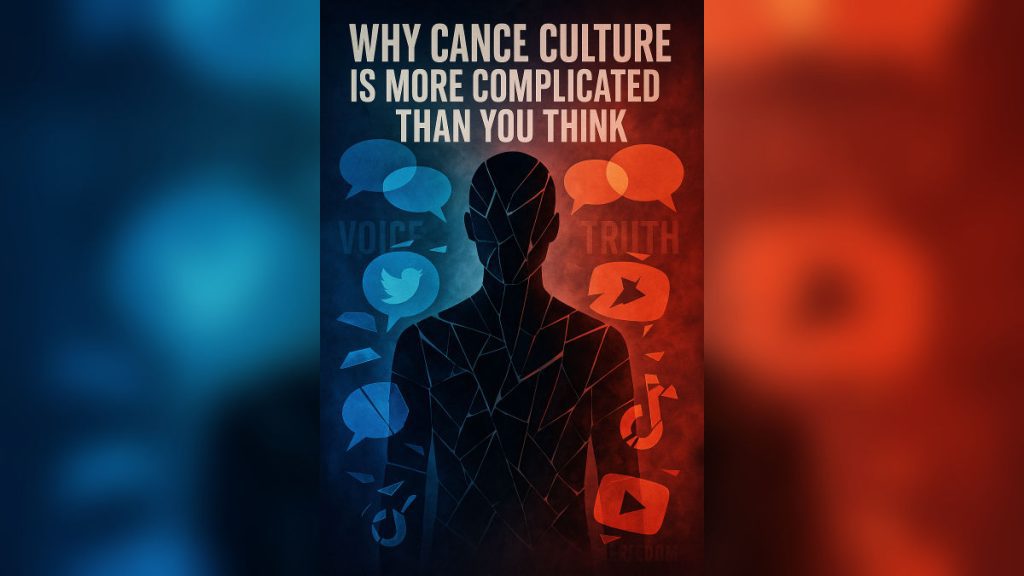
Short answer: Cancel culture in India is neither pure justice nor pure mob rule. It gave the #MeToo movement firepower across Bollywood and Indian journalism, but it also creates pile-ons that hurt mental health on both sides. Britannica frames it as a tool that can dismantle supremacy. UCF flags how it can collapse into performative outrage. The honest answer sits in the middle.
Understanding a powerful but polarising force in India’s digital age.
In recent years, cancel culture has become one of the most hotly debated social phenomena, especially among Indian Gen Z and millennials moving through an increasingly online world. At first glance, it seems simple. Someone makes a mistake, the internet calls them out. But scratch beneath the surface, and you’ll uncover a tangled web of power, justice, fear, outrage and empathy.
In India, cancel culture sits at the intersection of tradition and modernity, where celebrity worship, caste and class hierarchies and new-age activism collide. It is not merely about accountability, it’s about who gets to hold others accountable and what the consequences should look like.
What does cancel culture really mean today?
More than just a buzzword
Cancel culture refers to the collective withdrawal of support from public figures, influencers, brands or institutions after they’ve said or done something perceived as offensive. It plays out mostly on social media, where hashtags trend within hours and reputations crumble overnight.
In theory, a tool for justice. In practice, a thin line between accountability and public punishment.
“What’s scary isn’t the criticism—it’s the speed and scale,” says Nandini, a 22-year-old from Mumbai, who once saw her favorite stand-up comic ‘get cancelled’ over a five-year-old tweet.
How does cancel culture connect to power and justice?
Giving the voiceless a megaphone
For supporters, cancel culture can be empowering, especially for those who’ve historically had no access to justice. In India, where caste, gender and class disparities are deeply entrenched, social media offers marginalised voices a platform to call out powerful individuals who’ve wronged them.
Think of how the #MeToo movement swept through Bollywood and Indian journalism. Survivors came forward, often at great personal cost, to expose patterns of abuse and harassment that had long been buried under silence and impunity.
Britannica notes, “Cancel culture can help dismantle systems of supremacy and create space for social justice.”
But here’s the twist, it also begs the question: who decides what’s cancel-worthy?
How does social media shape who gets cancelled?
The court of public opinion moves fast
In the digital age, cancel culture thrives on speed and reach. A problematic statement, a screenshot from years ago, a joke taken out of context, any of it can go viral within hours.
Social media enables critique, but it lacks context most of the time. A short clip from a long conversation might not capture the speaker’s intent, and once the mob has passed judgment, it’s nearly impossible to undo the damage.
According to the University of Central Florida, platforms like Twitter and Instagram often become arenas for public shaming, where calling someone out becomes less about dialogue and more about performative outrage.
“It’s like watching a fire spread. Once it starts, it’s very hard to control,” says Ritesh, a 25-year-old design student from Delhi, recalling how an artist he followed lost a brand deal over a resurfaced meme.
Where does accountability cross into something else?
When call-outs turn into take-downs
At its best, cancel culture forces individuals to reflect, apologise and do better. At its worst, it becomes punitive, disproportionate and counterproductive.
Critics argue it often lacks room for growth or redemption. Someone makes a mistake, and they’re “done.” Little space to explain, less to change.
This gets murkier in India, where cancel culture can take on political overtones. A stand-up comic can be “cancelled” by the right-wing for satire, while a professor can face online backlash from the left for a poorly worded remark, same mechanism, opposite ends, and in both cases the individual becomes a symbol in a larger ideological battle.
What does cancel culture actually cost people?
Mental health and emotional fallout
Behind every “cancelled” person is a human being. Flawed, yes, but real. The psychological consequences of being publicly shamed, ostracised and trolled can be severe.
According to Premier Science, those targeted often experience anxiety, depression and social withdrawal. The impact isn’t limited to those cancelled either, many who participate also report burnout and outrage fatigue.
“I was part of a group that exposed a toxic creator. At first, it felt empowering. Later, it just made me feel drained,” confesses Tanya, 21, who eventually took a break from Twitter for her mental health.
Why does nuance matter so much here?
Beyond binary thinking
Cancel culture often paints people in black and white, good or bad, guilty or innocent. But real people exist in the grey.
Context matters. A one-time mistake isn’t the same as a repeated pattern of harm. Intent should not excuse impact, but it should inform the response. This is why experts advocate for restorative justice, approaches that focus on healing, education and transformation rather than punishment alone.
It’s important to recognise the roots of “calling out” in Black and Dalit liberation movements, where speaking truth to power was a matter of survival. Applying those principles responsibly today means creating space for both accountability and compassion.
What makes the Indian context unique?
Cultural complexity meets internet rage
India’s socio-political fabric makes cancel culture even more complicated. A celebrity expressing a progressive opinion may be cancelled by conservative trolls. An upper-caste influencer might face backlash for appropriating Dalit culture. An actor could be targeted for past controversial comments during a time of high religious tension.
Each case needs its own lens. Blanket outrage doesn’t always serve justice, sometimes it serves virality.
Choose dialogue over destruction
Cancel culture is not inherently good or bad. It’s a reflection of our collective desire for a more just world, albeit sometimes distorted by emotion, speed and digital noise.
Should we cancel or call out? Should we punish or educate? Should we shame or seek dialogue?
As young digital citizens, we must move beyond binary thinking. Hold people accountable, but allow space for redemption, growth and learning.
“Before you cancel someone, ask, am I seeking justice or just satisfaction?”
Let’s not just call out. Let’s call in.
FAQs about cancel culture
What is cancel culture in simple terms?
Cancel culture is the collective withdrawal of support from public figures, influencers, brands or institutions after they’ve said or done something seen as offensive. It plays out on social media, where hashtags trend within hours and reputations crumble overnight.
How is cancel culture different in India?
India’s caste, class, gender and political dynamics shape who gets cancelled and why. The same mechanism that powered the #MeToo wave through Bollywood and Indian journalism is also used to silence dissent, with comics targeted by the right and academics by the left.
What are the mental health effects of being cancelled?
According to Premier Science, those targeted often experience anxiety, depression and social withdrawal. Participants aren’t immune either, many report burnout and outrage fatigue, which is why some take long breaks from Twitter.
Is cancel culture the same as accountability?
Not quite. Accountability leaves room for explanation, learning and change. Cancel culture, in its harsher form, skips that step and goes straight to punishment. Restorative justice, by contrast, focuses on healing and transformation.
Where did call-out culture come from originally?
The roots of “calling out” lie in Black and Dalit liberation movements, where speaking truth to power was a matter of survival. The modern social media version borrows that energy but doesn’t always carry the same care, context or community accountability.