
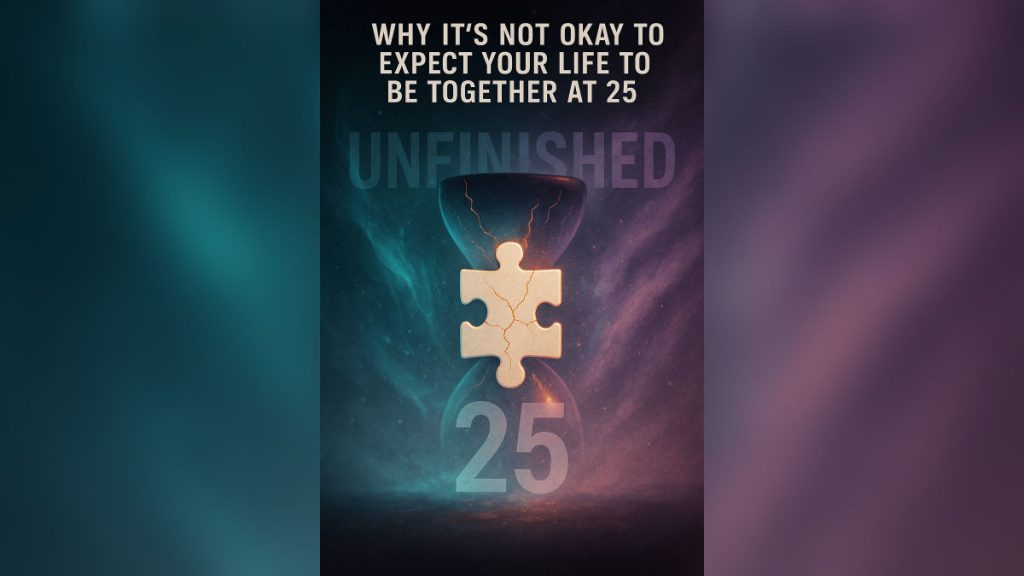
The Illusion of a Perfectly Timed Life
There’s a strange myth floating around—one that insists your life should be neatly arranged and fully functional by the age of 25. You should have a stable job, a clear career path, thriving relationships, a polished apartment, and a five-year plan. That’s what we’re told, explicitly or subtly, by society, media, and even well-meaning relatives. But here’s the truth: expecting your life to be “together” at 25 is not just unrealistic—it’s unfair.
In fact, the very idea can be harmful. It creates unnecessary pressure, fosters anxiety, and leaves little room for growth, discovery, or, frankly, being human. Let’s unpack why it’s not okay to expect yourself—or anyone else—to have it all figured out by 25.
The Pressure Cooker of Societal Expectations
Social Media: The Comparison Trap
Platforms like Instagram and LinkedIn are full of shiny updates: job promotions, engagements, cross-continental moves, entrepreneurial ventures. It’s easy to assume that everyone is progressing in life—except you.
But let’s not forget: social media is a highlights reel, not a reality show. People rarely post about the nights they cried over uncertainty, the rejection emails they received, or the crushing weight of student debt. According to Medium, the curated perfection of social media often distorts reality, creating unrealistic benchmarks for success at a young age.
Generational Shifts: Old Timelines, New Realities
Our parents’ generation often reached major milestones—marriage, career stability, home ownership—in their 20s. But they weren’t juggling the same challenges we are today. Millennials and Gen Z face rising housing costs, a competitive job market, student loans, and evolving career landscapes.
As The Juice Academy points out, expecting young adults today to hit the same milestones at the same age is irrational and outdated. The pressure to succeed by 25 doesn’t take into account the vastly different economic and social climate we’re navigating.
The Quarter-Life Crisis: A Common but Underrated Phase
By the time you’re 25, you’re likely deep in what psychologists now call the “quarter-life crisis.” According to Paper Cranes Counseling, it’s a time filled with uncertainty, self-doubt, and existential questioning. You may wonder if you’re in the right field, if you’re falling behind your peers, or if you’ll ever “figure it out.”
This is not a flaw—it’s a stage. It’s a sign that you’re growing, reflecting, and searching for meaning beyond the superficial. And that’s something to be respected, not rushed through.
Embracing Your Unique Journey
Success Isn’t One-Size-Fits-All
Not everyone’s path looks the same—and that’s the beauty of it. One friend might be climbing the corporate ladder while another is backpacking through Southeast Asia or learning a new skill after switching careers. All of these are valid.
Success isn’t a checklist. It’s a personal definition. For some, it’s emotional stability. For others, it’s creative freedom. And for many, it’s simply discovering what brings them joy and fulfillment.
Exploration Is Growth
Your 20s are for trying, failing, and trying again. They’re for messy experimentation, spontaneous decisions, and learning who you are outside the structure of school and parental expectations.
Personally, I changed career interests three times between 23 and 27. At the time, I felt like I was wasting time. In hindsight, I was building the foundation for the work I do now—work that aligns with my values and actually makes me excited to get up in the morning.
Every so-called “detour” taught me something valuable. And that’s not failure; it’s growth.
Prioritizing Mental Health and Well-being
You Are Not Your Job Title
When you tie your worth to your professional or personal milestones, setbacks can feel catastrophic. But remember: your value doesn’t depend on a resume, a partner, or a perfect five-year plan.
Constant pressure to “succeed” by a deadline can take a toll on your mental health. Anxiety, burnout, and imposter syndrome are all too common. According to a survey by the American Psychological Association, over 70% of young adults report stress about work and the future.
Instead of chasing external validation, focus on what nourishes you internally. Self-care, therapy, journaling, exercise, and rest are just as crucial to your 20s as ambition or hustle.
Build a Support System
No one gets through their 20s alone. Whether it’s friends, family, mentors, or mental health professionals, surround yourself with people who remind you that it’s okay not to have all the answers right now.
Unfollow accounts that make you feel inadequate. Follow those that make you feel inspired. Be around people who don’t measure your worth by your LinkedIn status.
Redefining Success on Your Terms
Small Wins Matter
You don’t have to land your dream job to be proud of yourself. Some days, just getting out of bed, paying your bills, or setting boundaries with someone toxic is a win. Celebrate those.
These small moments build resilience, confidence, and clarity. They are the steps that eventually lead to your bigger goals—ones that you get to define.
Let Go of Timelines
There’s no universal rulebook that says you must achieve specific things by 25—or any age. Life is not a race, and those detours often take you somewhere even better than you planned.
As Paper Cranes Counseling notes, aligning your path with your values—not with someone else’s timeline—is the real key to fulfillment. It’s not about speed. It’s about direction.
You’re Exactly Where You Need to Be
If you’re 25 and feel like you’re flailing, lost, or left behind—you’re not alone. And more importantly, you’re not failing.
The idea that you should have your life together by 25 is outdated, unrealistic, and unkind. It’s time we collectively reject it.
Instead, let’s normalize the journey—complete with stumbles, pauses, reroutes, and self-discovery. Let’s honor growth over perfection, and process over pressure.
You don’t need to have it all figured out. You just need to keep going. Step by step. Breath by breath. Moment by moment.
And that’s more than enough.