
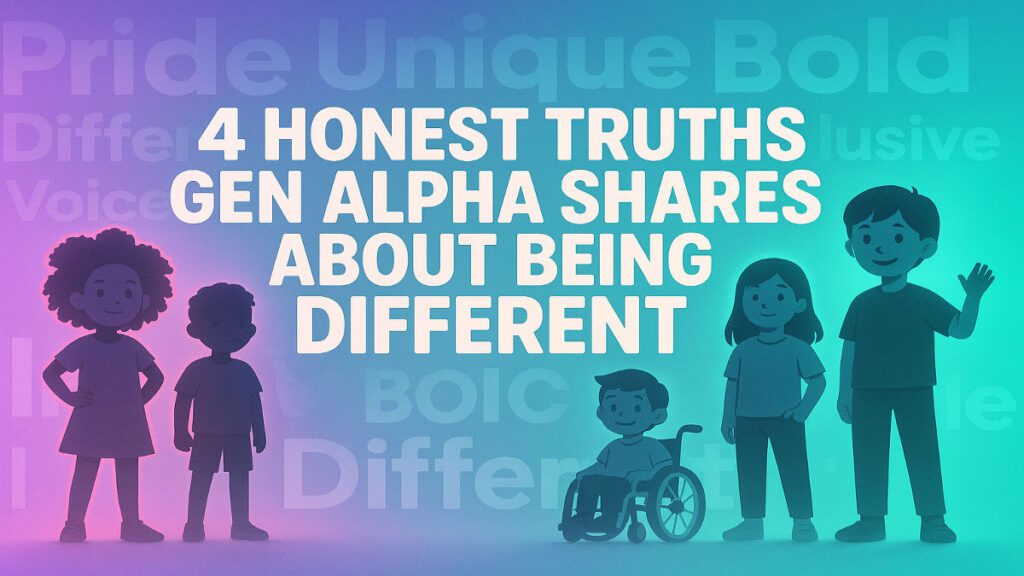
Short answer: Gen Alpha, born from 2013 onwards, treats being different as a strength rather than a flaw. They embrace fluid identity, challenge old gender norms, build inclusive friendships, and find role models from every corner of the world, reshaping what belonging looks like in 2025.
In 2025, being different doesn’t mean standing out in a bad way. It means standing up for who you really are. No one knows this better than Generation Alpha.
Born from 2013 onwards, Gen Alpha is growing up in a time where diversity is visible, identity is fluid, and inclusion is a basic expectation rather than a buzzword. Unlike previous generations who often struggled to fit in, today’s youngest voices are boldly redefining what it means to belong.
Here is what Gen Alpha has to say about being different, and why their perspective might reshape the future.
1. How does Gen Alpha embrace being unique?
Authenticity is Gen Alpha’s superpower.
Whether it’s the way they dress, the pronouns they use, or the passions they pursue, this generation isn’t afraid to be different. They celebrate it.
Twelve-year-old Tanvi from Bengaluru paints her nails in neon shades and wears mismatched socks to school. “It’s not about fashion,” she says. “It’s just who I am, and my friends think it’s cool.”
According to a 2024 report by Tokinomo, Gen Alpha is pushing hard against the pressure to conform. They’re carving out space where self-expression matters more than fitting into traditional molds.
Rigid definitions of identity based on gender, culture, or appearance don’t resonate with them. They embrace fluidity, allowing themselves and others the freedom to evolve.
Being different isn’t scary anymore. It’s empowering.
2. How is Gen Alpha challenging gender and identity norms?
For Gen Alpha, questioning stereotypes comes as naturally as breathing.
From pronoun use to school uniforms, they’re challenging long-held expectations around gender and identity. A growing number of students now prefer gender-neutral pronouns, and many schools are adapting accordingly. According to Executive Support Magazine, Gen Alpha is far more comfortable exploring non-binary identities than any previous generation.
Their push for inclusivity doesn’t stop at gender. They’re standing up against racism, ableism, classism, and more. Many are vocal online, joining causes and signing petitions before their teenage years.
Take 10-year-old Kabir, who once spoke up during a school assembly when a classmate was bullied for his accent. “It doesn’t matter where someone’s from, we all deserve kindness,” he said. That moment sparked a week-long class project on empathy.
These kids aren’t only learning history. They’re rewriting the present.
3. Why does Gen Alpha care about inclusive communities?
Belonging is everything to Gen Alpha, but not at the cost of uniformity. They want inclusive spaces where people feel free to be their true selves.
The UNIS Blog notes that Gen Alpha’s social circles are often richly diverse, culturally, ethnically, and ideologically. Their friendships aren’t defined by similarity, but by shared values of respect and openness.
Social media plays a surprisingly positive role. While platforms like Instagram and Roblox aren’t without risks, they serve as windows to communities where Gen Alpha can explore identity, share experiences, and stand in solidarity with others.
Eleven-year-old Ananya follows a deaf creator on TikTok who shares sign language tips. “It helps me understand people better,” she says. “And now I’m learning to sign too.”
Even at a young age, they understand that inclusion is not about tolerating differences. It’s about celebrating them.
4. Where does Gen Alpha find role models?
Unlike older generations that grew up idolising a narrow set of celebrities, Gen Alpha’s heroes come from every corner of the globe and every kind of background.
Thanks to digital media, they’re exposed to K-pop idols who challenge gender norms, LGBTQ+ influencers who share their journeys with grace, and YouTubers who speak openly about mental health and identity.
Parental influence matters too. Many Gen Alpha kids are being raised by Millennials, parents who emphasise empathy, diversity, and open dialogue. They’re having tough conversations at younger ages, growing up more informed and empowered.
“I saw a video of a boy wearing a skirt,” says 9-year-old Zahaan. “He looked awesome, and his friends cheered for him. I want to be like that, to cheer for people.”
Exposure to inclusive role models helps Gen Alpha develop a global, compassionate worldview, one where no one has to hide who they are.
Why being different is the new normal
Gen Alpha isn’t okay with being different. They’re proud of it. In doing so, they’re reshaping what it means to grow up in a complex, diverse world.
They’re showing us that being unique isn’t a flaw. It’s a form of strength. Their openness, empathy, and insistence on belonging are creating ripples that will extend far beyond childhood.
If you’re listening to Gen Alpha, and you should be, you’ll hear this loud and clear: being different is not just accepted, it’s celebrated.
Maybe that’s the future we’ve all been waiting for.
FAQs about Gen Alpha and being different
Who is Gen Alpha?
Gen Alpha is the generation born from 2013 onwards, following Gen Z. They are growing up in a world where diversity, fluid identity, and digital life are the default.
How does Gen Alpha view being different?
Gen Alpha sees being different as empowering rather than embarrassing. A 2024 Tokinomo report notes that they reject pressure to conform and prioritise authentic self-expression.
How is Gen Alpha handling gender identity?
According to Executive Support Magazine, Gen Alpha is more comfortable exploring non-binary identities than any previous generation. Many prefer gender-neutral pronouns and push schools to adapt.
Does social media help or hurt Gen Alpha’s sense of identity?
Platforms like Instagram, Roblox, and TikTok carry risks, but they also give Gen Alpha access to diverse creators, sign language tutors, LGBTQ+ voices, and global role models who expand their worldview.
Who are Gen Alpha’s role models?
Gen Alpha’s role models include K-pop idols who challenge gender norms, LGBTQ+ influencers, mental health advocates on YouTube, and their own Millennial parents who encourage open dialogue.