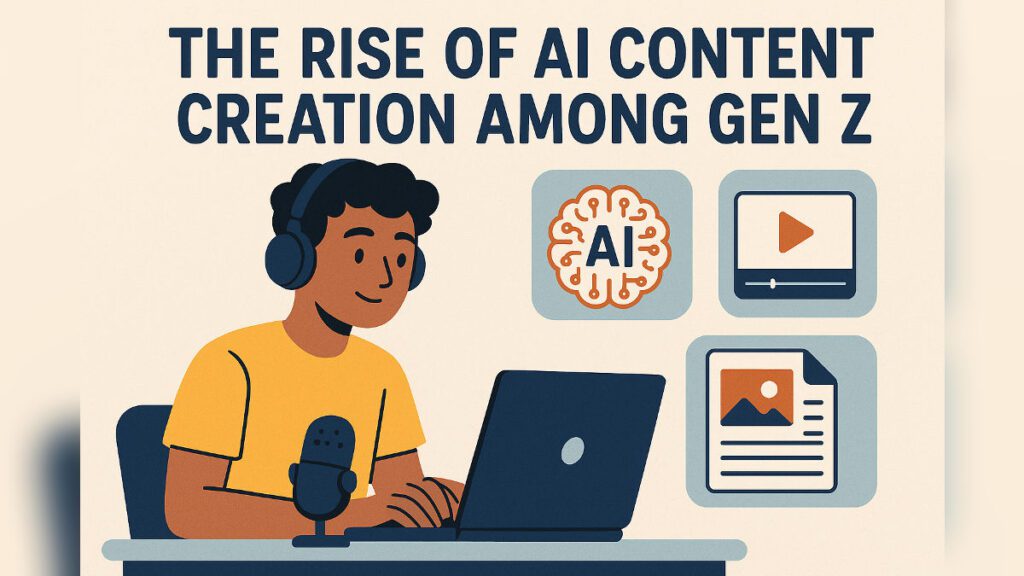
Short answer: Gen Z treats AI content creation as a creative partner, not a shortcut. In 2025, tools like ChatGPT, Suno AI, MidJourney, Runway Gen-2 and Pika Labs power their music, art, videos and side hustles — reshaping how young Indians learn, earn and express themselves online.
Gen Z grew up with technology in hand. From the early days of YouTube to the endless scroll of TikTok and Instagram Reels, this generation has always had tools to express itself. In 2025, a new wave of creativity sits at the centre of that expression: AI content creation. Tools like ChatGPT, Suno AI, MidJourney and Runway aren’t experiments anymore. They shape how young creators learn, hustle and entertain. For Gen Z, AI isn’t only technology; it’s a partner in creativity.
Why does AI appeal to Gen Z?
Instant creativity. Generating a song, designing anime-style art or drafting an essay takes seconds with AI. Speed matches the pace Gen Z already works at.
Low barriers. You don’t need a professional studio, a $2,000 camera or years of training to try something. AI tools have made music, design and even filmmaking more accessible.
Personal expression. Gen Z loves personalisation. From custom playlists to designing virtual avatars, AI helps them bring their identity to life.
How do Gen Z creators use AI every day?
Music: Platforms like Suno AI or AIVA let anyone generate beats, full songs or background scores. Many young musicians use AI as a co-writer or producer.
Art and design: With MidJourney and DALL·E, Gen Z creates professional-looking posters, anime fan-art and fashion mockups.
Video editing: Tools like Runway Gen-2 or Pika Labs turn text prompts into short films.
Writing: From blogs to school essays, AI chatbots like ChatGPT help brainstorm ideas, write drafts or polish grammar.
How is Gen Z turning AI into side income?
One of the biggest reasons Gen Z is hooked on AI is the money angle. Many are:
Selling AI-generated art as prints or NFTs.
Using AI music for YouTube videos and Instagram reels.
Offering AI-assisted writing services on freelancing platforms.
Running micro-businesses with AI marketing copy and designs.
For a generation eager to try side hustles without heavy investment, AI becomes a shortcut to entrepreneurship.
What are the challenges of AI content creation?
It isn’t all upside. Opportunity brings responsibility:
Originality issues: Is AI art really your art? Or does it blur the line between inspiration and plagiarism?
Overdependence: Leaning too much on AI can harm critical skills like problem-solving and creativity.
Ethics and bias: AI systems are only as fair as the data they train on, so biased outputs are a real risk.
Gen Z, more than any other generation, will have to balance AI as a tool with keeping an authentic voice alive.

Why does this matter for the future?
Just like anime, gaming or K-pop shaped identity in past years, AI is now shaping Gen Z’s future career paths. Some will become AI-powered entrepreneurs. Some may become AI ethicists. Others will use these tools to amplify their art. AI is no longer optional; it’s part of the creative DNA of Gen Z.
The takeaway
AI content creation isn’t about replacing creativity; it’s about redefining it. For Gen Z, this technology has become both a canvas and a collaborator. Whether they’re making music in dorm rooms, launching digital businesses or experimenting for fun, AI opens doors once locked behind expensive gear or professional skills.
The question now isn’t whether Gen Z will use AI. It’s how far they will take it.
FAQs about AI content creation for Gen Z
Which AI tools are most popular with Gen Z creators?
ChatGPT for writing, Suno AI and AIVA for music, MidJourney and DALL·E for visual art, and Runway Gen-2 and Pika Labs for short video are among the most-used AI content creation tools with Gen Z in 2025.
Can Gen Z make money from AI content creation in India?
Yes. Young Indian creators are selling AI-generated prints and NFTs, licensing AI music for reels, offering AI-assisted writing on freelance platforms, and running micro-businesses powered by AI marketing copy and designs.
Is AI-generated art really your own creation?
It depends on the level of human input. Prompts, edits, curation and remixing add authorship, but pure text-to-output work raises real questions about originality, copyright and where inspiration ends and plagiarism begins.
What are the risks of Gen Z relying on AI for creativity?
The main risks are overdependence that weakens problem-solving and original thinking, bias baked into AI training data, and losing a distinct personal voice if creators hand too much of the process to a tool.
Will AI content creation change Gen Z’s career paths?
It already is. Demand is rising for AI-powered entrepreneurs, AI ethicists, prompt designers and hybrid creator-technologists, and schools and freelance platforms in India are adjusting to match.