

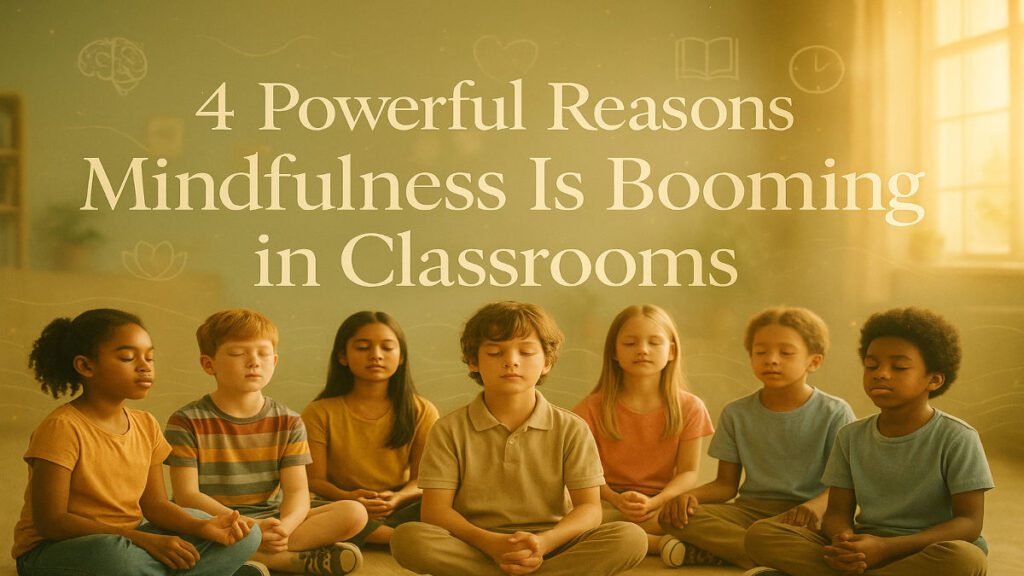
Short answer: Mindfulness is booming in Gen Alpha classrooms because it helps children focus in a distraction-heavy world, manages stress and anxiety, builds kinder peer relationships, and aligns with India’s National Education Policy (NEP) 2020. A 2024 Mindfulness Journal study found 10 minutes of daily mindfulness lowered student stress, and a UNICEF India report (2023) linked mindfulness-plus-SEL schools to stronger collaboration and fewer behavioural issues.
In 2025, classrooms from Delhi to suburban districts in the U.S. are seeing a quiet revolution. It doesn’t involve smartboards or coding bootcamps. It starts with a breath, a pause, a moment of stillness.
Welcome to the age of mindfulness in Gen Alpha classrooms. Born after 2013, Generation Alpha is the first to grow up entirely in a hyper-digital world. They swipe before they walk, scroll before they write, and face a life of constant noise and pressure. Mindfulness is emerging as an anchor in this chaos.
Here’s why it’s no longer a luxury for today’s youngest learners.
How does mindfulness help Gen Alpha focus in a distracted world?
One of the biggest challenges teachers report today is getting students to pay attention. With Gen Alpha exposed to YouTube Shorts, video games and algorithm-curated content, their brains are wired for quick dopamine hits. But reading, writing and problem-solving need sustained focus.
Mindfulness is proving to be a game-changer.
“After we started morning breathing exercises, I noticed my students were less fidgety and more engaged,” says Priya Menon, a Class 4 teacher in Pune. “Even five minutes makes a difference.”
Research backs her up. Mindfulness activities improve working memory and attention span in children, helping them tune in rather than zone out. Classrooms get quieter, disruptions drop, learning goes deeper.
When the mind is calm, it’s ready to learn.
Why does emotional resilience matter for this generation?
Alongside academic pressure, Gen Alpha faces cyberbullying, social comparison and high parental expectations. Many children experience anxiety and stress as early as age 8.
Mindfulness gives them a toolkit for emotional survival. Guided visualisation, body scans and gratitude journaling help them name and manage feelings. A study published in Mindfulness Journal (2024) showed that students who practised mindfulness for 10 minutes a day reported lower stress levels and better coping mechanisms.
Take Aarav, a 9-year-old from Hyderabad. After his school introduced a mindfulness corner, he started journaling before class. “I write about my worries. It helps me feel lighter,” he shares.
Instead of being overwhelmed by big emotions, these children are learning to breathe through them.
How does mindfulness build kinder classrooms?
Mindfulness isn’t only about what happens inside the mind. It shapes how children relate to one another.
Through compassion exercises and active listening, students start seeing their peers as humans with feelings and stories of their own. Friendships deepen, and bullying or exclusion drops.
“When we do mindful listening, we take turns without interrupting,” says 10-year-old Meera. “It makes everyone feel heard.”
This approach aligns with Social-Emotional Learning (SEL) frameworks gaining ground in schools worldwide. According to a UNICEF India report (2023), schools that combined SEL with mindfulness saw higher levels of student collaboration and fewer behavioural issues. Classrooms are becoming communities of care.
How does mindfulness align with NEP 2020?
India’s National Education Policy (NEP) 2020 calls for holistic, child-centric learning. It emphasises life skills as much as literacy, and mindfulness fits the brief.
Mindfulness builds self-awareness, emotional intelligence and interpersonal sensitivity, all essential 21st-century skills. It shifts teachers from instructors to mindful facilitators, guiding students in life, not just subjects.
More schools are folding mindfulness into the core curriculum rather than treating it as an add-on. The methods range from daily morning check-ins to mindfulness-based art and storytelling. Workshops and retreats for students, teachers and parents are becoming common, with schools bringing in experts and NGOs to build capacity for the long haul.
A breath of fresh air for the future
Mindfulness in Gen Alpha classrooms isn’t another education trend. It’s a response to a rapidly changing world. These young minds, shaped by screens and speed, are getting the tools to pause, reflect and breathe. They’re learning that success isn’t just scores. It’s staying balanced, kind and emotionally intelligent.
As 2025 unfolds, supporting schools and families embracing mindfulness matters. A generation that leads with empathy, resilience and presence is worth nurturing.
Sometimes, the most powerful thing we can teach a child is to be still.
FAQs about mindfulness in classrooms
What is mindfulness in the classroom?
Mindfulness in the classroom means short daily practices like breathing exercises, body scans, gratitude journaling or mindful listening that help students focus, calm down and connect with their peers. Many Indian schools run five- to ten-minute sessions before lessons.
How does mindfulness help students with anxiety and stress?
A 2024 Mindfulness Journal study found that students who practised mindfulness for 10 minutes a day reported lower stress levels and better coping mechanisms. Practices like body scans and journaling help children name emotions and respond rather than react.
Is mindfulness part of India’s NEP 2020?
NEP 2020 calls for holistic, child-centric learning that values life skills alongside literacy, and mindfulness fits that mandate. More Indian schools are adding mindfulness to the core curriculum, with morning check-ins, mindful art and storytelling.
What age should children start mindfulness?
Children as young as 8 now face anxiety from social media, cyberbullying and academic pressure, so schools are introducing mindfulness in primary years. Even five minutes of breathing exercises can make a difference, as Pune teacher Priya Menon notes from her Class 4 classroom.
Does mindfulness reduce bullying in schools?
Yes. Mindful listening and compassion exercises help students see peers as people with their own feelings and stories. A UNICEF India report (2023) found schools combining SEL with mindfulness had higher collaboration and fewer behavioural issues.