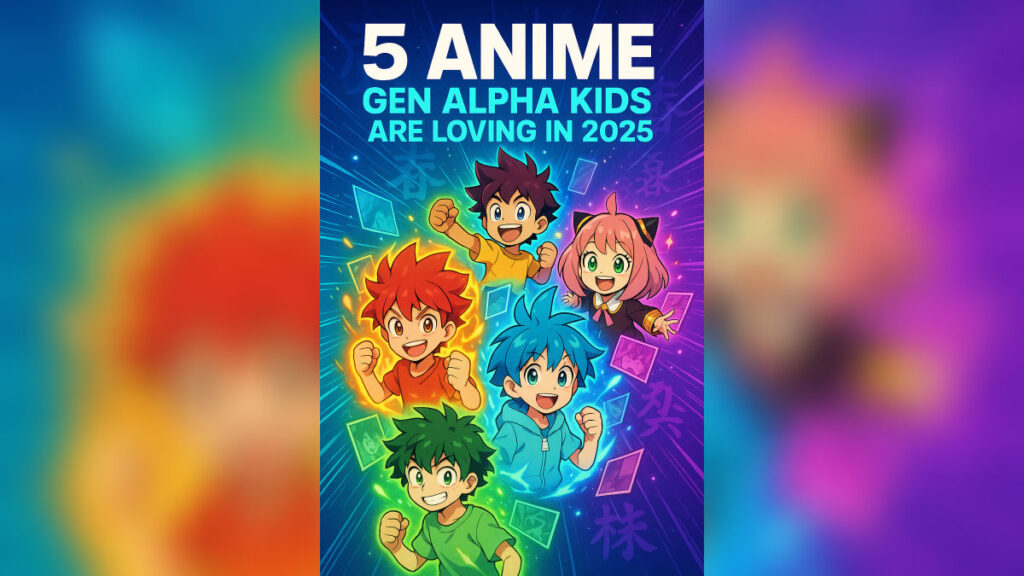
Short answer: Gen Alpha kids aged 8 to 13 are gravitating to five anime in 2025: Demon Slayer: Kimetsu no Yaiba, Spy x Family, One Piece, Pokemon and My Hero Academia. The pull isn’t only flashy fights. It’s emotional storytelling, found-family warmth and protagonists who fail before they win, all served on Netflix, Crunchyroll and Hulu where the remote-toting tween already lives.
Heart-pounding action. Lovable characters. Lessons that actually stick.
For a generation that learned to swipe before they could write joined-up, anime isn’t just a genre, it’s a piece of growing up. Tablets in tiny hands, streaming queues longer than the school reading list, lunchbox debates over who’d win in a fight between Tanjiro and Deku. Japanese animation has fully colonised the after-school hours of Gen Alpha (ages 8 to 13).
So which titles are running away with the watchlists in 2025? Tastes do shift across cities, schools, even friend groups, but a handful of shows keep showing up. Below: the five tweens can’t seem to put down, and a fair attempt at why.
Why is Demon Slayer such a big hit with kids?
Demon Slayer: Kimetsu no Yaiba has pulled in young viewers across continents, and the maths makes sense. Tanjiro is a kind-hearted boy who trains to fight demons after a family tragedy, and his loyalty to his sister is the emotional spine of the whole show. Kids respond to that. They aren’t fluent in plot mechanics yet, but they understand brother protecting sister.
The animation is gorgeous, no question. But it’s the small moments, between sword fights, between training arcs, that earn the rewatches. And while the demons can look scary on the school iPad, parents tell us the lesson kids actually take home is closer to grit than fear.
“Tanjiro never gives up, even when things are super hard,” said 11-year-old Aarav from Mumbai. “It makes me feel like I can be strong too.”
Why does Spy x Family connect with younger viewers?
Spy x Family is, on paper, an espionage comedy. In practice it’s a found-family sitcom dressed in trench coats. A secret agent assembles a fake family for a mission and slowly, awkwardly, ends up loving them. The adopted daughter Anya is a telepath, and a chaotic one, which is exactly why kids adore her.
The show is funny. It’s also gentle. And since the whole premise turns on the idea that the most unlikely people can become family, it teaches young viewers about love, trust and chosen kinship without ever lecturing.
According to Collider, its blend of “action and heartwarming family moments” makes it ideal for both solo and family viewing.
How is One Piece still pulling in new fans?
Two decades. Over a thousand episodes. Most franchises would be on life support by now, but One Piece somehow keeps reeling in fresh Gen Alpha viewers, which is genuinely remarkable when you think about it. Monkey D. Luffy and his pirate crew sailing endless seas in search of treasure plays as well to a 9-year-old in 2025 as it did to a teenager in the early 2000s.
What clicks? The humour, the absolute zoo of characters, and the way the show keeps surprising you. Themes of friendship, dream-chasing and refusing to fold land especially hard with kids who are just starting to think about what they want to be.
“Even after 1000 episodes, I want more,” admitted a 12-year-old fan on Reddit.
Why does Pokemon never get old?
Pokemon isn’t really an anime anymore. It’s a planet. From trading cards to the Nintendo Switch to the anime itself, Pokemon has spent thirty years being whatever a kid needed it to be that week. The animated series keeps adding new regions, new creatures, new trainers, and yet the core line stays the same: adventure, friendship, growing up.
Whether kids are catching up on Ash Ketchum’s run or following the new trainers in the Paldea region, the formula works. It’s warm. It’s exciting. There’s a small yellow electric mouse. What more do you want.
“I’ve been watching Pokemon since I was six,” said Kiera, now 10. “I still scream when Pikachu shows up!”
What makes My Hero Academia a tween favourite?
My Hero Academia asks one question: what happens when almost everyone has a superpower (a “quirk”), and you don’t? You get Izuku Midoriya, the underdog who refuses to let the odds crush him. For an 8 to 13-year-old audience already wrestling with feeling small, this is catnip.
The show hits a sweet spot, action big enough to feel cinematic, school dynamics close enough to feel familiar. Friendships, rivalries, the awkwardness of being new, it’s all there. The fights just happen to come with explosions.
Quora users note how the “superhero theme and relatable characters” have helped it remain wildly popular with Gen Alpha.
Why does this anime resonate with kids today?
Look across the five and a few patterns surface.
High-stakes action and adventure
Whether it’s demons or treasure, kids want stakes. They want stories that won’t let them blink. The slower, contemplative side of anime can wait until they’re older.
Characters that feel real
From shy students to brave older siblings, these casts show fear, fail openly, then bounce back. That’s the part kids actually rewatch. The scene where the hero loses, then gets up.
Visuals that earn the screen time
Today’s young viewers expect colour, speed and cinematic punch. Demon Slayer and My Hero Academia deliver in spades, which is why a parent’s casual “just one episode” rarely survives contact with the actual episode.
Streaming makes it effortless
Netflix, Crunchyroll, Hulu. The barrier to entry is functionally zero. A kid in Bangalore, a kid in Birmingham and a kid in Boise are watching the same fight scene the same week, and that shared cultural ground matters more than any one show.
More than just cartoons
In 2025, anime isn’t background noise for Gen Alpha, it’s a place where they see their own struggles reflected back, learn a bit about empathy, find courage in a plot twist. Whether it’s Tanjiro’s stubbornness or Anya’s chaotic charm, these aren’t just favourite characters. They’re companions in the long, weird business of growing up.
Parents, teachers, fans, all of us, should pay attention. These stories aren’t just captivating, they’re shaping how this generation organises ideas about bravery, kindness and what a hero is supposed to look like.
FAQs about anime Gen Alpha loves
What anime is most popular with Gen Alpha kids in 2025?
The five anime running away with Gen Alpha attention in 2025 are Demon Slayer: Kimetsu no Yaiba, Spy x Family, One Piece, Pokemon and My Hero Academia. They cover action, comedy, adventure and superhero genres, which is why no single show dominates the whole 8 to 13 bracket.
Is Demon Slayer appropriate for an 8 year old?
Demon Slayer is rated TV-MA on most platforms because of stylised violence and demon imagery. Many 11 and 12 year olds handle it without issue, but parents of younger kids often preview the first arc before letting them binge. The emotional core is age-appropriate, the visuals are not always.
Why is Spy x Family good for younger viewers?
Spy x Family pairs spy-thriller action with found-family comedy, and Anya, the telepathic daughter, is genuinely funny without being crude. There’s no romance subplot to dodge and the tone stays warm, which is why it sits well with the 8 to 11 set.
Where can kids watch these anime safely?
Netflix, Crunchyroll and Hulu carry most of the big titles, with parental controls available on each. Crunchyroll has the deepest anime library, Netflix has dubbed versions of Demon Slayer and Spy x Family, and Pokemon is split across Pokemon TV and various streamers depending on region.
Does watching anime help kids learn anything?
Anime fans often pick up Japanese phrases, learn to read subtitles fluently and absorb story structures heavier on emotion than most Western kids’ shows. Themes of perseverance, found family and underdog growth show up across all five of the most popular titles, which doesn’t hurt.