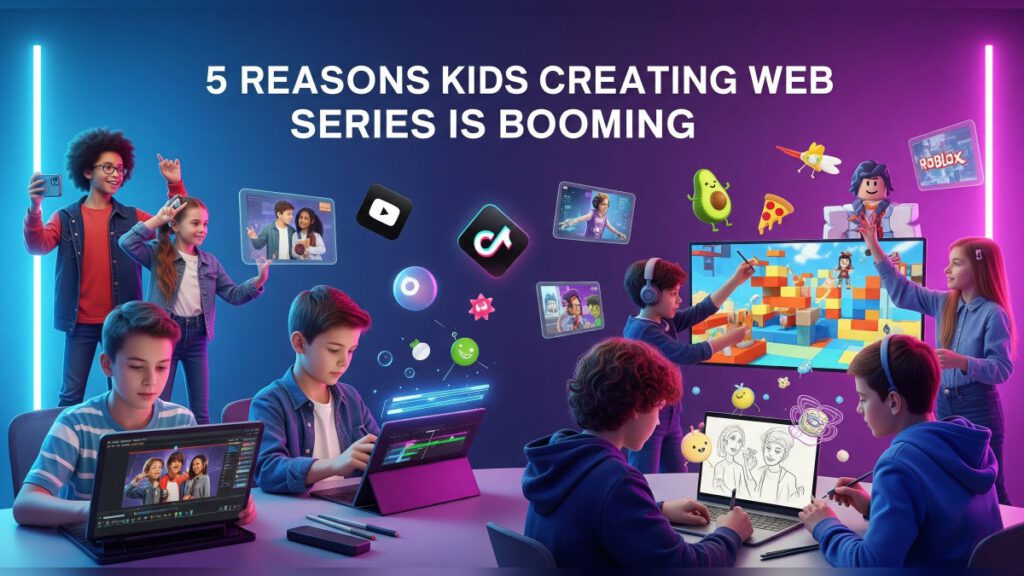
Short answer: Kids creating web series is booming because Gen Alpha are digital natives with access to YouTube Shorts, TikTok, Roblox, Scratch and FlipaClip. They make relatable peer-to-peer content, build story worlds inside games, and inspire other kids to create, shifting children from passive viewers to active storytellers.
Why are Gen Alpha’s short videos taking over the internet?
In 2025, a quiet revolution is unfolding on smartphones and tablets in living rooms across the world. It isn’t led by adults with big budgets or studio deals. It’s driven by kids. From web series to shorts, children are becoming digital creators, producing videos that are fun, imaginative, and influential.
Welcome to the world of kid-made content, a trend that’s reshaping how the next generation tells its stories.
Who are the Gen Alpha storytellers?
Gen Alpha, those born after 2010, are true digital natives. They grew up swiping screens before they could read and talking to smart assistants before they could spell. They aren’t passive consumers. They’re creators, using platforms like YouTube, YouTube Shorts, TikTok, and Roblox to share their worlds in bite-sized bursts.
Whether it’s a seven-year-old animating a short film, a brother-sister duo re-enacting superhero scenes, or a tween giving art tutorials, today’s kids aren’t waiting to grow up to make content. They’re doing it now.
Why does peer-to-peer content feel more real?
There’s something powerful about watching someone your own age do something cool. That’s exactly what makes kid-made content magnetic. Kids creating for kids brings a relatability that polished studio productions often lack.
Instead of scripted performances, viewers get real voices, real giggles, and unfiltered creativity. Popular YouTube channels like Ryan’s World, Like Nastya, and Vlad and Niki combine skits, pretend play, and toy reviews in a format that feels fun and familiar.
As a parent, I’ve seen my daughter skip past expensive animated shows to watch a kid drawing a unicorn on Art for Kids Hub. It isn’t about perfection. It’s about connection.
Why are shorts and skits the new Saturday cartoons?
Forget 30-minute episodes. Gen Alpha thrives on snack-sized content. YouTube Shorts and TikTok have become the go-to platforms for young creators and viewers. These short-form videos, often under 60 seconds, pack humour, creativity, and storytelling into small doses.
Though TikTok has age restrictions, its trends spill over into kid-friendly versions on other platforms. Dance routines, pranks, challenges, and mini-vlogs become part of a digital playground where Gen Alpha explores creativity.
A report by Common Sense Media shows that kids aged 8 to 12 now watch an average of over 5 hours of online video content per day, much of it user-generated.
How do gaming platforms double as creative studios?
Another stage for this creativity is Roblox, a gaming platform where kids don’t just play, they build. Many are creating their own game experiences, stories, and virtual worlds, effectively crafting mini-web series with characters and plots.
Roblox even allows for in-game storytelling, where narratives unfold across episodes or user-generated quests. It’s interactive, collaborative, and a natural extension of Gen Alpha’s immersive digital life.
Just ask 11-year-old Aryan from Mumbai, who designed a game based on a comic series he’s writing with friends. “It’s like our own cartoon show,” he grins, “but in a game.”
Is animation still only for big studios?
With free tools like Scratch, FlipaClip, and AI-assisted platforms, kids are dabbling in animation too. Short films on YouTube explore everything from school stress to superhero adventures, often voiced, drawn, and edited by children or teen teams.
These animations vary in polish, but the themes hit close to home. They reflect what kids care about: friendship, fairness, fears, and fun. One charming example is a series of stop-motion shorts created by two sisters using clay and a smartphone.
How does kid-made content inspire more creators?
The most beautiful aspect of this trend is its ripple effect. Watching someone your age produce a fun skit or get thousands of views can be motivating. For Gen Alpha, content creation isn’t reserved for “influencers.” It’s open to anyone with a phone and an idea.
Voy Media points out that peer influence is one of the strongest forces shaping Gen Alpha’s media habits. When they see kids like themselves succeeding, it builds confidence and sparks their own creative journeys.
The kids are innovating, not just watching
The boom in web series and short videos created by kids isn’t a phase, it’s a shift. It shows us that Gen Alpha isn’t waiting for permission to tell stories. They’re doing it now, one skit, one dance, one DIY video at a time.
In a world that often underestimates children, their creative voices are louder than ever. If we listen closely, these young creators aren’t just making content, they’re making the future. So next time you scroll past a kid-made video, pause. There might be genius in that giggle.
FAQs about kids creating web series
How many hours of video do kids watch daily?
According to Common Sense Media, kids aged 8 to 12 now watch an average of over 5 hours of online video content per day, much of it user-generated by peers rather than studios.
What platforms are kids using to create web series?
Kids use YouTube, YouTube Shorts, TikTok and Roblox to publish web series. For animation, free tools like Scratch, FlipaClip and AI-assisted platforms let them produce short films from home.
Which YouTube channels are popular with Gen Alpha?
Popular Gen Alpha YouTube channels include Ryan’s World, Like Nastya, Vlad and Niki, and Art for Kids Hub. They mix skits, pretend play, toy reviews and tutorials in a peer-to-peer style.
Can kids really build stories inside games like Roblox?
Yes. Roblox allows in-game storytelling where narratives unfold across episodes or user-generated quests. Kids can design characters, plots and interactive worlds, effectively creating mini-web series.
Why does peer influence matter for Gen Alpha creators?
Voy Media reports that peer influence is one of the strongest forces shaping Gen Alpha’s media habits. Seeing other kids succeed as creators builds confidence and inspires them to start their own channels.