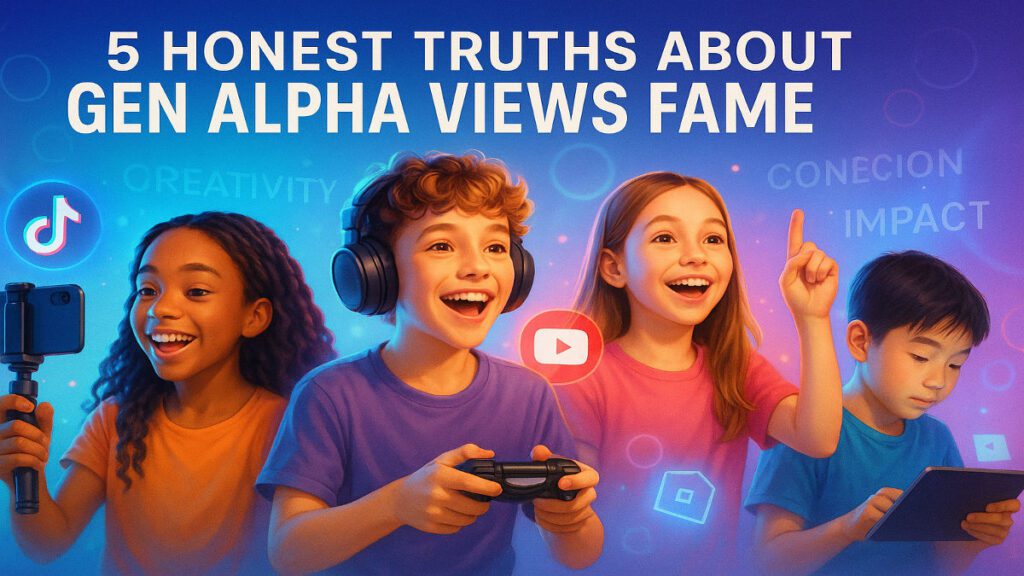
Short answer: Gen Alpha, born from 2010 onward, sees fame through TikTok, YouTube, and Roblox rather than Hollywood. They value relatability over glamour, treat creator work as a real career, and increasingly want impact alongside visibility.
Likes, follows, and viral trends shape popularity for kids born from 2010 onward. Gen Alpha doesn’t look to Hollywood films or music charts for fame. They find it in TikTok dance challenges, gaming livestreams, YouTube vlogs, and content that feels closer to a best friend than a movie star.
So what does fame really mean to the youngest digital natives? Here’s how Gen Alpha sees fame in 2025, and why their view matters.
Why does relatability matter more than glamour to Gen Alpha?
For Gen Alpha, fame isn’t about being untouchable. It’s about being real. Millennials and Gen Z once idolised red carpet celebrities. Gen Alpha is more likely to admire a kid who shares their morning routine on YouTube than an Oscar-winning actor.
These young minds want authenticity. Influencers who show messy bedrooms, bloopers, or behind-the-scenes moments feel more trustworthy. As 11-year-old Anaya from Bengaluru shared in a classroom discussion, “I follow people who are funny and show their real life. Not everything needs to be perfect.”
This is a clear departure from polished stardom. Gen Alpha wants to relate, not aspire from afar.
Is being a creator a real career goal for Gen Alpha?
A 2024 Fortune report found that becoming a YouTuber, TikToker, or Roblox world creator ranks among the top career choices for Gen Alpha kids. They’ve grown up watching influencers make millions from their bedrooms, building empires out of snack reviews and gaming hacks.
The days of “doctor” or “astronaut” topping the list are fading. You’re as likely to hear an eight-year-old say, “I want to be a gamer like MrBeast or a fashion creator like Avani.”
This isn’t only about visibility. It’s about control. These platforms give kids ownership over their voice, creativity, and personal brand, even from a young age.
How does social media work as a stage for Gen Alpha?
YouTube, TikTok, and Roblox aren’t only entertainment outlets for Gen Alpha. They’re performance stages, social hubs, and creative studios rolled into one.
The Annie E. Casey Foundation notes that short-form video content is especially appealing, offering quick engagement and instant feedback. A 15-second lip-sync video or a time-lapse of Lego building fuels expression and community.
Roblox has become a social ecosystem where kids play, create, collaborate, and monetize their ideas. It isn’t content. It’s culture.
What does Gen Alpha know about the price of fame?
Many Gen Alpha kids and their parents are waking up to the complexities of digital fame. HypeAuditor notes that concerns around mental health, burnout, and privacy are coming up more often in family discussions.
Kids dream of going viral, but they also see the toll internet fame can take. Stories of influencers facing cyberbullying, pressure to produce constantly, or losing their sense of self aren’t lost on this generation.
Parental guidance has grown more careful. Many families are working to build healthy digital habits, limit screen time, and talk openly about what it means to post online. The line between personal life and public image is blurrier, and Gen Alpha is learning to navigate it.
Why do Gen Alpha kids care about impact, not just fame?
Here’s the most inspiring insight: for many in Gen Alpha, the goal isn’t just to be famous. It’s to make an impact.
They want content that helps people laugh, learn, or feel seen. Whether that’s reviewing a cool gadget, sharing tips for school stress, or raising awareness about the environment, these young creators blend influence with intention.
As 10-year-old Aarav from Delhi said during a podcast segment, “I want to be famous—but the good kind of famous, where people feel better after watching my videos.”
The future of Gen Alpha fame in 2025
In 2025, Gen Alpha is rewriting the rules of fame. For them, it isn’t flashing lights or magazine covers. It’s connection, creativity, and community.
As they grow up in a hyper-connected world, these kids are also learning to balance visibility with privacy, purpose, and perspective. Fame is more accessible than ever, and Gen Alpha is proving it can also be more meaningful.
So the next time you see a 9-year-old setting up their phone to record a video, watch closely. They may be the voice of a generation that isn’t only going viral but making a difference.
FAQs about Gen Alpha and fame
Who is Gen Alpha?
Gen Alpha refers to children born from 2010 onward. They are the youngest digital natives and the generation after Gen Z.
What platforms does Gen Alpha prefer for fame?
TikTok, YouTube, and Roblox are the leading platforms. They use these for short-form video, gaming livestreams, vlogs, and creator monetization.
Do Gen Alpha kids really want to be YouTubers?
Yes. A 2024 Fortune report shows YouTuber, TikToker, and Roblox world creator rank among their top career choices, ahead of traditional picks like doctor or astronaut.
What are the risks of digital fame for Gen Alpha?
According to HypeAuditor, the main concerns are mental health, burnout, privacy loss, cyberbullying, and pressure to produce content constantly.
Why do Gen Alpha creators care about impact?
They want to help people laugh, learn, or feel seen. Many focus on gadget reviews, school stress tips, or environmental awareness, blending influence with purpose.