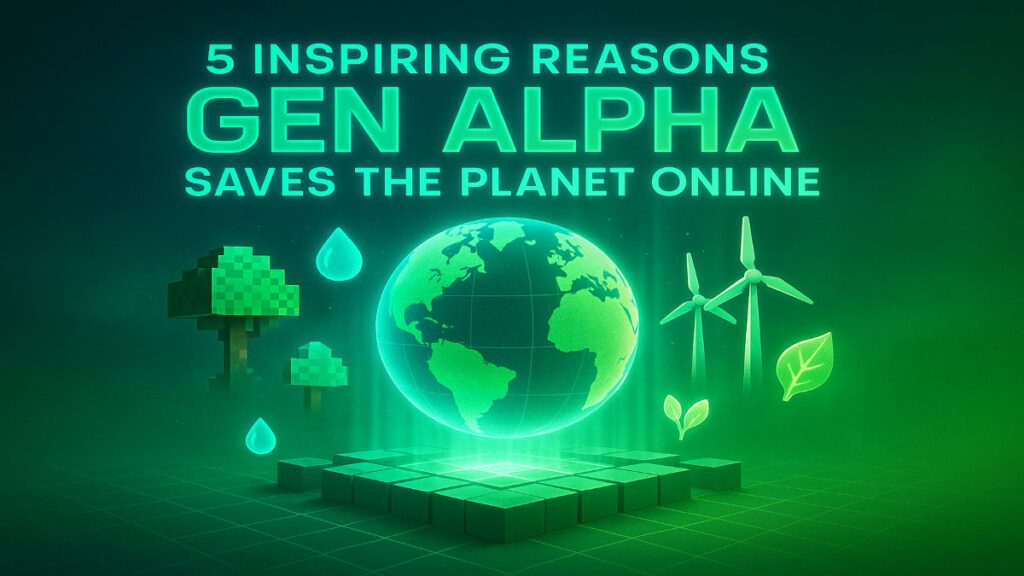
Short answer: Gen Alpha saves the planet online by building eco-friendly cities in Minecraft and Roblox, learning sustainability through gameplay, and sharing climate solutions peer-to-peer on YouTube. A 2023 UNICEF report found over 80% of children worldwide face at least one climate-related risk, pushing this generation to act through the digital spaces they know best.
The world is teetering on the edge of climate catastrophe, and Generation Alpha isn’t waiting to grow up to respond. They are already building greener futures inside their favourite video games.
Whether it is planting trees in Minecraft or cutting pollution in Roblox cities, Gen Alpha channels environmental passion into the digital spaces they know best. To some it might look like “just play.” But their commitment is personal, shaped by responsibility, empathy, and urgency.
Here is why, in 2025, Gen Alpha’s virtual worlds have become training grounds for real-world change.
1. Why does Gen Alpha care about climate change?
Climate change is their everyday backdrop, not an abstract threat.
From record-breaking heatwaves to news about melting ice caps, these kids have heard about global warming since before they could spell “carbon footprint.” According to a 2023 UNICEF report, over 80% of children worldwide are exposed to at least one climate-related risk. For Gen Alpha, that is the norm.
A 9-year-old I spoke with recently said, “We had to cancel our cricket game because of the smog. It’s not fair.” That frustration fuels a desire to do something, even if that something starts in a blocky Minecraft world.
When they build clean-energy power plants or design eco-friendly cities, they are not escaping the real world. They are reshaping it, pixel by pixel.
2. How did Millennial parents shape Gen Alpha’s eco-values?
Many Gen Alpha kids are raised by Millennials, the generation that brought tote bags to the grocery store, protested plastic straws, and made composting cool.
This eco-conscious parenting trickles down in big ways. Recycling lessons at home, family beach cleanups on weekends, sustainability as part of daily language. The values do not end when the screens turn on.
These lessons carry over into digital play. A mom once told me her daughter refuses to build anything in Minecraft unless it uses “eco-bricks,” her term for wood blocks from “replanted trees.”
In a world where play mimics life, Gen Alpha’s moral compass, shaped at home, guides them toward greener decisions online.
3. How do Minecraft and Roblox teach sustainability?
Games are classrooms in disguise for Gen Alpha.
Take Minecraft: Education Edition’s “Sustainability City.” It teaches players how to generate renewable energy, manage waste responsibly, and balance forestry with conservation. Roblox hosts whole games built around cleaning polluted rivers or designing energy-efficient homes.
These experiences give Gen Alpha more than knowledge. They provide tools to experiment with solutions.
A 10-year-old who learned about composting through Roblox told his teacher, “Now I know banana peels go in the green bin. Even in Minecraft.”
Gamified learning gives young minds a sense of control in a world that often feels out of control.
4. Why does building in games matter for real climate action?
Gen Alpha is creative and collaborative. They are not afraid to try, fail, rebuild, and try again, especially for the planet.
Whether restoring coral reefs in a simulation or designing a plastic-free village, they use a problem-solving mindset to tackle environmental challenges with hope and imagination.
In these digital spaces there are no bureaucratic delays or red tape. If they want a wind farm, they build one. If they see pollution, they fix it. The immediate feedback makes them believe their actions matter.
For a generation raised on creativity, climate action is another exciting design challenge.
5. How does peer-to-peer activism spread through Gen Alpha?
Gen Alpha isn’t working alone. In games like Roblox and Minecraft, players from across the globe collaborate to build sustainable worlds together.
From co-creating reforestation missions to sharing screenshots of zero-waste cities, these platforms become spaces for collective activism, imagination, and peer-driven learning.
When one kid uploads a YouTube tour of their solar-powered Minecraft city, others want to replicate or improve on it. This viral effect spreads environmental awareness in the most organic way, peer to peer.
One student put it best: “When I show my friends my recycled water system in the game, they want to build one too.”
The digital planet is just the beginning
Generation Alpha isn’t clicking buttons. They are modelling a world they want to live in.
Their virtual creations may not cut carbon emissions in the real world, but they are planting the seeds of change. Seeds that grow into beliefs, behaviours, and eventually action.
In 2025, as the climate crisis deepens, these digital eco-warriors remind us that real change starts with imagination, community, and a willingness to act, no matter the platform.
So the next time you see a child building a forest in Minecraft or designing a green utopia in Roblox, pause and smile. They are not saving pixels. They are practising how to save the planet.
FAQs about Gen Alpha and climate action online
Why does Gen Alpha care about climate change?
Climate change is their lived reality. A 2023 UNICEF report found over 80% of children worldwide face at least one climate-related risk. Gen Alpha grew up with record heatwaves, smog days, and melting ice caps as daily news. For many, that urgency becomes action inside the games they already play.
How do Minecraft and Roblox teach sustainability?
Minecraft: Education Edition’s “Sustainability City” teaches renewable energy, waste management, and forest conservation through gameplay. Roblox hosts games built around cleaning polluted rivers and designing energy-efficient homes. Kids learn by building solutions, not by memorising facts.
How are Millennial parents shaping Gen Alpha’s values?
Millennial parents normalised recycling, plastic-free habits, composting, and beach cleanups. Gen Alpha brings those habits into digital play. One mom reported her daughter only uses “eco-bricks” in Minecraft, her term for wood from replanted trees.
Does online eco-activism lead to real-world action?
Virtual builds do not cut real carbon emissions, but they plant beliefs and behaviours that carry over. Peer-to-peer YouTube tours of solar-powered Minecraft cities inspire other kids to try the same at home and in school projects.
What age is Gen Alpha in 2025?
Gen Alpha covers children born from 2010 onwards. In 2025 the oldest are around 14 or 15. They are the first generation to grow up fully with smartphones, tablets, AI tools, and gaming platforms as their primary social spaces.