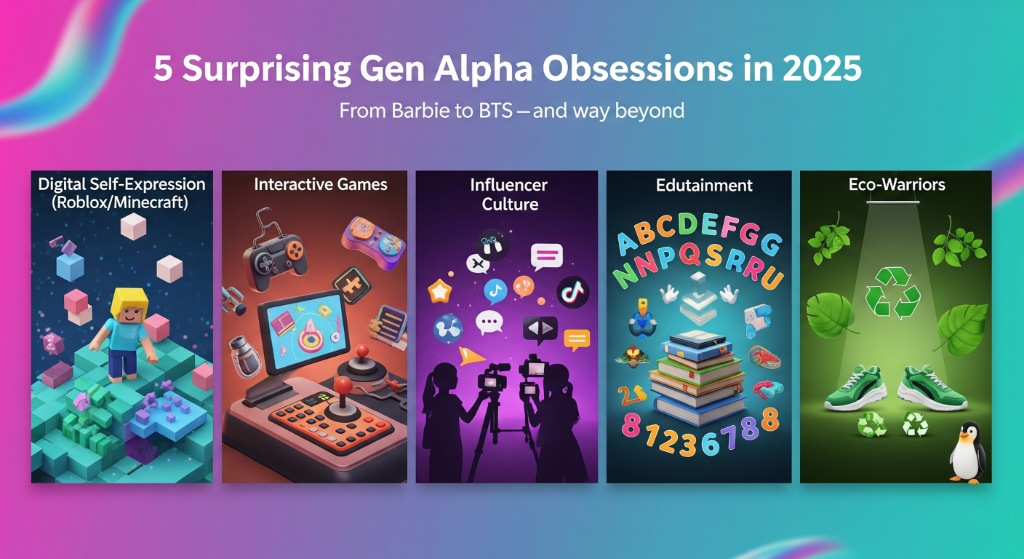
Short answer: In 2025, Gen Alpha (born 2010–2025) is obsessed with five things: building digital worlds in Roblox and Minecraft, interactive mobile gaming, peer-like influencers on YouTube and TikTok, edutainment from creators like Ms. Rachel and Cocomelon, and eco-conscious living shaped by Millennial parents.
Barbie dolls still sparkle in toy stores and BTS posters still cover bedroom walls. But Gen Alpha, the youngest and most digitally fluent generation yet, has moved far past mainstream fandoms. Born between 2010 and 2025, these kids are drawn to creative autonomy, social savvy, and ethical awareness.
Here are five unexpected obsessions fuelling Gen Alpha’s hearts and screens in 2025.
Why are Gen Alpha kids building their own digital worlds?
Forget watching cartoons or playing with dolls. Gen Alpha wants to create, customise, and control. Roblox and Minecraft have become digital playgrounds for over half of this generation. According to eMarketer, 58% engage with Minecraft and 43% regularly play Roblox.
It is not only about playing games. It is about building identity. Designing avatars, constructing dream cities, scripting mini-games — these platforms give Gen Alpha real ownership of their digital presence. As Printful puts it, this is a generation that does not just consume content. They co-create it.
“My 8-year-old daughter made an entire café in Roblox last week,” shares Riya, a Mumbai-based parent. “She even hired her friends to work in it. It’s wild — and impressive!”
This kind of virtual creativity mirrors the DIY spirit of past generations, digitised for a touchscreen world.
How does interactive gaming shape Gen Alpha entertainment?
Gen Alpha is not content to sit and watch. They want to do. Highlight PR reports that 44.9% of kids under 12 prefer mobile gaming to traditional TV, and that preference is reshaping entertainment norms.
Whether they are diving into puzzle adventures, simulating real-life experiences, or escaping into fantasy quests, they want media they can touch, move, and influence. Passive viewing belongs to the last decade.
As Mediatool observes, this generation grew up with instant gratification and expects dynamic, responsive entertainment. Smarter game design is delivering it.
Why do Gen Alpha kids trust influencers more than celebrities?
Who do Gen Alpha kids trust? Not actors or pop stars, but child and tween influencers they follow on YouTube and TikTok.
Take the “Sephora Kids” trend — young children reviewing luxury skincare and recommending routines to their peers. Baffling to many adults, the trend shows how social media now shapes tastes even in the under-12 set. LinkedIn reports that 44% of Gen Alpha use TikTok, overtaking traditional TV viewership at 39%.
This is not mimicry. It is relatability. Digital creators feel “real” to Gen Alpha in a way scripted characters and glossy celebrities never will.
“My son asked for a moisturizer he saw on TikTok,” laughs Arjun, a dad from Bengaluru. “He’s nine!”
It is peer influence, redefined for a digital-first world.
What does the edutainment revolution look like for Gen Alpha?
Educational content is no longer boring. Whether kids are singing along to Cocomelon, learning phonics with Ms. Rachel, or exploring STEM through animated shorts, Gen Alpha is drawn to digital tools that make learning feel like play.
YouTube has become part of the classroom. According to eMarketer, educational videos rank among the most viewed content types for this age group.
The shift is not accidental. Schools and parents are blending curriculum with creativity to match Gen Alpha’s learning style: hands-on, visual, and deeply interactive.
How are Gen Alpha kids becoming mini eco-warriors?
The most surprising obsession may be sustainability and ethical consumption.
Gen Alpha may not fully grasp climate change yet, but they are growing up in homes that prioritise eco-friendly values. Their Millennial parents pick books, shows, and brands that teach kindness, inclusivity, and planet-conscious habits. The result is a generation that sees green as cool.
GWI reports that brands like Adidas, Nike, and Under Armour have seen double-digit growth in Gen Alpha popularity over the past year, largely due to eco-forward messaging. Toy makers are also swapping plastic for recycled materials and biodegradable packaging.
“My son refuses straws now because his cartoon penguin friend said they hurt turtles,” says Nidhi, a Delhi-based teacher. “That’s influence!”
Gen Alpha is shaping culture, not just following it
From building pixelated cities in Minecraft to forming early opinions on climate ethics, Gen Alpha’s obsessions are signals. They point to a generation that thinks, feels, and creates differently.
Yes, Barbie still twirls in sparkly dresses and BTS still rocks global stages. Look closer and you will see something more powerful: a generation shaping the future on their own terms, digitally curious, emotionally tuned-in, and socially aware.
Are we ready to keep up? Gen Alpha is not waiting for permission. They are already rewriting the rulebook, one avatar, one video, and one tiny protest at a time.
FAQs about Gen Alpha obsessions in 2025
What are Gen Alpha kids obsessed with in 2025?
Five obsessions stand out: building worlds in Roblox and Minecraft, interactive mobile gaming, peer-like influencers on YouTube and TikTok, edutainment from creators like Cocomelon and Ms. Rachel, and sustainability shaped by Millennial parents.
Why do Gen Alpha kids love Roblox and Minecraft?
According to eMarketer, 58% engage with Minecraft and 43% play Roblox regularly. The pull is creative ownership: designing avatars, constructing dream cities, and scripting mini-games gives them real control of their digital identity.
How much time does Gen Alpha spend on TikTok and mobile games?
LinkedIn reports 44% of Gen Alpha use TikTok, overtaking traditional TV at 39%. Highlight PR reports 44.9% of kids under 12 prefer mobile gaming to traditional TV.
Why do Gen Alpha kids care about sustainability?
Their Millennial parents pick eco-conscious books, shows, and brands. GWI notes brands like Adidas, Nike, and Under Armour saw double-digit growth in Gen Alpha popularity over the past year, largely from eco-forward messaging.
Who are the most popular creators for Gen Alpha kids?
Edutainment leaders include Ms. Rachel for phonics, Cocomelon for nursery rhymes, and India’s own Mighty Little Bheem for cultural storytelling. YouTube and TikTok child and tween influencers also dominate their attention.