Short answer: Gen Alpha entrepreneurs, born between 2010 and 2024, are building businesses before high school thanks to digital-native skills, early exposure to side-hustle culture, purpose-driven thinking and a global mindset. A 2024 Common Sense Media report found 80% of children aged 8-12 have used digital creation tools, giving them a real startup head start.
Picture an entrepreneur and you might think of a hoodie-clad twenty-something pitching a startup in a boardroom. In 2025, adjust that image. The next generation of founders may be sitting in a fifth-grade classroom, designing an eco-friendly slime business or coding a game for their classmates.
Gen Alpha, the youngest generation, was born between 2010 and 2024. Years away from voting or driving, many already show strong entrepreneurial instincts. It’s a shift in mindset, fuelled by tech, purpose and a different worldview. Here’s why Gen Alpha might be better entrepreneurs than you think.
Why are Gen Alpha kids already digitally startup-ready?
Gen Alpha was born into a tech-saturated world. Smartphones, AI assistants, coding games and YouTube tutorials aren’t tools for them. They’re part of how they learn, play and connect. According to a 2024 report by Common Sense Media, 80% of children aged 8-12 have used digital creation tools like video editors or website builders.
That means they already know how to launch and scale digital content, something most millennial entrepreneurs had to learn from scratch.
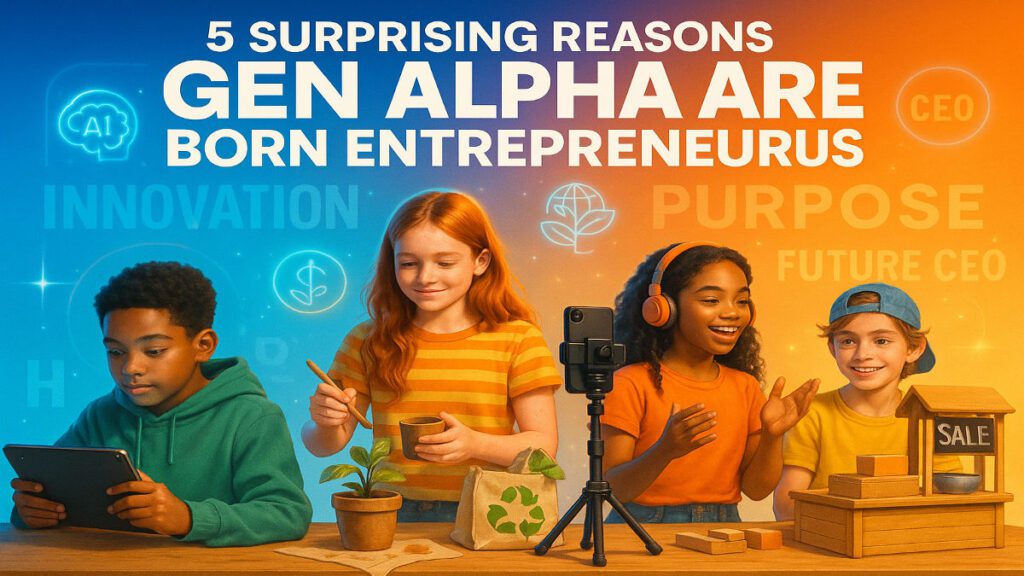
Take 11-year-old Sara from Mumbai, who runs a YouTube channel reviewing books and stationery and earns enough to fund her art supplies. “I watched other creators and thought, why not me?” she says. That confidence, paired with fluency in digital tools, is a powerful head start.
How does Gen Alpha get early exposure to entrepreneurship?
Unlike earlier generations, Gen Alpha sees entrepreneurship everywhere. Not only in textbooks, but on TikTok, Instagram and in their own families. The gig economy is steady, side hustles are normal, and kids grow up with role models who turn hobbies into income.
They don’t just dream of being doctors or engineers. They want to launch startups, build apps or become content creators with a mission. Platforms like Lemonade Stand and Kidpreneurs already teach kids business basics through interactive learning.
When children see that creativity and hustle can lead to real results, they begin thinking entrepreneurially by default. Starting isn’t something that waits for adulthood.
Is Gen Alpha really driven more by purpose than profit?
One striking quality of Gen Alpha is their awareness of the world. Climate change, inequality, mental health. These aren’t abstract topics for them. They feel them.
That awareness drives a desire to build businesses that solve real problems. According to a 2023 UNICEF-World Economic Forum survey, over 70% of Gen Alpha respondents said they wanted to work in roles that make the world a better place.
Don’t be surprised if tomorrow’s hottest startups are led by 14-year-olds creating sustainable fashion lines, mental wellness apps, or eco-conscious packaging. For Gen Alpha, profit isn’t the only measure of success. Purpose matters more.
Why is Gen Alpha so adaptive and self-taught?
In a fast-changing world, adaptability is necessary. Gen Alpha excels at it. They’ve grown up with rapid technological evolution, constant updates and shifting norms.
They also know how to teach themselves. Need to learn how to code? There’s a YouTube video for that. Want to market a product on Instagram? Follow a few creators and reverse-engineer their tactics.
They’re natural lifelong learners, comfortable with online education, peer collaboration and rapid experimentation. Every one of those traits matters for startup success.
How does global thinking give Gen Alpha an edge?
Raised in a hyperconnected world, Gen Alpha doesn’t see borders the way older generations did. They collaborate with peers in other countries through online games, co-create content with global communities and follow trends across languages and cultures.
That global perspective and openness to cross-cultural collaboration sets them up to build inclusive, scalable businesses from day one. As companies increasingly value diversity, empathy and cross-border cooperation, Gen Alpha’s worldview becomes a competitive advantage.
Don’t underestimate the kid CEO
It might feel strange to imagine a 10-year-old as a business founder, but Gen Alpha is redefining what entrepreneurship looks like. They’re not waiting for permission or a college degree. They observe the world, spot gaps and create solutions, sometimes between homework and football practice.
They still have a lot to learn. With the right guidance and resources, this generation has the potential to become the most entrepreneurial in history.
So the next time you see a child selling handmade crafts online, coding a first app, or brainstorming ways to reduce plastic waste, don’t dismiss it as a phase. You might be watching the future of business in action.
And who knows? One of them might just be your future boss.
FAQs about Gen Alpha entrepreneurs
What years define Gen Alpha?
Gen Alpha covers children born between 2010 and 2024. They follow Gen Z and are the first generation fully raised on smartphones, tablets and AI assistants as everyday tools.
What makes Gen Alpha different from Gen Z as entrepreneurs?
Gen Z had to adapt to social media and digital tools as teenagers. Gen Alpha has never known life without them, which is why 80% of children aged 8-12 already use digital creation tools according to Common Sense Media’s 2024 report. That early fluency shortens the learning curve for launching online businesses.
How can parents support a young Gen Alpha entrepreneur?
Encourage curiosity, help set up parental accounts on platforms like YouTube or Etsy, and use age-appropriate learning platforms like Kidpreneurs or Lemonade Stand. Parents can also model healthy business habits by talking openly about money, saving and customer feedback.
What kind of businesses are Gen Alpha kids starting?
Common ventures include YouTube and Instagram channels, eco-friendly product lines, digital art stores, coded games, and small handmade-craft businesses. The 2023 UNICEF-WEF survey noted over 70% of Gen Alpha respondents want roles that make the world better, which explains the mission-led angle.
Are there risks to kids becoming entrepreneurs so young?
Yes. Screen time, privacy, age limits on platforms and managing stress are real concerns. Parental oversight, healthy boundaries and clear communication about rest and play help kids gain the benefits of early entrepreneurship without burning out.