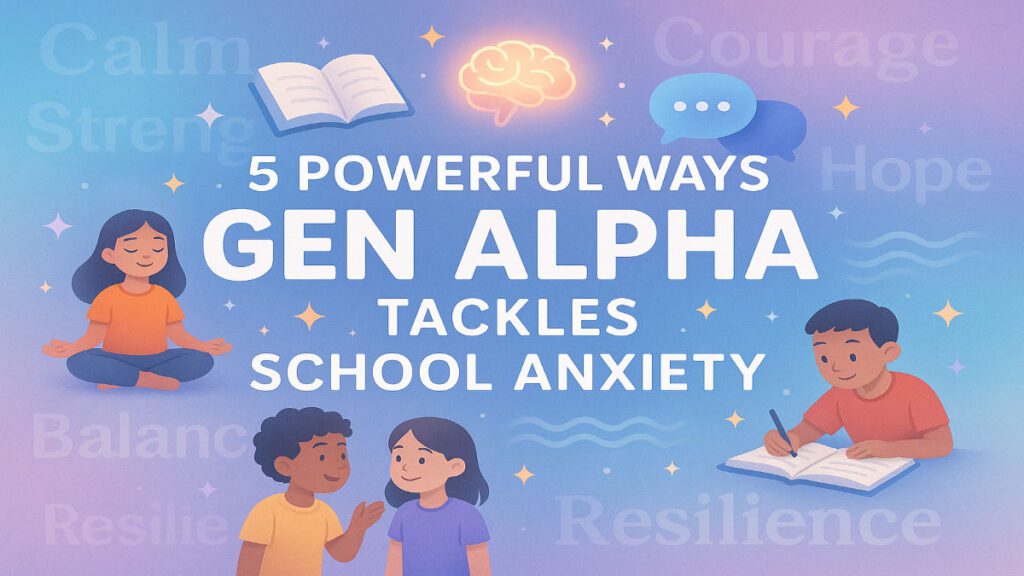
Short answer: Gen Alpha (born after 2013) handles school anxiety by talking openly to parents, friends, and counsellors, using apps like BYJU’S, Khan Academy, Calm Kids, and Smiling Mind, carving out offline time, learning social-emotional skills in class, and pushing schools to include mental health in the curriculum.
Generation Alpha is growing up with screens, heavy school demands, and constant social pressure. They are not dealing with it quietly. They confront academic stress with a mix of digital tools and old-fashioned conversation.
In 2025, this generation is showing that resilience means adapting, expressing, and recharging. Here are five ways they are handling school pressure, often with more emotional intelligence than adults expect.
How does Gen Alpha seek support for school stress?
One defining trait of Gen Alpha is their willingness to open up. They trust both digital and real-life support systems.
Whether it is a dinner-table conversation with a parent or a message to a friend on WhatsApp, they talk. A 2024 National Law University Delhi report notes that more students aged 8 to 12 are accessing counselling support, both in school and online, than ever before.
Take 11-year-old Riya. When she felt overwhelmed before a math exam, she did not bottle it up. She messaged her best friend, joined a calming YouTube community, and later spoke to her school counsellor. “Talking helped me breathe,” she says. “I just needed to not feel alone.”
This generation is not afraid to name what they feel. That is a big step forward.
How does Gen Alpha use technology to manage anxiety?
While older generations see screens as stressors, Gen Alpha is redefining the relationship. They use digital tools for support and learning, not only distraction.
Personalised learning apps like BYJU’S and Khan Academy let them study at their own pace. Gamified platforms like Duolingo and Prodigy make studying feel more like play than punishment.
Mindfulness apps matter too. Calm Kids, Smiling Mind, and YouTube meditations for children are teaching Gen Alpha to pause, breathe, and reflect.
Creativity has gone digital as well. From animation on Flipaclip to music production on GarageBand, kids are expressing emotions through art and rhythm. Many are choosing how and when to use screens, something even adults struggle with.
Why is offline time important to Gen Alpha?
As digitally fluent as they are, Gen Alpha is intentional about offline hours. They understand that being constantly online can drain them, and many step away when needed.
Findings from IJFMR (2024) show that more children are self-monitoring their screen time and asking for device-free zones at home. Time with pets, cycling with friends, or painting is how many find joy in the real world.
Twelve-year-old Aryan, a budding coder from Pune, puts it best: “After coding for an hour, I skateboard. It clears my head.”
They are not rejecting technology. They are learning to coexist with it.
How are Indian schools teaching emotional skills?
More schools in 2025 are weaving emotional education into the curriculum. Mindfulness minutes, breathing breaks, and classroom check-ins are becoming common, including in urban Indian schools.
Through role-play and social-emotional learning (SEL), students learn to identify feelings, empathise with peers, and manage frustration. The result is a generation that is emotionally literate and more resilient.
They are also breaking taboos. Talking about therapy, stress, or feeling low is no longer whispered. It is normal.
As one primary school teacher in Delhi puts it, “My students talk about ‘self-care’ like it’s a school subject, and honestly, it should be.”
How is Gen Alpha reshaping education?
Gen Alpha is not accepting school pressure. They are reshaping the system that causes it.
They want relevant, interactive learning. Rote memorisation does not cut it anymore. They are pushing schools toward project-based learning, real-world problem-solving, and mental health education.
Educators are listening. Mental health workshops, peer-led support groups, and flexible assessment models are entering the academic landscape, largely because this generation demands it.
As 10-year-old Kian says, “Why can’t we learn how to feel better too? Not just how to get full marks?”
That question is shaping a more compassionate, student-first approach to education.
Gen Alpha Is Growing Up With Grit and Grace
In 2025, Gen Alpha is proving that resilience is not about being tough. It is about being self-aware, supported, and intentional.
They are using every tool available, from tech to talk, to navigate school stress. More importantly, they are doing it with kindness toward themselves and others.
As we watch them grow, we would be wise to follow their lead.
Listen more, judge less, support better. The way Gen Alpha handles anxiety today will shape the well-being of our world tomorrow.
FAQs on Gen Alpha and School Anxiety
What causes school anxiety in Gen Alpha kids?
Academic pressure, social expectations, heavy screen exposure, and a constant flow of information through apps and social media are the main stressors. Many kids feel squeezed between school demands and online life.
Which apps help Gen Alpha manage stress?
Mindfulness apps like Calm Kids and Smiling Mind are popular. Learning apps like BYJU’S and Khan Academy reduce pressure by letting kids study at their own pace, and gamified tools like Duolingo and Prodigy make learning feel less stressful.
How can parents help Gen Alpha with anxiety?
Open conversations at home, encouraging offline time, connecting kids with school counsellors, and modelling healthy screen habits all help. Parents who listen without judgement make the biggest difference.
Are Indian schools addressing mental health in 2025?
Yes. Many urban Indian schools now include mindfulness minutes, breathing breaks, SEL activities, peer support groups, and mental health workshops as part of the regular school day.
Why is Gen Alpha more open about mental health?
They have grown up with mental health in mainstream conversation, online and at home. Millennial parents, social media, and school-based SEL programmes have all helped normalise talking about feelings and seeking help.