

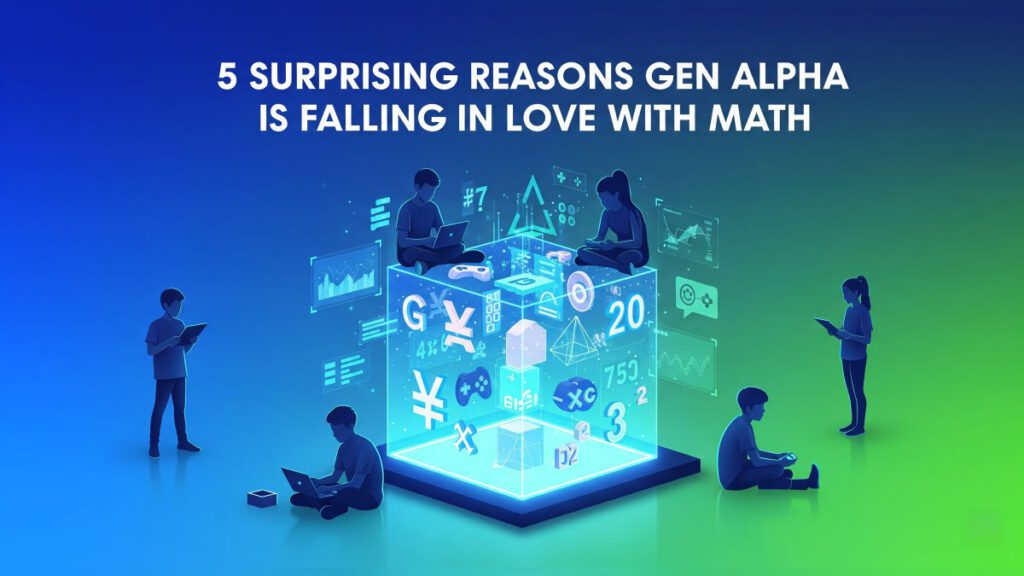
Short answer: In 2025, Generation Alpha (born 2013-2025) is warming up to math because it now links directly to what they love: coding, games, and creation. Platforms like Prodigy, BYJU’S, Scratch, Tynker and Roblox Studio turn math into play. A 2024 GWI report says over 70% of Millennial parents actively push STEM at home, which shifts how kids see math from the start.
Not just screens and games: what really interests today’s kids
Ask any adult to name a kid’s favourite school subject, and you’ll hear “art,” “sports,” or “coding.” But in 2025, a surprising contender is climbing up: mathematics. The subject once feared by many is quietly staging a comeback among Generation Alpha.
Born between 2013 and 2025, Gen Alpha is growing up in a world shaped by AI, smartphones, and YouTube tutorials. They’re tech-savvy, curious, and drawn to anything interactive and real. Technology, science and creative arts still top their popularity charts. Math is gaining ground thanks to unexpected shifts in how it’s taught, perceived and experienced.
What subjects is Gen Alpha actually enjoying?
Gen Alpha loves subjects that mix hands-on learning with creativity. Coding with visual interfaces, designing games in Minecraft, or building robots that solve puzzles. Platforms like Roblox Studio and Tynker aren’t hobbies alone, they’re how many Gen Alpha kids are learning logic, design, and yes, math.
Other favourites include:
- Digital Skills and Coding: Game creation, animation, video editing, basic app development.
- Creative Arts: Digital design, music production, and drama that lets them express emotions.
- Science with Experiments: Seeing biology or physics in real time, not just in theory.
- Physical Education: Sports and games for health and social bonding.
Nestled inside all of this is something intriguing: math, once dismissed as rigid or abstract, is quietly becoming a subject Gen Alpha actually enjoys.
1. Why does math feel like a superpower to Gen Alpha?
For a generation raised on tech, it didn’t take long to notice that behind every game, app, or robot lies math.
Coding is rooted in logical sequencing and problem-solving, both mathematical skills. As Gen Alpha dives into creating digital experiences, they see math as powerful. It helps them build what they imagine, from apps to AI bots.
As one 10-year-old recently said during a school coding workshop: “I like math now because it helps me fix bugs in my game faster. I never thought of it like that before!”
2. How has gamification changed math learning?
Gone are the days of endless worksheets and rote learning. In 2025, math is becoming a game.
Apps like Prodigy and platforms like BYJU’S have turned arithmetic into level-based challenges, puzzles and adventures. The result? Math feels less like a chore and more like a quest.
These platforms use adaptive learning, tailoring problems to each student’s pace, which makes math feel achievable and personal. Kids are hooked by progress, not pressure.
3. Why does math match Gen Alpha’s problem-solving instincts?
One defining trait of Gen Alpha is deep curiosity. They don’t want to memorise facts, they want to know how and why things work.
Math, at its core, is about solving problems. When introduced through tools like Scratch or Tynker, which let children build projects using logic blocks and visual commands, math looks like a puzzle, not punishment. It isn’t about the answer. It’s about the thrill of figuring it out.
4. How are edutainment and mathfluencers helping?
On YouTube and TikTok, a new wave of creators, math “edutainers”, are breaking down complex topics using humour, storytelling and real-world scenarios. They turn algebra into detective stories and geometry into art challenges.
For Gen Alpha, which consumes most of its learning through video, this makes a difference. It’s fun, it’s visual, and it’s relatable.
5. Why is STEM culture a family affair for Gen Alpha?
Many of Gen Alpha’s parents are Millennials, a generation aware of how tech and innovation are shaping the future. These parents often encourage STEM early, enrolling kids in coding bootcamps, science fairs and math enrichment programs.
According to a 2024 GWI report, over 70% of Millennial parents actively promote STEM learning at home, with math seen as a core life skill, not just a school subject. This cultural shift is reshaping how kids view math from a very young age.
Math isn’t just making a comeback, it’s evolving
The world Gen Alpha is growing up in is fast-moving and full of innovation. Creativity, empathy and communication are all vital, and math is re-emerging as a critical skill, academically, creatively and practically.
The difference? We’re teaching it in ways that connect to kids’ lives and fuel curiosity. Next time you hear a kid say, “Math is my favourite subject,” don’t be surprised.
FAQs about Gen Alpha and math
Why is Gen Alpha starting to enjoy math?
Because math now connects directly to what Gen Alpha already loves: coding, games, building apps and creating digital experiences. It feels like a superpower, not homework. Gamified apps, adaptive platforms and video-based edutainers also make it fun and relatable.
Which apps and platforms make math fun for Gen Alpha kids?
Prodigy and BYJU’S turn arithmetic into level-based quests with adaptive difficulty. Scratch and Tynker teach math through logic blocks and coding projects. Roblox Studio and Minecraft bring math into game design, while YouTube and TikTok creators explain topics through humour and storytelling.
What years define Gen Alpha?
Gen Alpha are kids born between 2013 and 2025. They’re the first generation to grow up fully in the smartphone and AI era, which shapes how they learn, including how they approach math.
How are Millennial parents helping Gen Alpha love math?
According to a 2024 GWI report, over 70% of Millennial parents actively promote STEM learning at home. They enrol kids in coding bootcamps, science fairs and math enrichment programs, and treat math as a core life skill, not just a school subject.
Is gamified math as effective as traditional teaching?
Gamified platforms use adaptive learning that tailors problems to each student’s pace, which keeps kids engaged. They work best alongside strong classroom teaching, not as a replacement.