Short answer: Gen Alpha, born between 2010 and 2024, may be the most inventive generation yet. Early tech access, hands-on learning, a problem-filled world, creator culture, entrepreneurial ambition, and comfort with failure drive their daily invention.
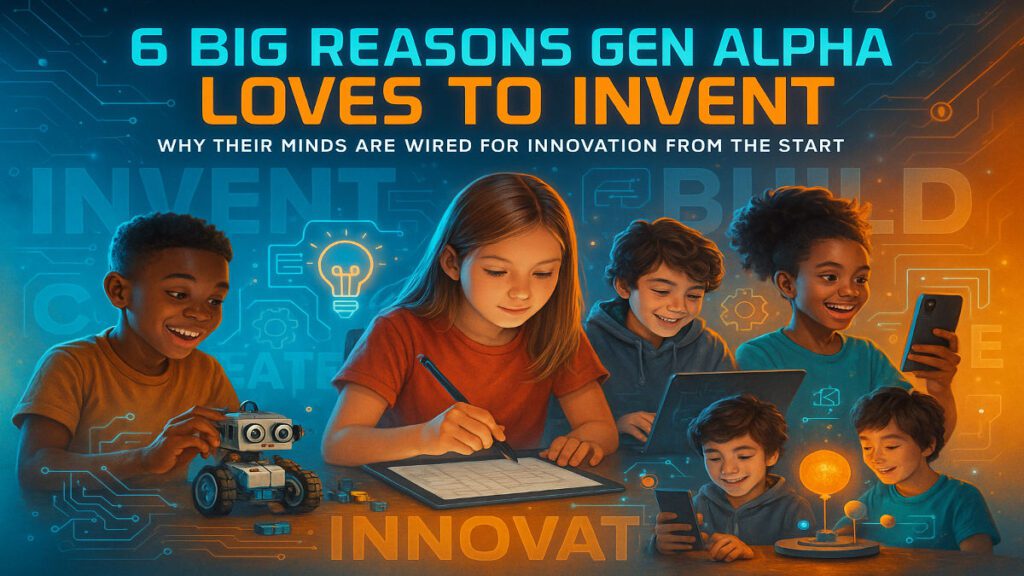
Why their minds are wired for innovation from the start.
Walk into any home, school, or play area in 2025, and you will likely see a child building, coding, or creating something new rather than just playing with toys. This is Gen Alpha, the generation born between 2010 and 2024, growing up with unprecedented technological access and global complexity.
Past generations often had to wait until adulthood to start inventing. Gen Alpha is doing it now, in bedrooms, on tablets, and inside virtual worlds. So what makes this generation so inclined to invent? Here are six reasons Gen Alpha may be the most inventive generation yet.
1. Why have they had a tech toolbox since toddlerhood?
From the moment many Gen Alpha kids could walk, they could also swipe. By age two, it is common for them to have access to a tablet. By age eight, a smartphone. This is about comfort, familiarity, and fluency, not just screen time.
Children use platforms like Scratch, Tynker, and Roblox Studio to experiment with coding, build games, and bring ideas to life. These interfaces feel as intuitive to them as coloring books did to earlier generations.
Take 11-year-old Maya. She designed an entire Roblox game to raise awareness about plastic pollution. “I wanted it to be fun but also teach people to clean the oceans,” she said. That is invention rooted in empathy and tech.
2. How do they learn through interaction, not memorization?
Gen Alpha does not sit still and listen. They tap, drag, build, and create. According to Sapphire International School, they thrive on hands-on, visual learning. This trains the brain to solve problems actively rather than consume facts passively, which naturally encourages invention.
Whether using AR to visualize the solar system or creating digital dioramas on Canva, their classroom looks more like a maker space than a lecture hall. Learning has become doing, and doing often leads to inventing.
3. Why does a world that needs fixing shape them?
This generation has witnessed a pandemic, extreme climate events, and widespread social change before their teens. That shapes a solution-driven worldview.
A 2023 UNICEF report showed that over 60% of Gen Alpha kids express a strong desire to help solve world problems, whether saving the planet or helping the homeless. This desire fuels a mindset that leans toward creating better solutions: new gadgets, smarter tools, or creative services.
Because they have seen that adults do not always have the answers, many Gen Alpha kids believe they can help now, not later.
4. How do they see creativity and influence as a career path?
Platforms like YouTube, TikTok, and Instagram have put creator culture in Gen Alpha’s DNA. They are not just consuming; they are making. Stop-motion videos, DIY crafts, and reviews of homemade inventions show many kids building something unique to share with an audience.
“Kidfluencers” like Ryan Kaji of Ryan’s World have turned playful curiosity into multimillion-dollar brands. That visibility inspires young minds to think like inventors: imagining what they can create, promote, and sell.
5. Why are they mini entrepreneurs in the making?
A 2024 report by FutureBridge indicates Gen Alpha will likely be the most entrepreneurial generation in history. Many already dream of launching a YouTube channel, an app, or their own product line before they turn 18.
Online marketplaces, digital storefronts, and creator platforms have removed traditional barriers to starting a business. Want to sell a new toy idea or a handmade fidget tool? With a little help, a 10-year-old can launch it online.
This energy comes from creativity, curiosity, and a desire to invent something that matters, not ambition alone.
6. How does Gen Alpha handle failure?
One of the most striking differences is their comfort with failure. Digital-native platforms and coding tools have taught them that mistakes are part of building something great.
As Ernst & Young noted in a recent study, this “failure is learning” mindset is baked into digital-native behavior. Gen Alpha kids expect to try, test, break, and redo, whether they are building a LEGO robot or coding a new game level.
Viewing mistakes as stepping stones instead of setbacks gives any aspiring inventor a strong advantage.
Ready to change the world, one idea at a time
In 2025, Gen Alpha is not waiting to be old enough to invent. They are already imagining new possibilities, solving problems, and building the future from their bedrooms and classrooms.
Access to technology, hands-on learning, exposure to real-world issues, and comfort with failing fast gives them a unique edge. They are not afraid to ask, “What if?” More importantly, they are bold enough to find out.
Next time you see a Gen Alpha child tinkering on a tablet or sketching wild ideas in a notebook, pay attention. You might be watching the first draft of the next big invention.
FAQs about Gen Alpha inventors
Who is Gen Alpha?
Gen Alpha is the generation born between 2010 and 2024. They are growing up with early access to tablets, smartphones, and platforms like Scratch, Tynker, and Roblox Studio.
What tools does Gen Alpha use to invent?
Common tools include Scratch, Tynker, Roblox Studio, Canva, LEGO robotics kits, and AR apps for visual learning. Many kids combine coding, design, and hands-on building.
Why does Gen Alpha want to solve global problems?
They have lived through a pandemic, climate events, and rapid social change. A 2023 UNICEF report found over 60% of Gen Alpha kids express a strong desire to help solve world problems.
Is Gen Alpha really entrepreneurial?
Yes. A 2024 FutureBridge report suggests Gen Alpha will likely be the most entrepreneurial generation in history. Many plan to launch a channel, app, or product before they turn 18.
How does Gen Alpha view failure?
As Ernst & Young noted, Gen Alpha treats mistakes as part of building. Coding and maker platforms train them to try, test, break, and redo without fear of failure.