
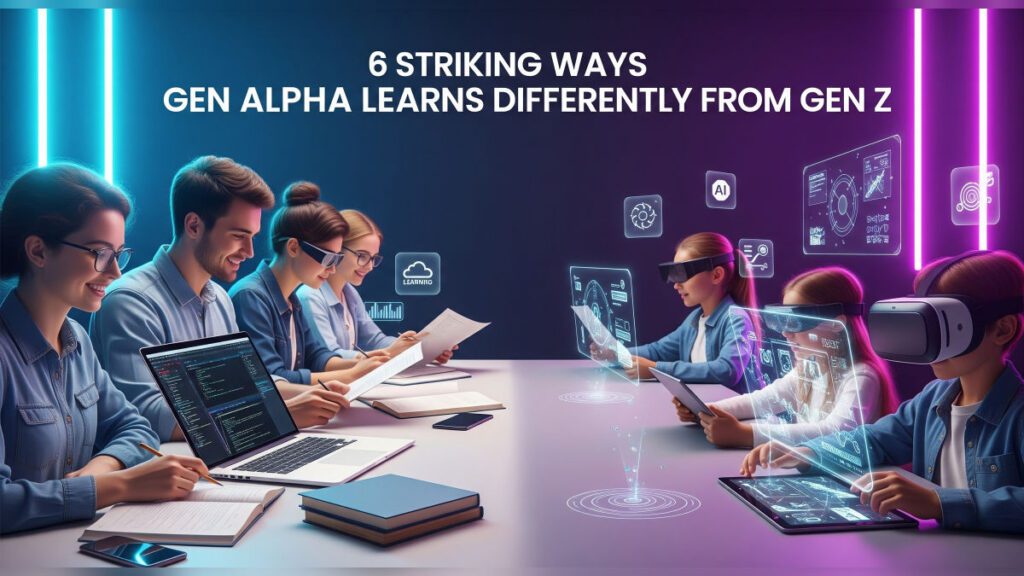
Short answer: Gen Z (born 1997 to 2012) adapted to digital learning through smartphones, YouTube, and online courses. Gen Alpha (born from 2013 onward) is AI-native, prefers gamified micro-lessons under five minutes, and treats virtual classrooms as equal to physical ones. The shift is pushing parents, educators, and content creators in India to rethink lesson design for 2025.
Why does understanding this shift matter in 2025?
No two generations learn the same way. Gen Z grew up with smartphones, social media, and online courses. Gen Alpha is growing up with AI, AR, and VR as everyday tools, not novelties.
For parents, educators, and content creators, the gap is worth paying attention to. Here is how Gen Alpha is rewriting the rules of learning, and why it matters now.
How does tech-native Gen Alpha differ from tech-savvy Gen Z?
Gen Z grew up alongside technology. They were introduced to it, adapted, and made it their own. From YouTube tutorials to school projects in Google Docs and Canva, they became fluent digital learners.
Gen Alpha has never known a world without smart devices. They are AI-native, born into homes with voice assistants, personalised recommendation algorithms, and immersive digital experiences. Swiping, speaking to AI, or wearing AR glasses feels as natural to them as flipping a page did to earlier generations.
Take my nephew, for instance. At just six, he confidently tells Alexa to play educational games and uses an AI-powered app to read bedtime stories. For him, a tablet is less of a gadget and more of a learning companion.
Why is personalised learning bigger for Gen Alpha?
Gen Z sparked the shift toward personalised, on-demand learning. They embraced Coursera, Skillshare, and YouTube, finding freedom outside traditional classrooms. Many picked up coding, design, or editing on their own.
Gen Alpha takes personalisation further. Adaptive platforms powered by AI build their learning journeys from day one. They thrive on gamified apps that adjust in real time based on pace and performance. Their educational tools are visual, interactive, and story-driven, often looking more like games than textbooks.
In 2025, apps like BYJU’S, Duolingo, and Khan Academy Kids tailor every interaction to a child’s cognitive and emotional development.
What do shorter attention spans mean for lesson design?
Gen Z has a short attention span, often juggling TikTok, schoolwork, and social causes at once. Gen Alpha flips between tasks even faster. According to Nikola Roza’s research, the average Gen Alpha switches digital tasks every four minutes.
Traditional 30-minute lectures do not work for them. Educational content needs to be short, sharp, and story-driven, ideally in bursts of three to five minutes. Quick animations, micro-lessons, and interactive games are the way forward, both to teach and to hold attention.
Why are cloudrooms replacing classrooms for Gen Alpha?
Gen Z was introduced to remote learning during the COVID-19 pandemic, but many still value physical classrooms and see college as a stepping stone toward a career.
Gen Alpha was introduced to virtual classrooms from the very beginning. Many of them attended their first years of school through tablets and video calls. For them, physical and digital learning environments are interchangeable, and the idea of college itself may evolve.
According to GWI, Gen Alpha may view formal higher education as optional, preferring self-paced digital credentials or immersive learning programmes instead.
How do Gen Alpha learners collaborate globally?
Gen Z enjoys group projects and virtual hangouts, often learning through collaboration. They thrive in social environments, physical or digital.
Gen Alpha goes a step further. Their collaborative mindset is inclusive and digital-first. They expect diversity and cooperation across borders. Multiplayer educational games and shared AR experiences are everyday learning tools, not novelties.
As Navigate360 reports, this generation values equity, representation, and collaboration more than ever, shaping not just what they learn but how they learn it.
How do values shape Gen Alpha learning?
Both generations care about the world, but their expressions differ. Gen Z is socially conscious, vocal about mental health, climate change, and systemic inequality. They expect accountability from institutions and transparency from brands.
Gen Alpha, influenced by their Gen Z siblings and parents, inherits these values and takes them further. They expect climate solutions built into their learning tools, diversity in their curriculum, and causes that are interactive and measurable.
They are not only learning about the world. They want to change it, and they expect technology to help.
A call to adapt, not resist
The way Gen Alpha learns is different from anything we have seen before. Their digital-first, emotionally intelligent, personalised education ecosystem is pushing educators, parents, and creators to rethink lesson planning and content design.
This is not a cause for concern. It is an invitation to reimagine learning as something dynamic and connected to who children are becoming. The future of education is already here, in the hands of a child using a gamified app or an immersive virtual classroom.
Meet them where they are, and build a smarter, kinder world together.
FAQs about Gen Alpha vs Gen Z learning
What years define Gen Alpha and Gen Z?
Gen Z was born between 1997 and 2012. Gen Alpha was born from 2013 onward. The two generations overlap in many households, with Gen Alpha often influenced by older Gen Z siblings.
How often does Gen Alpha switch digital tasks?
According to Nikola Roza’s research, the average Gen Alpha switches digital tasks every four minutes. This is why micro-lessons of three to five minutes work better than 30-minute lectures.
Which learning apps are popular with Gen Alpha in 2025?
BYJU’S, Duolingo, and Khan Academy Kids are widely used. These adaptive, AI-powered platforms tailor lessons to each child’s cognitive and emotional development rather than pushing a fixed curriculum.
Will Gen Alpha still go to college?
According to GWI, Gen Alpha may view formal higher education as optional. Many are expected to prefer self-paced digital credentials or immersive learning programmes over a traditional four-year degree.
How can parents support Gen Alpha learners?
Blend screen time with real-life experiences. Pick apps that match your child’s age and interests, encourage collaboration with peers, and stay involved in their learning journey rather than leaving them alone with a tablet.