

Short answer: ServiceNow’s 2025 Workforce Skills Forecast, built with Pearson’s labour-market models, projects that over 10 million Indian roles will be redefined by agentic AI by 2030, while India’s tech workforce is set to add roughly 3 million new tech jobs. Manufacturing, retail and education face the largest absolute impact.
A new generation of AI — systems that plan, decide and act autonomously — is already rewriting job descriptions in India. ServiceNow’s 2025 Workforce Skills Forecast, developed with Pearson’s labor-market models, projects that over 10 million Indian roles will be redefined by agentic AI by 2030, while India’s tech workforce is poised to add roughly 3 million new tech jobs as organisations scale AI across operations.

What is agentic AI, and how is it different from earlier waves?
Agentic AI describes AI systems (often organised as “agents”) that do more than reply to prompts. They set sub-goals, plan multi-step workflows, call tools and APIs, learn from feedback and execute tasks with limited human supervision.
Earlier automation replaced single tasks. Agentic systems can orchestrate whole processes end-to-end. That shifts human work from rule-following to oversight, design and exception handling. This is a capability leap, not a semantic tweak. It changes which parts of a job are inherently automatable and which become higher-value human work.

What do the hard numbers actually say?
ServiceNow’s Faethm-powered analysis finds India will see one of the largest absolute workforce effects among the countries studied. Because India’s workforce is so large, even modest percentage shifts translate to millions of roles changing in character.
Press coverage and the ServiceNow summary place the headline figure at ≈10.3–10.5 million Indian roles reshaped by 2030, alongside a projected ~3 million rise in tech jobs to design, implement and govern these systems. The shifts are concentrated: manufacturing, retail and education are flagged repeatedly among the most affected sectors.

How will agentic AI change work? Three concrete patterns
Automation of repetitive orchestration. Tasks that involve routine coordination, data entry, claims processing or schedule juggling are being consolidated into agentic workflows. Payroll and timekeeping clerks, data-entry roles and routine communications work show high automation potential. Humans shift from doer to auditor and exception-handler.
Augmentation — humans supervising digital labour. Implementation consultants, system administrators and many service operators will move toward designing agent goals, validating outputs, managing toolchains and embedding AI into business processes. Productivity goes up; required skill sets change.
Creation of new specialist roles. Demand for AI Configurators, Data Engineers, Experience Designers and AI Governance leads is rising quickly. The ServiceNow analysis flags these as the fastest-growing hiring needs in India’s AI transition.

Which Indian sectors are most exposed?
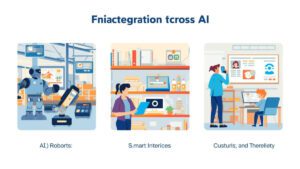
Manufacturing. Agentic agents excel at supply-chain orchestration, predictive maintenance, quality-control triage and adaptive scheduling. When these capabilities are embedded into factories, roles that monitored and executed repetitive coordination tasks shrink. Demand rises for people who design agent workflows, validate models and manage edge-to-cloud data flows. ServiceNow and Indian media summaries place manufacturing among the largest absolute impacts in India.
Retail. Inventory management, dynamic pricing, customer triage and returns handling are prime candidates for agentification. Agents run multistep customer journeys and inventory optimisations in near real-time. Human roles lean more into strategy, customer experience design and exception management. Retail is listed as a top impacted sector in India.
Education. Adaptive tutoring, automated assessment and administrative automation change both classroom and back-office functions. Teachers and administrators will use agentic tools to personalise learning at scale, increasing reach while demanding new pedagogical and digital skills. Education shows a meaningful absolute headcount effect in the ServiceNow findings.
(The sector counts reported in media summarise ServiceNow’s modeling. The underlying ServiceNow/Pearson dataset and methods are transparent about modeling choices and the role of Faethm labor-market tooling.)
Where’s the upside for India?
Agentic AI isn’t only substitution; it unlocks scale. Indian enterprises that move from pilots to enterprise-grade agentic workflows can compress cycles (faster case resolution, fewer manual handoffs) and redeploy human time to product and customer work. ServiceNow calls out a possible wave of 3 million new tech jobs in India — roles that design, secure and govern agentic systems — and identifies a class of “AI Pacesetters” that have already seen substantial productivity gains. India’s demographic dividend can be amplified, provided education and reskilling scale with the tech.
What could go wrong?
Concentration of displacement risk. Jobs with high task-repeatability and few reskilling pathways are most vulnerable — payroll clerks, data keyers, simple administrative roles. Without deliberate reskilling programmes, local shocks can become structural unemployment.
Data, security and governance concerns. ServiceNow’s analysis notes that many enterprises cite data security and unclear skill requirements as top obstacles. Poor governance magnifies reputational and operational risk when agents act across systems.
Economic and regional mismatch. Global reports from WEF and McKinsey show the gains from automation are uneven. Without policy and investment in human capital, benefits concentrate. India’s potential is large, but realising it needs active labour-market and education policy.

What should businesses, workers and government do?
For businesses
Move from pilots to governed production. Treat agents like production software with SLOs, logs and human-in-the-loop checkpoints. Invest equivalent effort in AI governance as in functional rollout.
Design role-transition paths. Identify automatable task bundles, map adjacent role pathways, and fund accelerated internal reskilling through micro-credentials and apprenticeships.
For workers
Prioritise hybrid skills: data literacy, systems thinking, prompt and agent design, and governance/ethics skills will be high-value. Move from doing tasks to supervising, interpreting and designing agentic outcomes.
For government and education
Scale modular upskilling at national scale — certifications, public-private reskilling consortia, and incentives to embed training into hiring. India’s digital infrastructure and talent pipeline create an opening, but policy must bridge education to work.

Real examples: what’s already shipping?
Large enterprises are piloting agentic systems that assemble cross-system intelligence and take multi-step actions. Banks are testing agents that gather data from internal repositories and produce client briefs. Platform companies are trialling agent coordination protocols that let agents transact and negotiate on a user’s behalf. These pilots show how fast agentic capabilities are moving from lab to line of business.
The bottom line
Agentic AI isn’t a better chatbot. It’s a new automation layer that can redefine task boundaries across millions of Indian jobs in the coming five years — and create millions of new, higher-value roles if the nation acts. The difference between a disruptive shock and a generational opportunity will be choices made now: invest in human capital, treat agentic systems with the same operational rigour as software, and make governance and reskilling national priorities. The data says the transformation is real and sizable. The rest is policy, leadership and execution.
FAQs about agentic AI and Indian jobs
How is agentic AI different from ChatGPT-style AI?
Agentic AI doesn’t only reply to prompts. It sets sub-goals, plans multi-step workflows, calls tools and APIs, and takes actions across systems with limited human supervision. Chat AI answers questions; agentic AI executes processes.
How many Indian jobs will agentic AI transform by 2030?
ServiceNow’s 2025 Workforce Skills Forecast, using Pearson and Faethm data, projects roughly 10.3 to 10.5 million Indian roles will be redefined by agentic AI by 2030, with about 3 million new tech jobs created to design and govern these systems.
Which jobs in India are most at risk from agentic AI?
Roles with high task-repeatability and limited reskilling paths face the highest displacement risk: payroll and timekeeping clerks, data-entry workers, routine administrative roles and parts of claims processing and scheduling.
What new jobs is agentic AI creating in India?
Demand is rising for AI Configurators, Data Engineers, Experience Designers, AI Governance leads, implementation consultants and model validators — roles that design, secure and oversee agentic systems rather than compete with them.
What skills should Indian workers build for the agentic AI era?
Data literacy, systems thinking, prompt and agent design, AI governance, and ethics. Workers who can supervise, interpret and design agentic outcomes will be more valuable than those focused on single repeatable tasks.