
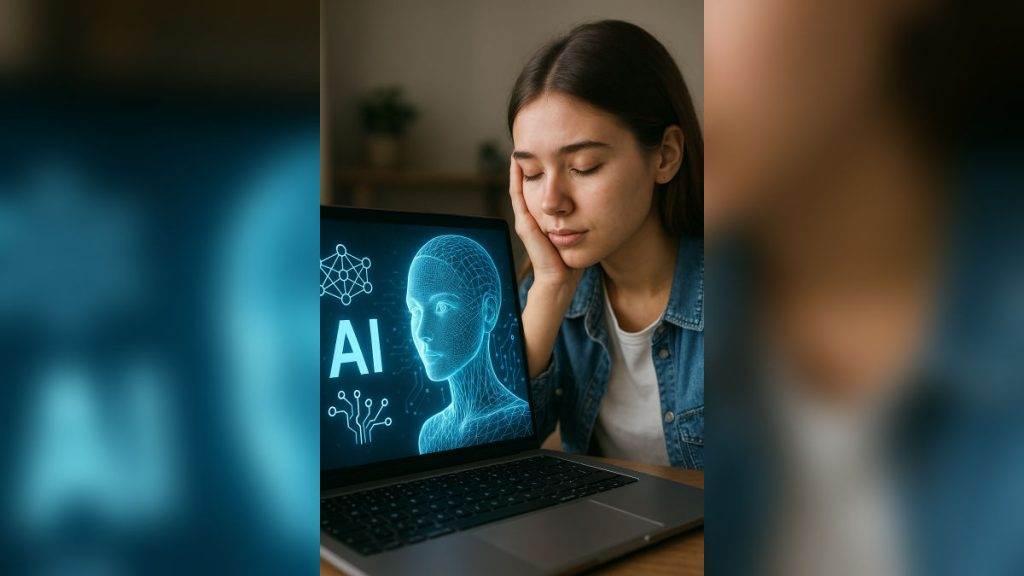
Short answer: Gen Z doesn’t treat AI as a tool. They use it as a tutor, planner, therapist and creative co-pilot, often multiple times a day. Tools like ChatGPT, Notion AI, Midjourney, DALL·E, Wysa, Replika and Snapchat’s My AI sit inside their daily routine, and a meaningful share of them have already shared emotions with one of these systems.
For most older readers, AI still sounds like software. Useful, faintly mechanical, sometimes a bit creepy. For Gen Z it’s something else.
And the difference matters. We spoke to hundreds of Gen Z respondents across India, and the pattern that came back wasn’t I use AI. It was closer to I live alongside it. School, sleep, gaming, feelings, planning the week, untangling a chemistry chapter at 1 a.m. — there’s a model in the loop somewhere.
Here’s the thing. The numbers are clear, this generation isn’t curious about AI anymore, they’re already past that.
How fluent is Gen Z with AI tools?
Pretty fluent. The old benchmark for tech literacy used to be Microsoft Office. That’s gone. Today’s teenagers and young adults move between ChatGPT, Notion AI, Midjourney and DALL·E without much friction.
Most respondents described themselves as “very familiar” or at least “somewhat familiar” with AI tools. Only a handful had never heard of them. For many, school was where it started. First as a curiosity, then as a default.
“It’s not like a new thing to us,” said a 20-year-old engineering student from Hyderabad. “It’s just… part of the way we do things now.”
For this generation, AI isn’t innovation. It’s integration.
How often does Gen Z actually use AI?
We asked, how often do you actually use AI? The most common answer? Multiple times a day.
From brainstorming a Reels caption to summarising a dense economics chapter, AI gets used as casually as Instagram does. The difference? It hands back answers, not likes.
“When I’m stuck with a concept, I ask ChatGPT before I even Google it,” shared a 19-year-old commerce student.
That’s a meaningful shift. This generation isn’t troubleshooting through forums or skimming textbooks the way older cohorts did. They’re talking to a machine that talks back. The result is a kind of second brain that’s always on, rarely judgmental, and never sighs at the question.
Is AI cheating in school, or just learning differently?
Schools are still catching up. Gen Z, meanwhile, has already built workflows.
Nearly every respondent admitted to using AI for academics. The common use cases:
- Summarising long readings
- Drafting essay structures
- Breaking down hard subjects
- Brainstorming projects and presentations
Far from cutting corners, many said it actually helped them learn faster and retain more.
“It’s like a smarter search engine that talks to you,” explained a 21-year-old literature major. “It doesn’t just give links — it explains.”
Teachers may worry about plagiarism. The students themselves frame it differently — a tutor who never gets bored of the same question, never sarcastic, available at 3 a.m. before a viva.
Why does Gen Z talk to AI about feelings?
This was the surprise. A meaningful share of young people said they had shared their emotions with AI, and not just the once.
When asked, “Would you ever talk to AI about your feelings?” answers ranged from a confident yes to a cautious “maybe, depends on the situation.” Many had already used Woebot, Wysa, Replika or Snapchat’s My AI to vent, seek comfort, or organise their thoughts.
“I was anxious before an exam and just typed everything to ChatGPT,” said one respondent. “It helped me breathe.”
This isn’t about replacing therapists. It’s about having someone — or something — to talk to when no one else is around. For a generation that still navigates mental health stigma and patchy access to affordable therapy, AI shows up as a low-pressure, judgement-free zone. The bar isn’t “professional support.” The bar is “someone awake at 2 a.m.”
Can AI work as a personal coach?
To-do lists, habit trackers, bullet journals — they’ve all gone digital. Gen Z is pushing it further, dropping AI directly into how they organise their day.
Several respondents reported using AI for:
- Daily planning
- Goal-setting
- Reminders
- Breaking long-term tasks into smaller steps
Notion AI in particular has become a favourite among students and creators. It blends personal organisation with intelligent prompts and helps people not just manage time — but, well, optimise it.
“It’s like having a smart assistant who knows what I need, even when I don’t,” said a design student from Mumbai.
The shift here is from passive planning to AI-led nudging. Productivity isn’t just about doing more anymore. It’s about doing better, with help on tap.
How is Gen Z using AI for fun?
It’s not all therapy and homework.
A massive portion of respondents had used AI inside games — NPC interactions, character creation, story arcs in role-playing setups. Tools like Character.ai or AI Dungeon let users co-build entire fictional universes without writing a line of code.
“My AI companion in a game is smarter than some people I know,” laughed a 17-year-old gamer.
Strange, really. For a generation raised on Minecraft, Roblox and Fortnite, AI isn’t backdrop. It’s a co-creator that helps them dream bigger and ship faster.
What does Gen Z’s relationship with AI actually look like?
The throughline across all these conversations? Gen Z’s relationship with AI isn’t functional — it’s foundational. They don’t engage AI only for what it can do. They engage it for what it can be: a guide, a partner, a presence.
That doesn’t mean they’re naive about the risks. Plenty flagged misinformation, bias, over-reliance and privacy. But where older generations often respond with skepticism or fear, Gen Z is leaning in with curiosity, caution, and openness at the same time.
They’re not overwhelmed. They’re in dialogue — testing, questioning, rerouting. That posture, more than anything else, is the story.
What this means for educators and brands
AI isn’t a buzzword in Gen Z’s world. It’s a trusted companion that shapes how they study, create, think and feel. It helps them learn faster, express deeper, and function smarter — which is a real shift in how this cohort relates to information and to themselves.
For educators, employers, policymakers and brands, the takeaway is direct.
If you want to reach Gen Z, don’t just market at them. Meet them where they already are — in digital conversations with AI, in their creative spaces, and in their emotionally complex, tech-powered lives.
Because for Gen Z, the future isn’t man versus machine. It’s man with machine, navigating life one prompt at a time.
FAQs about how Gen Z uses AI
Which AI tools does Gen Z use most?
ChatGPT, Notion AI, Midjourney and DALL·E for general use. Wysa, Replika, Woebot and Snapchat’s My AI for emotional support. Character.ai and AI Dungeon for creative and gaming use. Most respondents reported being very or somewhat familiar with these.
How often does Gen Z actually use AI?
Multiple times a day was the most common response. Use cases ranged from summarising study material to drafting captions, planning the week and asking conceptual questions before turning to Google.
Do young people really talk to AI about feelings?
Yes, a meaningful share do. Respondents described using Wysa, Replika and even ChatGPT to vent, manage exam anxiety or organise their thoughts. It’s not a replacement for therapy, but a low-pressure outlet when no one else is around.
Is using AI for school the same as cheating?
Most Gen Z respondents don’t see it that way. They use it for summarising readings, structuring drafts and breaking down hard subjects. Many said it helped them learn faster and retain more, framing the model as a patient tutor rather than a shortcut.
What concerns does Gen Z have about AI?
Misinformation, bias, over-reliance and privacy were the most cited. The response wasn’t fear, though. It was a mix of curiosity and caution, with users actively testing limits rather than avoiding the tools.