

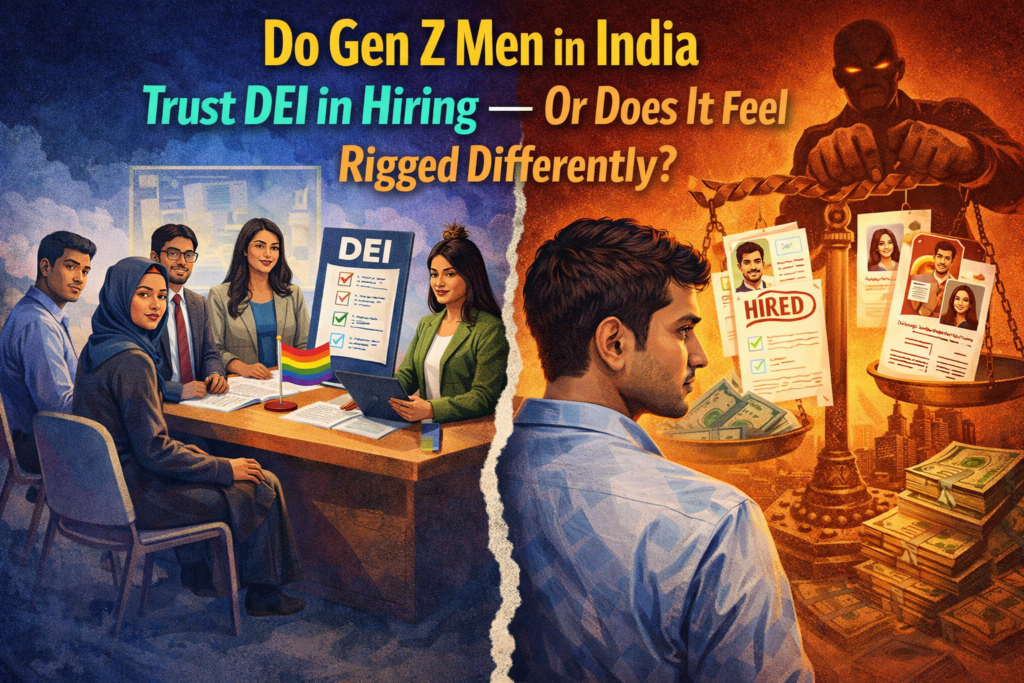
Short answer: A Theyouthtalks survey of 100 Gen Z men (18–27) across urban India found they are largely pro-DEI in principle but sceptical about how hiring decisions are made in practice. The real issue isn’t merit vs DEI — it’s a trust deficit driven by unclear criteria, missing feedback, and an intensely competitive job market. They want transparency, not exemptions.
The question no one wants to ask
Spend a few minutes inside a college placement cell, or scroll through job posts on LinkedIn, and you’ll sense something subtle but significant. It isn’t outrage. Not even frustration, at least not openly. It’s a question — quiet, uncomfortable, and increasingly common:
“Is hiring still fair?”
Not the kind of fairness companies talk about in presentations. Not the polished version wrapped in corporate language. The real, lived version. The one students discuss after rejection emails. The one young professionals think about after yet another “we regret to inform you.”
To move beyond assumptions, Theyouthtalks conducted a survey of 100 Gen Z men (aged 18–27 across urban India). The goal was simple — understand how they perceive fairness, merit, and DEI (Diversity, Equity, and Inclusion) in hiring today.
The results weren’t extreme. They weren’t polarising. But they revealed something more important — a quiet shift in trust.
Is it really DEI vs merit, or something else?
Most Gen Z men are not anti-DEI. Many acknowledge its importance. They understand that representation matters and that opportunities haven’t historically been equal.
But they are also not fully convinced that the system they’re entering is transparent or predictable.
What the survey suggests
- A majority see the job market as highly competitive
- Many feel rejection feedback is unclear or missing
- A significant number are unsure if hiring decisions are purely merit-based
This creates a subtle but powerful shift. The debate is no longer Merit vs DEI. It has evolved into Trust vs Doubt. And right now, doubt is quietly growing.
Does merit still matter in hiring?
Ask any Gen Z candidate what should matter in hiring, and the answer is almost instinctive: skills, experience, capability. Simple. Logical. Fair.
But dig deeper and the picture becomes layered. Respondents pointed toward factors like referrals and networks, college reputation, socio-economic background, and yes — occasionally, DEI-related considerations.
Gen Z men no longer believe hiring is purely meritocratic. They see it as a system influenced by multiple variables — some visible, others not. And it’s this lack of clarity that creates discomfort.
Why “just tell me why I was rejected” matters
If there’s one emotional thread running through the survey, it’s not anger. It’s confusion. Many respondents shared similar experiences — applying to multiple roles, getting rejected repeatedly, receiving little to no explanation.
Over time, that creates a feedback vacuum. And in the absence of clarity, assumptions take over.
One respondent articulated it in a way that feels almost universal: “I don’t mind losing. I just want to know why.”
That line is simple but powerful. It reflects a generation that is willing to compete — but wants to understand the rules of the game.
Where does DEI get questioned — in theory or in practice?
When the conversation turns to DEI (Diversity, Equity, and Inclusion), responses become more nuanced. Most participants agreed that DEI is important. They recognised that inclusive hiring can broaden perspectives, create more equitable workplaces, and address systemic gaps.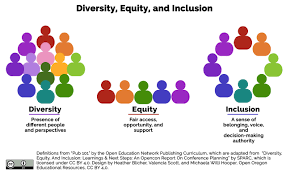
However, there was a clear caveat. Many felt that DEI should not override merit, especially when decision-making processes are unclear. The emerging view: “DEI is necessary. But fairness should be visible.”
This is not resistance. It’s a request — for transparency.
When does perception start shaping reality?
The real friction doesn’t come from DEI policies themselves. It arises when hiring criteria are unclear, decision-making feels inconsistent, or outcomes don’t match expectations.
In those situations, even well-intentioned DEI initiatives can be misunderstood. They may be perceived as bias — not because they are, but because the process lacks visibility. And perception, as we know, often shapes reality.
How does scarcity change the conversation?
This isn’t only about DEI or hiring policies. It’s about the environment Gen Z is entering. Today’s job market feels intensely competitive, slightly unpredictable, and increasingly filtered.
When opportunities feel scarce, people become more sensitive to how those opportunities are distributed. The issue is not DEI itself. The issue is how fair the system feels under pressure. Scarcity amplifies scrutiny.
What do Gen Z men actually want?
Despite the complexity, one theme stood out clearly across responses — a desire for fairness that is transparent and understandable.
When asked what fairness means, answers included:
- “Equal opportunity for everyone”
- “Selection based on skills”
- “Clear and transparent criteria”
- “No hidden advantages”
Notice the pattern. This is not anti-DEI language. It is pro-clarity, pro-transparency language.
Why does confidence shape perception?
Another dimension is confidence. Some respondents expressed optimism about their future and confidence in their abilities. Others felt uncertain about opportunities, slightly disadvantaged, unsure how the system works.
That difference in confidence shapes perception. Those who feel secure tend to trust the system. Those who feel uncertain tend to question it. It isn’t only ideology — it’s personal experience.
A placement room reality
I remember sitting in a campus placement hall a few years ago, watching names get shortlisted. Some candidates celebrated. Others stared at their screens, trying to make sense of what had happened.
There were no explanations. No feedback. Just outcomes. And in that silence, theories were born. “He had a referral.” “Maybe the company preferred a certain profile.” “Maybe DEI played a role.” “Maybe I wasn’t good enough.”
No one really knew. That uncertainty lingers.
What’s the risk of misreading this signal?
If these concerns are dismissed as overthinking, entitlement, or resistance to DEI, the conversation risks becoming polarised. Because when people feel unheard, they don’t disengage. They double down.
What companies need to understand
This isn’t a rejection of DEI. It’s a call for clarity and communication. If organisations want to build trust with Gen Z talent, they need to:
- Clearly outline hiring criteria
- Provide feedback wherever possible
- Ensure consistency in evaluation
Today’s candidates aren’t only looking for jobs. They’re looking for systems they can trust.
The brutal truth
Gen Z men are not saying, “Don’t do DEI hiring.” They are saying, “Help us understand how decisions are made.” That distinction is critical.
A trust deficit, not a DEI problem
It’s tempting to frame this as a debate — Merit vs DEI, fairness vs inclusion, men vs the system. But that framing oversimplifies the issue. What we’re witnessing is something deeper: a trust deficit in hiring systems.
Gen Z men are entering a professional world where rules feel unclear, outcomes feel unpredictable, and feedback is limited. In that environment, even well-designed DEI systems can feel questionable.
Research methodology
This study was conducted by Theyouthtalks in March 2026 with a sample size of 100 Gen Z male respondents aged 18–27 across urban India. Data was collected through online surveys and anonymised responses.
FAQs: Gen Z men, DEI, and hiring in India
Are Gen Z men in India against DEI hiring?
No. The Theyouthtalks survey of 100 Gen Z men aged 18–27 across urban India found most respondents accept that DEI is important. They recognise it broadens perspectives and addresses systemic gaps. Their concern is with opacity in hiring decisions, not with inclusion itself.
What is the real concern Gen Z men have about hiring?
A lack of clarity. Respondents said hiring feels highly competitive, rejection feedback is missing or vague, and they aren’t sure whether decisions are purely merit-based. The underlying issue is a trust deficit, not a rejection of DEI.
What do Gen Z men mean by fairness in hiring?
When asked, they described fairness as equal opportunity, selection based on skills, clear and transparent criteria, and no hidden advantages. It’s pro-clarity, pro-transparency language, not anti-DEI language.
How does job market scarcity affect this conversation?
Scarcity amplifies scrutiny. When opportunities feel limited, candidates become more sensitive to how those opportunities are distributed. A well-intentioned DEI policy can still feel like bias if the selection process isn’t transparent.
What can companies do to build trust with Gen Z candidates?
Three concrete steps: clearly outline hiring criteria upfront, provide feedback to rejected candidates wherever possible, and ensure consistency in how evaluations are conducted. Gen Z men aren’t asking for exemptions — they’re asking for visibility into how decisions are made.