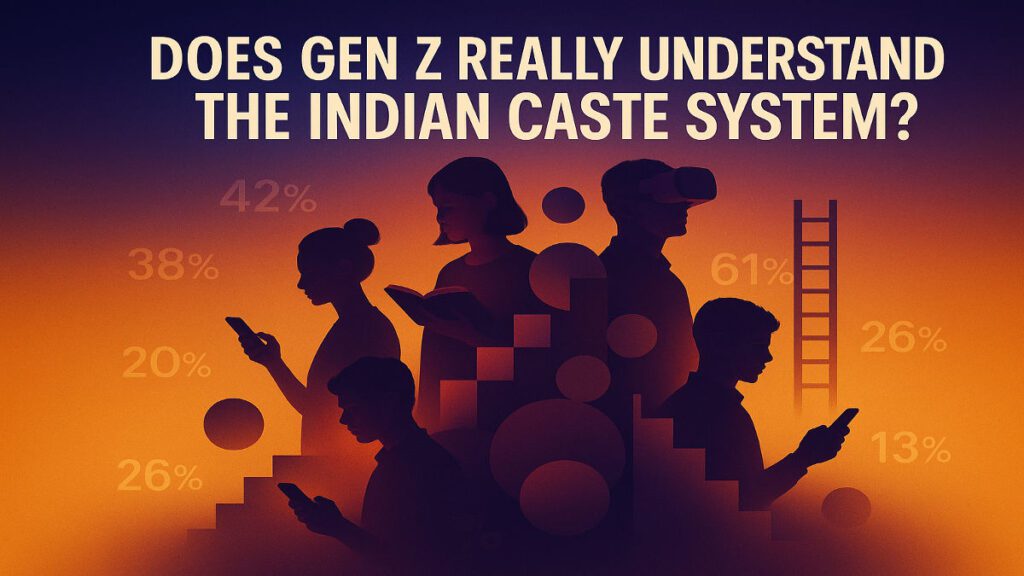
Short answer: Yes, but unevenly. A TheYouthTalks survey of 900+ Indian Gen Z respondents (ages 15–28) found nearly all have heard of caste, but depth of understanding splits by geography and background. 61% see it as inequality, 26% call it outdated tradition, 13% treat it as community identity. In practice, caste still shapes marriage and reservation debates more than friendships.
Why ask Gen Z about the Indian caste system?
The caste system has long been called one of the oldest and most deeply rooted social hierarchies in the world. In India, its influence continues to run through everyday life, shaping opportunities, politics, marriage, and the way people interact. But how does the youngest generation — Gen Z, born between 1997 and 2012 — see this system?
At TheYouthTalks, we decided to ask the question directly. We spoke to over 900+ Gen Z respondents across India, aged between 15 and 28, to understand whether they truly grasp the meaning of caste, how they interpret its relevance today, and whether it still affects their behaviour. What emerged is a picture of awareness, contradiction, and change.
How aware is Indian Gen Z of caste?
Caste is not invisible to Gen Z. Nearly all respondents had at least heard of it, whether from school textbooks, family conversations, or the media. Yet the depth of understanding varied widely.
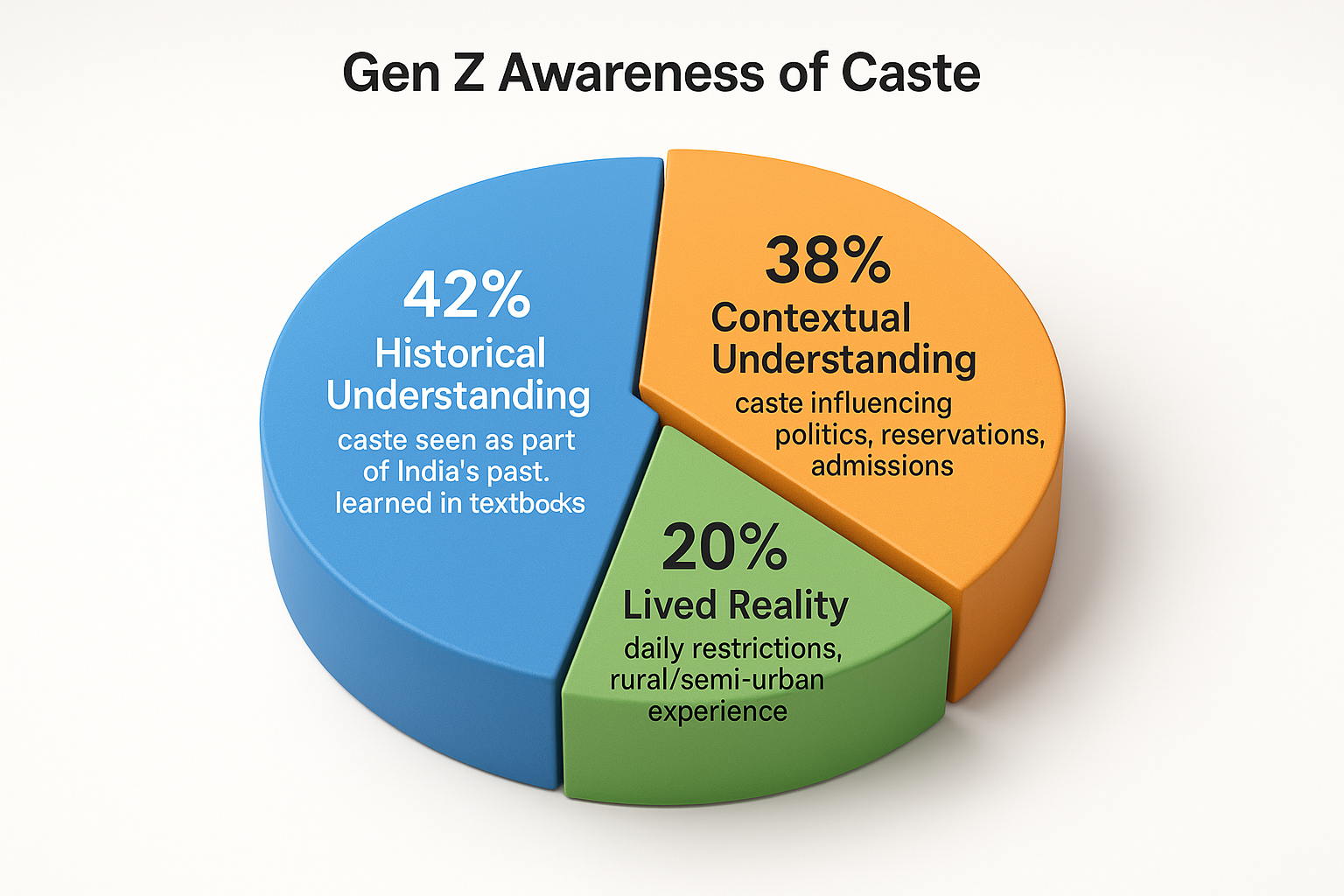
For about 42 percent of respondents, caste was described largely in historical terms — something learned in a classroom as part of India’s past. They spoke of it the way one might talk about ancient kingdoms or forgotten wars: present in history but not in their daily lives.
Another 38 percent showed a more contextual understanding. They saw caste as a force that continues to shape politics, marriage decisions, and debates around reservations. This group often mentioned their first real encounter with caste during college admissions, where reservation quotas made the system feel tangible.
The remaining 20 percent, largely from rural or semi-urban settings, described caste as a lived reality. For them it was not just history or policy. It dictated who could sit where, who got invited to social events, and who was still treated with suspicion.
How does Gen Z frame caste: inequality, tradition, or identity?
When asked to explain what caste meant to them, three distinct views came up.
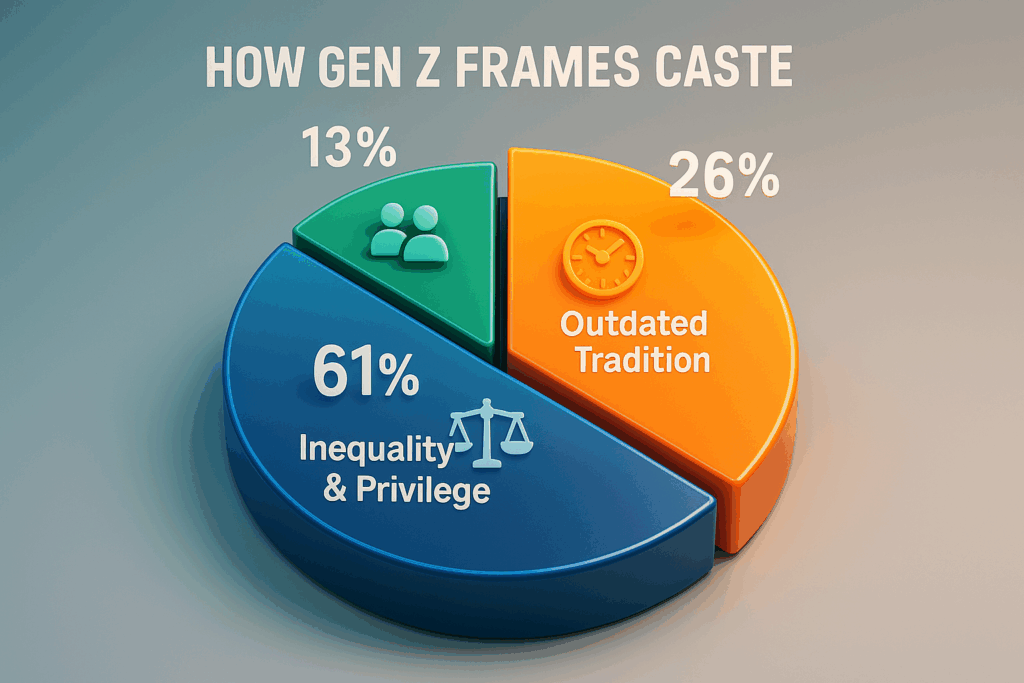
A majority — about 61 percent — saw caste as a form of inequality and privilege. Many compared it to global struggles like Black Lives Matter, calling it India’s version of systemic oppression. These respondents emphasised fairness, justice, and the need to dismantle barriers.
Another 26 percent described caste as an outdated tradition, something that had relevance for older generations but no longer deserved attention. This view was far more common among urban, English-educated respondents, who admitted they rarely encountered caste in friendships or professional networks.
Finally, 13 percent took a different angle. They saw caste as a community identity rather than a problem. For them, caste offered belonging and continuity, particularly in cultural practices and festivals.
Does caste still affect Gen Z friendships, marriage, and work?
While Gen Z speaks the language of inclusivity, behaviour tells a more complex story.
Take friendships. Three-quarters of respondents said caste plays no role in choosing their friends. Yet nearly one in five admitted they avoid openly discussing caste in mixed groups, worried it might create discomfort or spark bias.
In relationships and marriage, contradictions are sharper. Only 29 percent said they would freely marry across caste lines. Almost half said they were personally open to it but admitted their families would strongly oppose such unions. About 23 percent said outright that they would prefer marrying within their caste. Gen Z may want to move past caste, but family expectations still weigh heavily on intimate choices.
In work and education, the divide is also visible. Around 31 percent of students from marginalised castes reported facing subtle forms of discrimination, often stereotyped as “quota students” or hesitant to reveal their identity. 37 percent of upper-caste respondents said their first serious encounter with caste came during debates on reservations.
On social media, nearly half of respondents said they regularly encounter caste-related content on Instagram, YouTube, or Twitter. Many follow Dalit creators and Ambedkarite pages, which have made caste awareness part of youth digital culture.
How do region and city type shape Gen Z views on caste?
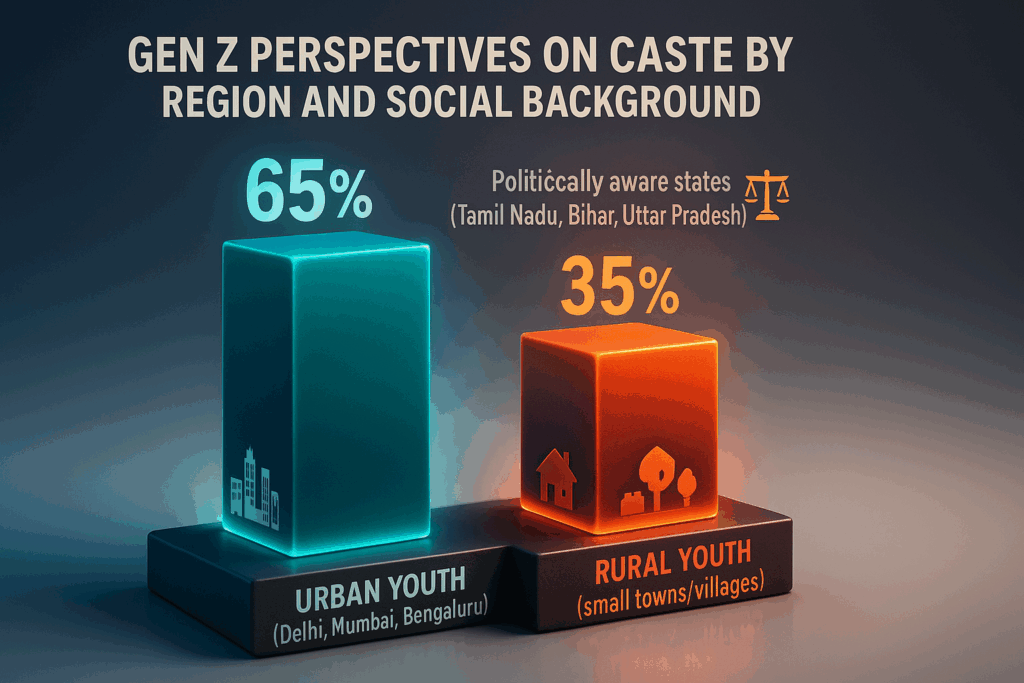
Geography and social background matter a lot. Urban youth in metros such as Delhi, Mumbai, or Bengaluru often claimed caste was irrelevant to their daily lives. Rural respondents, particularly from smaller towns and villages, described caste divisions in more immediate, visible terms.
Regionally, states like Tamil Nadu, Bihar, and Uttar Pradesh — where caste-based politics has long been prominent — produced respondents who were more vocal and politically aware. In cosmopolitan cities, many framed caste as a hidden or fading concept.
A generation in transition
So, does Gen Z understand the caste system? The answer is yes, but unevenly. Awareness is universal, but understanding depends heavily on background, geography, and personal experience. Gen Z tends to frame caste as a matter of justice and fairness, often influenced by global equality movements. Yet traditional boundaries resurface in family matters like marriage and in debates over reservation policies.
Gen Z stands at a crossroads. They are eager to move beyond caste divisions, champion inclusivity, and engage with digital activism. But they remain tied to legacies that cannot be wished away overnight. Their journey reflects a generation in transition: progressive in ideals, cautious in action, still negotiating the weight of history.
If there is one takeaway, it is this: the way Gen Z chooses to confront — or sidestep — the caste question will shape India’s social fabric in the decades ahead.
FAQs on Gen Z and the Indian caste system
How many Gen Z respondents did TheYouthTalks survey?
TheYouthTalks surveyed over 900+ Gen Z respondents across India, aged between 15 and 28, to understand their awareness, views, and behaviour around the caste system.
Do most Indian Gen Z see caste as inequality or tradition?
About 61 percent see caste as a form of inequality and privilege, 26 percent call it an outdated tradition, and 13 percent see it as a community identity tied to culture and festivals.
Does Gen Z marry across caste lines in India?
Only 29 percent said they would freely marry across caste lines. Almost half said they were personally open but expected family opposition. About 23 percent said they would prefer marrying within their caste.
Do Gen Z in metros experience caste differently from small-town India?
Yes. Urban Gen Z in Delhi, Mumbai, and Bengaluru often see caste as hidden or fading. Rural and semi-urban respondents — including those from Tamil Nadu, Bihar, and Uttar Pradesh — describe caste as a visible, lived reality.
How does social media shape Gen Z’s view of caste?
Nearly half of respondents said they regularly encounter caste-related content on Instagram, YouTube, or Twitter. Dalit creators and Ambedkarite pages have helped make caste awareness part of youth digital culture.