Short answer: After the COVID-19 shift to online-only schooling, Gen Alpha — kids born after 2010 — hit real screen fatigue. In 2025, Indian and global schools are moving to hybrid learning: a mix of in-person classes and digital work that restores social connection, builds digital literacy, and tackles burnout.
In 2025, education is still being reshaped by the aftershocks of a global pandemic, fast digital innovation, and changing attention spans. At the centre of that transformation is Generation Alpha — kids born after 2010 — navigating a new way of learning where screens and classrooms co-exist.
They may be digital natives, but the story isn’t as simple as “tech equals better.” The shift from full-time online learning to a balanced, hybrid model reflects not just changing infrastructure but the emotional and cognitive needs of these young learners.
Why did online learning lead to burnout?
When screens became schools
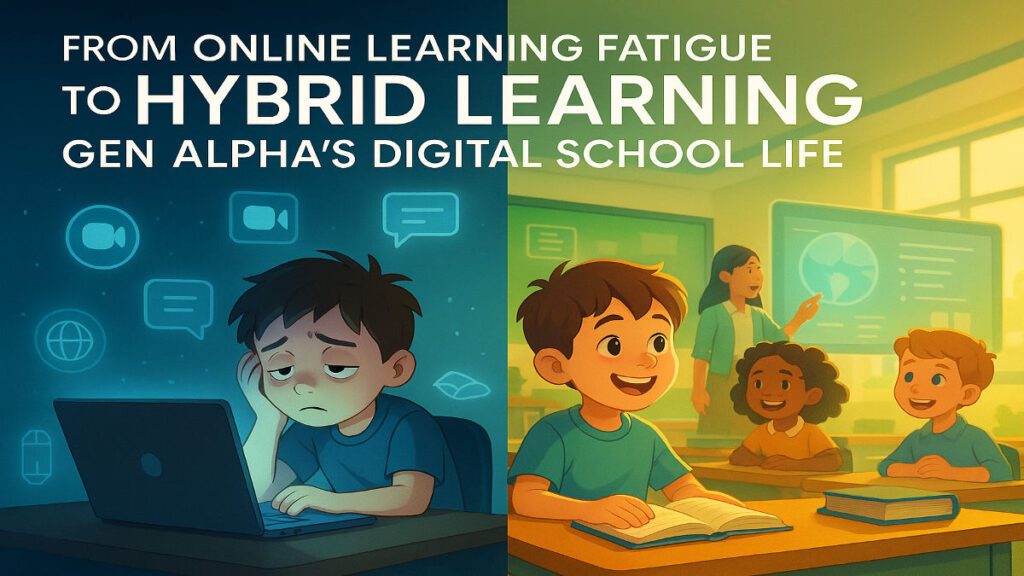
In the early 2020s, as schools shuttered due to COVID-19, learning moved almost overnight to Zoom calls, learning management systems, and digital worksheets. For Gen Alpha, many of whom were experiencing school for the first time, this was their only classroom.
The initial novelty of learning from home — pajamas during lessons, snack breaks on demand — wore off quickly, and cracks began to show.
How did fatigue set in?
Staring at screens for 6–8 hours a day took a toll. According to a study by Common Sense Media, screen time among children aged 8–12 jumped by 17% between 2019 and 2021. More time online didn’t mean more learning.
Students reported lower attention spans, frequent eye strain, increased irritability, and difficulty separating home from school life. Parents noticed mood swings and disengagement. Educators struggled to hold motivation across virtual platforms.
As an educator in Delhi told India Today, “It was hard to tell whether my students were truly learning or just staring blankly at a screen.”
What is hybrid learning and why does it work?
How the blended model emerged
Fast forward to 2025, and many schools across India and the world have adopted hybrid learning — a thoughtful combination of in-person and digital education. Students attend school physically for certain subjects or days, while using technology for self-paced learning, assignments, or creative projects at home.
The goal isn’t to abandon tech. It’s to humanise it.
Why hybrid works for Gen Alpha
- Flexibility with structure: Kids thrive when routines are predictable but not rigid. Hybrid learning offers both — the comfort of a classroom with the flexibility of learning from home.
- Varied engagement: Gen Alpha is used to switching between apps, games, and videos. Hybrid learning taps into that by alternating modes — discussions in school, interactive content online, hands-on experiments at home.
- Social connection: In-person days bring back peer interactions lost during lockdowns — friendships, teamwork, and conflict resolution. These moments matter for emotional and social development.
- Digital literacy with mindful limits: Hybrid education teaches tech skills, from navigating online platforms to creating multimedia projects, while setting boundaries for screen breaks and offline exploration.
What does hybrid learning look like for one family?
When my 10-year-old cousin Arya started hybrid school last year, her parents noticed a shift. She was more energised, looked forward to her “school days,” and started using tech more creatively — building slideshows for science class and creating digital posters for art. She also began journaling again, doing school crafts, and talking about playground drama — signs her development was rounding out again.
As Arya put it, “I like doing projects online, but I also like meeting my friends and writing stuff with colors.”
What challenges still remain?
Hybrid learning isn’t a perfect fix. Not all schools have equal access to infrastructure, especially in rural India. Teacher training, tech support, and parental involvement are critical pieces that must evolve alongside the system.
As The Conversation highlights, balance is fragile — too much tech, and we return to burnout; too little, and we risk digital illiteracy in a fast-moving world.
What does the future of Gen Alpha education look like?
The future of education isn’t about going “back to normal.” It’s about building something better. Hybrid learning offers a blueprint that prioritises mental health, adaptability, creativity, and both digital and interpersonal skills.
As schools, policymakers, and families move forward, the voice of Gen Alpha should be at the centre of decision-making. These kids aren’t just adjusting to new systems — they’re shaping what school can be.
Hybrid learning isn’t just a response to fatigue — it’s a reimagining of education itself.
FAQs about Gen Alpha and hybrid learning
What is hybrid learning?
Hybrid learning combines in-person classroom teaching with digital learning at home. Students may attend school physically for some subjects or days and use technology for self-paced work, assignments, or creative projects at other times.
Why did online learning cause fatigue for Gen Alpha?
Students spent 6–8 hours a day on screens during COVID-19 school closures. Common Sense Media found screen time among children aged 8–12 rose 17% between 2019 and 2021, leading to lower attention spans, eye strain, irritability, and mood swings.
How does hybrid learning help Gen Alpha?
It gives them flexibility with structure, varied engagement modes, restored social connection with peers, and digital literacy with mindful screen-time limits.
What are the challenges with hybrid learning in India?
Unequal access to infrastructure, especially in rural India, along with gaps in teacher training, tech support, and parental involvement. Striking the right balance between tech and in-person learning is also hard.
Is hybrid learning the future of education?
Hybrid learning is shaping up as a long-term blueprint for Gen Alpha, prioritising mental health, adaptability, creativity, and both digital and interpersonal skills.