
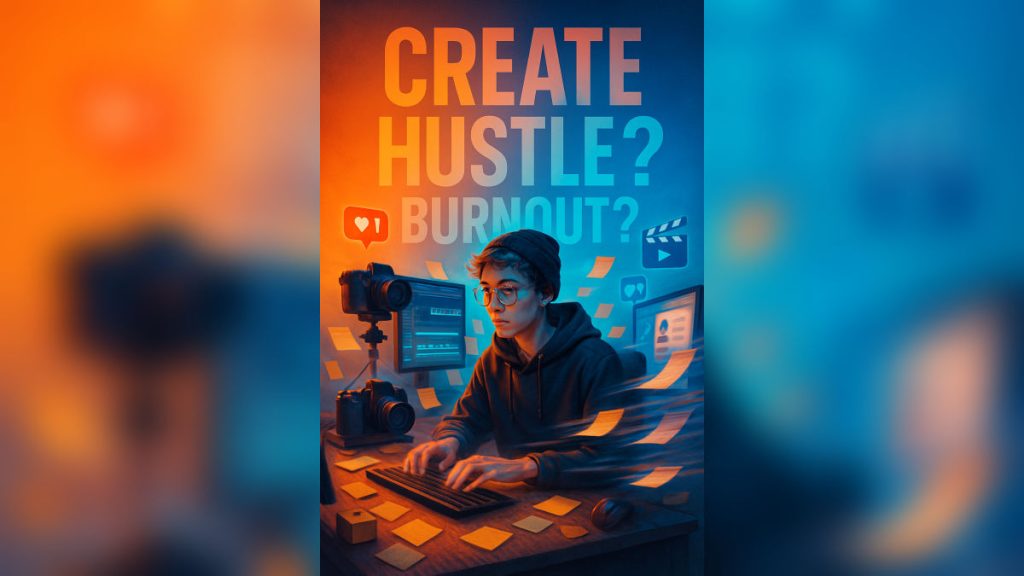
Short answer: Gen Z creators avoid burnout by working smarter, not harder. Content batching, repurposing one idea across formats, and using tools like Notion, CapCut and ChatGPT cut the workload while protecting mental health. According to a 2022 Morning Consult study, 1 in 4 Gen Zers want to become influencers, but the ones who last treat creation as a marathon, not a sprint.
Trends shift overnight. Algorithms reward consistency. Creating content quickly can start to feel like a never-ending race. For Gen Z, raised online and fluent in everything digital, the race comes with high expectations and a hidden tax, exhaustion. The hustle culture of content creation promises visibility and virality, but it also drags burnout along for the ride.
So how do young creators keep going without losing themselves? The answer’s the same as it’s always been. Work smarter, not harder.
How can Gen Z creators avoid burnout?
Content creation isn’t a niche hobby anymore, it’s a full career path. According to a 2022 Morning Consult study, 1 in 4 Gen Zers want to become influencers, and many already create content regularly alongside school or jobs.
But the pressure to post daily, stay relevant and outperform the algorithm takes its toll. Many creators report feeling anxious, fatigued, or emotionally drained. “I love making videos, but I constantly feel like I’m on a treadmill I can’t get off,” says Neha, a 20-year-old student and part-time creator based in Pune.
Let’s face it. Content burnout is real. But it doesn’t have to be the default.
What is content batching and does it really help?
Think like a factory, but creatively
One of the fastest ways to speed up production is content batching. The idea’s simple. Instead of creating and posting day by day, group similar tasks together and tear through them in dedicated blocks.
For example:
- Set aside one day to brainstorm ideas.
- Use another to record or write.
- Reserve a third for editing and scheduling.
The method boosts productivity and cuts decision fatigue. “I batch record all my Reels on Saturdays,” shares Rishi, a 23-year-old fitness influencer. “That way, I have a week’s worth of content ready and don’t stress every morning about what to post.”
Pair batching with planning tools like Notion or Trello and the mental clutter shrinks even faster.
Reuse, remix, repurpose
One idea, multiple formats
You don’t always need to reinvent the wheel. Smart creators recycle their best-performing content. A YouTube video can become a carousel post, a tweet thread, a blog article, even a podcast clip. One idea, four formats, half the effort.
Here’s how to break it down:
- Turn a long blog post into 5-6 mini videos or tip posts.
- Update old content with fresh perspectives or data.
- Tailor the format to each platform: Instagram for visuals, LinkedIn for thought leadership, X for quick takes.
This strategy maximises reach with minimal extra work and keeps your feed feeling fresh without burning creative fuel every single time.
Use the tools, don’t be the tool
Let tech carry the load
From AI writing assistants to social media schedulers, there’s a whole ecosystem of digital support out there. And Gen Z is uniquely placed to make the most of it.
Some creator favourites:
- Canva for design templates
- CapCut or Adobe Premiere Rush for mobile video editing
- Buffer, Later or Planoly to schedule posts
- ChatGPT for brainstorming, scriptwriting and even captions
- Grammarly for editing and polish
- Google Trends and Ahrefs for SEO insights
Most of these offer free versions, which matters when you’re a creator on a budget.
And no, you’re not cheating by using them. You’re optimising your process.
Don’t ignore the red flags: prioritise self-care
You are not a machine
However passionate you are, content creation shouldn’t cost your mental health. Burnout creeps in quietly when boundaries blur and self-care slides off the radar.
A few habits to protect your well-being:
- Schedule breaks: step away from the screen to reset your mind.
- Set limits: define your working hours, even if you’re freelance or a student.
- Unplug regularly: take intentional time offline, read, walk, draw or hang out with friends.
- Talk it out: whether with friends or a therapist, processing stress aloud lightens the load.
A support system of fellow creators who get the highs and lows of the game can also be a powerful anchor. (Honestly, the smaller and more honest the group, the better.)
How do you create content at speed without losing quality?
Be strategic, not just busy
Posting daily works for some. But more isn’t always better. What matters is that your content connects, with your audience and with your purpose.
Instead of chasing volume, try this:
- Define your core message: what are you trying to say, and why?
- Know your audience: understand their problems, interests and quirks.
- Create pillar content: 2-3 in-depth pieces a month that can be repurposed into micro-content.
- Track what works: use analytics to double down on what resonates.
Setting realistic goals (three quality posts a week instead of seven rushed ones) prevents burnout while still growing the brand.
A creator’s story: learning to slow down
Ananya, a 22-year-old creator who runs a mental health page on Instagram, shares:
“At one point, I was posting every day. But after a few months, I couldn’t even open the app without feeling drained. I took a two-week break, reworked my content calendar, and now I only post three times a week. My engagement hasn’t dropped, but my peace of mind has gone way up.”
Her story is a reminder. Sustainable creativity wins over short-term spikes, every time.
The final word: your pace, your power
In a world addicted to speed, it’s easy to feel like you’re falling behind. But content creation isn’t a sprint, it’s a marathon. You can build an audience, make an impact, even go viral, without sacrificing your mental health or your joy.
The real flex in 2025? Creating with intention, protecting your peace, growing at your own pace.
So take a breath. Batch your brilliance. Repurpose like a pro. Let the tools do their job. And most importantly, don’t forget to live a little offline.
Your content matters. But you matter more.
FAQs about content creation and burnout
How can Gen Z creators create content at speed without burning out?
The core moves are content batching, repurposing one idea across multiple formats, using tools like Canva, CapCut, ChatGPT and Buffer to lighten the workload, and protecting mental health with clear boundaries. Quality over volume is the underlying principle.
What is content batching for creators?
Content batching is grouping similar creative tasks (brainstorming, recording, editing, scheduling) into dedicated time blocks instead of doing each step day by day. Fitness creator Rishi, for example, records a full week of Reels every Saturday so he doesn’t have to decide what to post each morning.
How many Gen Zers want to become influencers?
According to a 2022 Morning Consult study, 1 in 4 Gen Zers want to become influencers. Many already create content regularly alongside school or jobs, which is why burnout has become such a common topic among young creators.
What tools help speed up content creation?
Popular options include Canva for design, CapCut and Adobe Premiere Rush for mobile video editing, Buffer or Later or Planoly for scheduling, ChatGPT for brainstorming and scripting, Grammarly for polish, and Google Trends and Ahrefs for SEO insights. Most have free tiers.
Is it better to post daily or focus on quality?
Quality almost always wins. Three thoughtful posts a week tend to drive stronger engagement than seven rushed ones, and they protect your mental health in the process. Creator Ananya found her engagement stayed steady after dropping from daily posts to three a week.