
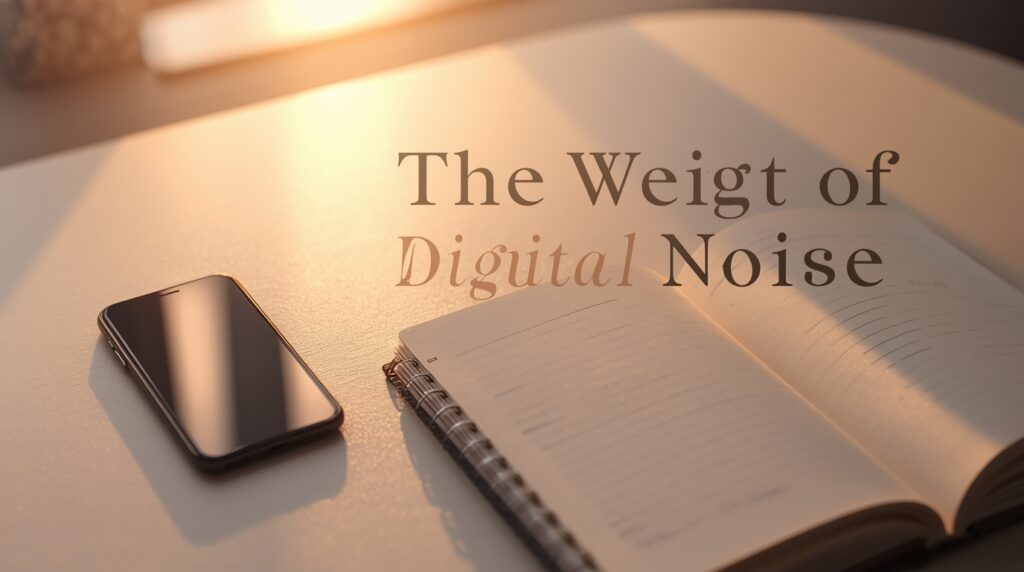
Short answer: Digital noise is the constant hum of notifications, scrolling and updates that leaves no space for thought. Silence feels uncomfortable at first because it exposes what distraction has been hiding, and that discomfort is the entry point to real presence.
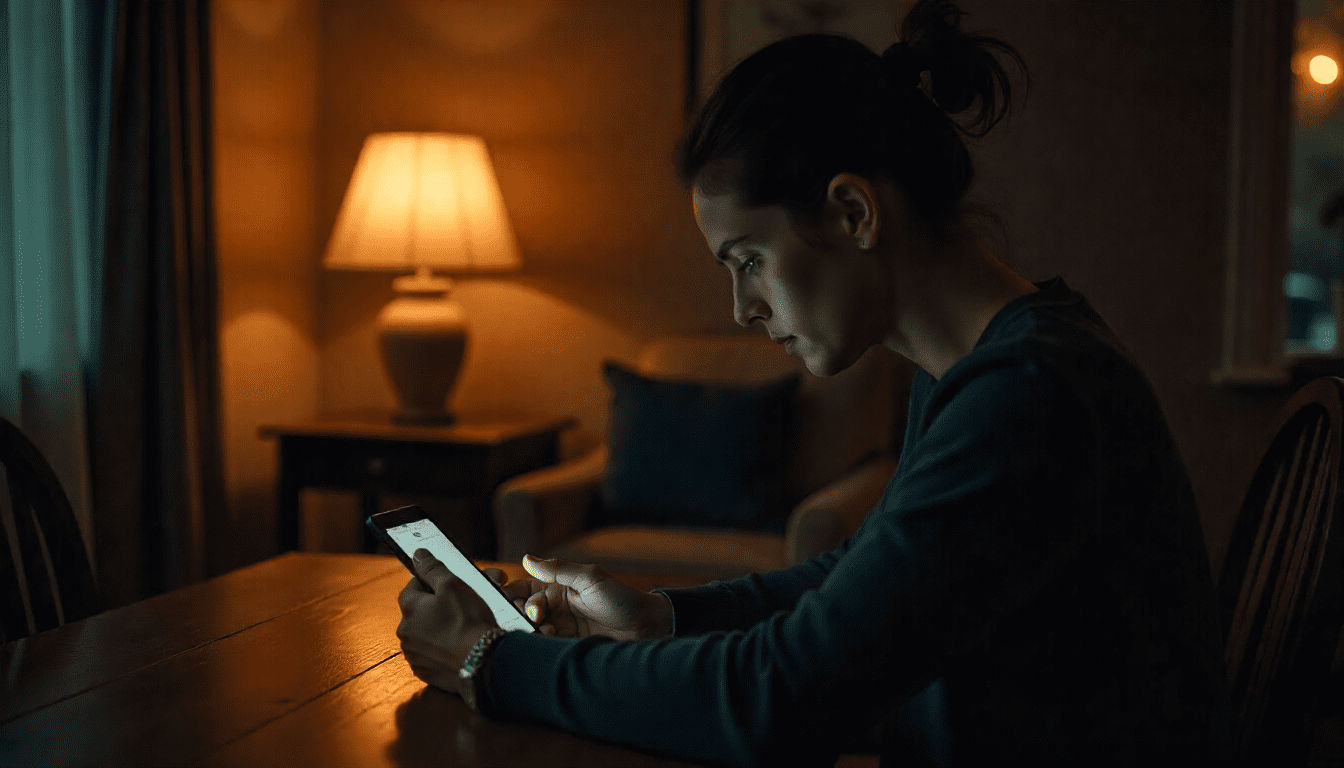
There is a strange quiet that follows after you mute notifications, a quiet so unfamiliar it almost feels wrong. Your thumb twitches, your mind searches for the next scroll, the next update, the next tiny dopamine hit disguised as connection. And in that moment, you realise something unsettling:
You weren’t checking your phone. Your phone was checking you.
We live in a world louder than it looks. A world where silence is not absence, it is withdrawal. Where being unreachable feels like rebellion. Where rest feels like irresponsibility. Yet somewhere beneath the noise, a new craving has begun to rise, not for more content, more updates, more engagement, but for space. For breath. For a moment not designed to be shared, captured, posted, archived or optimised. A moment that belongs only to you.
Why is constant connection reshaping us?
There is a rhythm built into the modern world, a rhythm of interruption. Ping. Swipe. Scroll. Refresh. Repeat. It is subtle, but it is shaping us.
We used to enter silence intentionally through books, walks, journaling, sunsets, stillness. Now silence arrives only by accident: a dead battery, a lost signal, a missed charger. For many of us, the world inside screens feels more urgent than the one outside them. Notifications demand immediate emotional engagement, even when our bodies are tired and our minds are scattered.
Connectivity was meant to expand our lives. Instead, it has begun to consume them.
What did we lose when everything became instant?
There was a time, not long ago, when waiting was normal. Waiting for a letter. Waiting for film to develop. Waiting for someone to call back. Waiting to hear how someone was doing instead of seeing it daily through curated windows.
Waiting was not inefficiency, it was anticipation. It allowed imagination, reflection, longing, space. Now everything arrives before we are emotionally ready to receive it. Bad news. Good news. Updates. Opinions. Chaos. Life comes unfiltered, nonstop, and without boundaries, and our minds have not evolved fast enough to catch up.
How does hyperconnection create loneliness?
Somewhere along the way, we confused visibility with intimacy. We know what hundreds of people ate today, wore today, watched today, thought today, yet many of us struggle to name three people we could call in the middle of the night without feeling like a burden.
We are surrounded yet isolated. Seen yet misunderstood. Connected yet lonely. Real connection takes time, slowness, vulnerability and silence. You cannot build depth in a rush. You cannot understand someone fully in fragments. You cannot discover yourself while running from every quiet moment you meet.

How do you learn to sit with the quiet?
The first time you step back, truly step back, there is discomfort. Silence exposes the things distraction kept buried: the unresolved emotions, the unasked questions, the unmet needs, the parts of yourself you have avoided.
Silence is not empty. It is honest. And honesty is rarely comfortable at first. But slowly, something shifts. The noise fades. The tension softens. The frantic need to check, respond, consume weakens. Then, finally, something you have not felt in a long time arrives: presence.
What does a healthier relationship with technology look like?
Maybe the future is not about abandoning technology. It is about rewriting our relationship with it. A world where we pause before we respond. We think before we share. We listen more than we update. We choose depth over visibility.
Technology is powerful, but so is silence. Somewhere between constant input and intentional peace, a new balance waits to be discovered. A balance where the digital world serves us, not controls us. A balance where noise becomes optional. A balance where silence becomes strength.
Why is silence becoming the new luxury?
We are entering a new chapter, one defined not by speed but by intention. Silence is becoming desirable. Privacy is becoming sacred. Presence is becoming rare and valuable.
Maybe this discomfort we feel when everything goes quiet is not a warning. Maybe it is an invitation. An invitation to meet ourselves again. Without filters. Without noise. Without performance. Just us. Alive. Present. Human.
FAQs about digital noise and silence
What is digital noise?
Digital noise is the steady stream of notifications, messages, scrolling and updates that fills every quiet moment. It is not any single app. It is the cumulative pressure of constant input that keeps your attention fragmented.
Why does silence feel uncomfortable at first?
Silence exposes what distraction was hiding: unresolved emotions, unasked questions, unmet needs. The discomfort is not a sign something is wrong. It is the nervous system adjusting to honesty after months or years of noise.
How do I start a digital detox without deleting everything?
Begin with notifications. Mute non-essential ones, set specific windows for checking messages, and protect one quiet hour a day, usually morning or just before sleep. You do not need to abandon technology, only renegotiate access to your attention.
Is loneliness worse in the age of social media?
Visibility is not intimacy. You can know hundreds of people’s meals, outfits and opinions yet struggle to name three you could call at 3 am. Real connection needs slowness, vulnerability and silence, which scrolling does not offer.
Why is Gen Z moving towards slower digital habits?
Gen Z grew up inside the noise and felt its cost earliest: burnout, anxiety, scattered attention. Slower habits, muted phones, journaling, walks without earphones are not anti-technology. They are a reclaiming of presence inside it.