
Short answer: Indian Gen Z is quietly making room for the occult. A theyouthtalks.com survey of 2,000+ respondents aged 18–25 found 57% engage with astrology and 41% with tarot, using these practices less as rigid faith and more as a language for emotion, uncertainty, and identity.
On a weekday night in a crowded Delhi hostel, 22-year-old Mehul sits on his bed scrolling through Instagram. Between exam stress and placement anxiety, he pauses at a reel explaining why people feel unusually restless during certain planetary phases. He doesn’t fully buy the explanation, but he saves the post anyway. Later that night, he mentions it to his friends. Someone jokes about Saturn. Someone else nods.
Scenes like this play out quietly across urban India. Without grand declarations of faith, Indian Gen Z is engaging with astrology, tarot, manifestation, and other occult-adjacent practices, not as rigid belief systems, but as tools to interpret emotions, relationships, and uncertainty.
A recent theyouthtalks.com survey of 2,000+ Gen Z respondents (aged 18–25), pan-India with a metro-heavy skew, offers a data-backed glimpse into this shift. 57% reported engaging with astrology, and 41% said they had explored tarot. These numbers don’t point to a sudden spiritual awakening. They show a generation redefining what belief looks like in contemporary India.
Why is Gen Z moving from inherited faith to chosen meaning?
India has always been a spiritually layered society. Astrology has guided marriage decisions, business openings, and naming ceremonies for generations. For Gen Z, the relationship with spirituality is less inherited and more intentional.
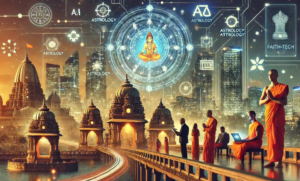
Unlike their parents or grandparents, many young Indians do not grow up with unquestioned allegiance to religious institutions. National and global studies on youth belief patterns consistently show declining participation in organised religion among younger cohorts, even as interest in spirituality, wellness, and metaphysical ideas grows.
This contradiction is only apparent. Gen Z is not rejecting meaning. They are redesigning it. Occult practices fit neatly into this redesign because they are non-exclusive. One can engage partially, skeptically, even playfully. Belief is optional. Participation is flexible.
How does astrology work as an emotional language for Gen Z?
According to the theyouthtalks.com survey, more than half of Gen Z respondents (57%) actively engage with astrology. This engagement ranges from daily horoscope checks to zodiac-based memes, reels, and conversations with peers.
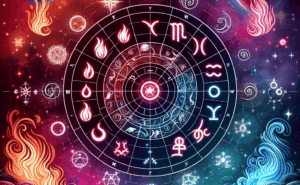
What stands out is not the depth of belief but the frequency of use. Astrology functions as a shared emotional vocabulary. It allows young people to talk about vulnerability without exposing it fully.
Saying “I’m having a rough Mercury retrograde” feels lighter than admitting burnout. Saying “That’s such a Scorpio trait” offers a way to describe boundaries, intensity, or conflict without confrontation.
In interviews and anecdotal responses collected by youth platforms, many Gen Z individuals admit they do not make major life decisions based on astrology. They continue to consume it regularly. The reason is simple: astrology offers structure in moments when life feels messy.
Psychologists describe this as externalisation, shifting internal chaos onto a symbolic framework. In this sense, astrology becomes less about prediction and more about permission: permission to pause, to feel confused, to not have everything figured out.
Why is tarot rising in urban India?
Tarot’s growing acceptance among Indian Gen Z is one of the most significant findings of the theyouthtalks.com survey. 41% of respondents reported engaging with tarot, a striking number given tarot’s historically marginal position in Indian spiritual households.

Unlike astrology, tarot enters Gen Z’s life during specific moments, breakups, career crossroads, identity confusion. Engagement is usually episodic, not habitual.
Tarot sessions today are rarely conducted in mystical settings. They are digital, conversational, and often framed as reflective experiences. Instagram Live readings, Zoom sessions, and DM-based pulls dominate the format.
Many young users describe tarot as “therapy-adjacent.” Not a replacement for mental health care, but a space where feelings can be explored without diagnosis or stigma. The cards act as mirrors, offering narratives that help users articulate what they already sense but cannot yet name.
In a country where access to therapy remains uneven and mental health conversations are still emerging, tarot occupies an emotional middle ground, spiritual enough to feel safe, structured enough to feel meaningful.
How does Gen Z hold belief without absolutes?
One of the most revealing patterns across survey responses is the decoupling of belief from practice. A large section of Gen Z respondents openly acknowledge skepticism toward occult practices. Yet they continue to engage with them. This apparent contradiction reflects a broader generational mindset.
For Gen Z, belief is not binary. It exists on a spectrum. Occult practices are evaluated not on truth claims but on usefulness. Do they help me feel calmer? Do they offer perspective? Do they help me process uncertainty?
This pragmatic approach aligns with broader Gen Z behaviour, from career choices to relationships. Flexibility is valued over permanence. Experience over ideology.
How do anxiety and uncertainty shape this turn to the occult?
To understand why these practices resonate now, context matters.
Indian Gen Z is growing up amid rising youth unemployment, intense academic competition, climate anxiety, and economic unpredictability. Traditional markers of success, stable jobs, linear careers, predictable milestones, feel increasingly fragile.
Global youth studies consistently show Gen Z reporting higher levels of anxiety and stress compared to previous generations. In India, this is compounded by societal expectations and limited safety nets.
Occult systems offer symbolic reassurance. They suggest that not everything is within individual control. That delays and disruptions may have meaning beyond personal failure. This doesn’t remove responsibility. It softens its weight.
How have digital platforms become spiritual gateways?
Social media has reshaped how spirituality is consumed.
Astrology and tarot thrive on platforms designed for short, emotionally resonant content. Algorithms reward posts that feel personal and affirming, making occult content highly visible.
What was once private or family-bound is now public and performative. Comment sections turn into collective confessionals. Live readings become shared experiences.
Spirituality, in this context, is no longer tied to physical spaces. It exists in late-night scrolling, shared reels, and group chats. It is woven into daily digital rituals.
Why has the occult become identity and aesthetic?
Beyond belief, the occult has also become an aesthetic language. Moon phases on wallpapers. Zodiac signs in dating bios. Crystals on work desks. Manifestation affirmations in journals.
These symbols function as soft identity markers. They signal introspection, emotional awareness, and openness, traits highly valued within Gen Z culture. Unlike rigid religious identifiers, occult symbolism is flexible. It can be adopted, discarded, or reinterpreted at will.
What are the cultural implications for India?
The findings from the theyouthtalks.com survey point to a broader cultural reconfiguration. India is not witnessing a decline in spirituality, but a decentralisation of it.
Authority is shifting from institutions to individuals. Meaning is becoming personalised. Ritual is becoming optional. For media, brands, and cultural organisations, this has important implications. Engagement with Gen Z requires sensitivity, authenticity, and an understanding that spirituality today is experiential, not prescriptive.
What are the limitations of this research?
While the survey offers valuable insight, its metro-heavy sample may not fully represent rural or semi-urban Gen Z experiences. Self-reported engagement also does not measure depth or long-term impact. Future studies could explore regional differences, gendered patterns of engagement, and longitudinal shifts in belief over time.
Meaning in the in-between
Indian Gen Z’s engagement with the occult is not about surrendering to mysticism or abandoning rationality. It is about navigating a world that feels unstable, competitive, and emotionally demanding.
Astrology and tarot offer pause. Language. Reflection. The theyouthtalks.com survey shows a generation comfortable living in the in-between, between belief and skepticism, tradition and reinvention, certainty and doubt.
In a rapidly changing India, this quiet turn toward symbolic systems may not be about predicting the future at all. It may be about surviving the present with a little more clarity, comfort, and care.
FAQs on Indian Gen Z and the occult
What percentage of Indian Gen Z engage with astrology?
According to the theyouthtalks.com survey of 2,000+ Gen Z respondents aged 18–25, 57% reported engaging with astrology, ranging from daily horoscope checks to zodiac-based memes and conversations.
How many Indian Gen Z are exploring tarot?
The same survey found 41% of Gen Z respondents reported engaging with tarot, a striking figure given tarot’s historically marginal position in Indian spiritual households.
Why is Gen Z drawn to tarot over traditional therapy?
Many young users describe tarot as “therapy-adjacent.” It offers a space to explore feelings without diagnosis or stigma, which matters in a country where access to therapy remains uneven.
Does Gen Z actually believe in astrology and tarot?
Belief is not binary for Gen Z. Many acknowledge skepticism yet continue engaging. Occult practices are evaluated on usefulness, whether they help process emotion or uncertainty, rather than on truth claims.
How is social media shaping Gen Z spirituality in India?
Instagram Live readings, Zoom sessions, and DM-based tarot pulls now dominate. Algorithms reward personal, affirming content, making astrology and tarot highly visible in daily digital life.