
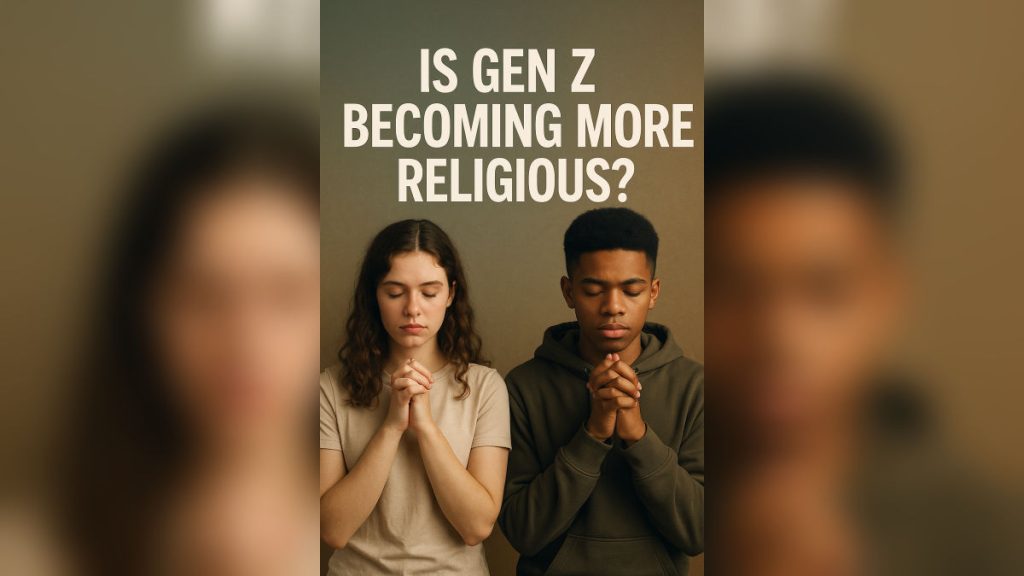
Short answer: A nationwide survey of over 1,000 Indian Gen Z aged 16-26 found they aren’t abandoning religion, they’re reshaping it. Over 60% engage in some spiritual or religious practice at least once a month and nearly 30% do so weekly, but the practices look different: gratitude journaling, meditation, festival rituals, devotional music. Faith on social media (Instagram tarot readers, YouTube spiritual vlogs) now rivals family and elders as a primary influence.
For years, public perception painted Gen Z as spiritually detached, too caught up in the digital deluge to care about tradition or religion. But the narrative is shifting. Quietly, and with unexpected conviction, many Gen Z-ers are returning to spirituality, not the way their grandparents did, but in a form uniquely their own.
In a recent nationwide survey conducted with over 1,000 Indian Gen Z individuals (aged 16-26), a surprising trend emerged. Gen Z isn’t abandoning religion, they’re reshaping it. Through a mosaic of beliefs, practices and digital influences, young Indians are rediscovering spiritual grounding, even as they reject rigid frameworks. This research-based article unpacks what religion looks like in the hands of a generation raised on memes, mindfulness and moral questioning.
Who did we ask?
Our survey encompassed a diverse cross-section of India’s youth, across gender, geography and educational backgrounds. Respondents hailed from metro cities, tier-2 towns and semi-urban spaces, ensuring wide representation. The age spread was balanced across three brackets: 18-20, 21-23 and 24-26, with both male and female perspectives fairly accounted for.
This inclusivity gives the findings a broader cultural lens, reflecting how varied contexts shape young people’s attitudes toward religion and spirituality.
Is Gen Z really becoming more religious?
Forget the stereotype of the disinterested atheist teen. According to our data, a significant majority of Gen Z respondents reported a growing or stable interest in religion or spirituality. Fewer than expected said they were “less religious” than before.
The signal is a cultural pivot. Gen Z may not be crowding into temples or churches, but many are deepening their spiritual curiosity, asking questions, and seeking meaning beyond material success.
“Spirituality helps me navigate the chaos,” shared Mehak, a 22-year-old postgraduate student from Pune. “It’s not about gods, it’s about grounding.”
In a world of constant notifications and mounting societal pressure, many young people embrace spirituality as a form of emotional resilience and personal empowerment.
Who shapes Gen Z’s beliefs now?
The traditional gatekeepers of religious belief, families, priests, elders, are no longer the only voices Gen Z listens to. Our research shows a sharp rise in digital and peer influence on spiritual viewpoints.
Leading influences on Gen Z’s beliefs
- Family and upbringing still foundational, but no longer absolute.
- Social media influencers and YouTube creators sharing meditative practices, modern interpretations of texts, and spiritual vlogs.
- Books and podcasts self-help meets sacred teachings.
- Friends and peer circles exploring faith as a collective experience.
“I started following a tarot reader on Instagram just for fun,” said Aashna, 19, from Lucknow. “But now I journal every day and light incense before exams. It calms me down.”
This democratisation of spiritual thought means Gen Z is crafting a pick-and-choose spiritual toolkit, often blending religious motifs with wellness trends and personal rituals.
What spiritual practices do Indian Gen Z follow?
While weekly temple visits or daily prayers may be on the decline, they’ve been replaced by something more fluid. Practices like:
- Gratitude journaling
- Meditation
- Occasional ritual observance during festivals
- Chanting or listening to devotional music while studying
These have become common for many Gen Z youth. For them, spirituality is practical and therapeutic, a way to tune into their mental well-being, not just an obligation to tradition.
The survey revealed that over 60% of participants engage in some form of spiritual or religious practice at least once a month, and nearly 30% do so weekly.
How does Gen Z feel about organised religion?
Here lies the paradox. Gen Z respects religious traditions, but many feel alienated by the institutions upholding them. Our study revealed a deep ambivalence toward organised religion. While some appreciated its community structure, others critiqued the perceived hypocrisy, gender bias or political overreach.
A 24-year-old male respondent from Delhi shared candidly:
“I’m proud of being Hindu, but I don’t like the way some religious leaders use it to divide people.”
This indicates a desire for reform rather than rejection. Gen Z doesn’t want religion thrown out, they want it updated, inclusive and sincere. They want to keep the essence, but ditch the ego.
How is Gen Z redefining what faith means?
Arguably the most powerful insight from this study was that Gen Z is actively redefining what it means to be religious. For some, faith is the energy of the universe. For others, it’s being kind, living consciously, or staying grateful.
This spiritual eclecticism allows them to craft their own meaning from:
- Ancient scriptures
- Instagram reels
- Yoga practices
- Environmental activism
- Cultural festivals
Religion, for this generation, is less about doctrine and more about discovery.
“For me, God is nature,” said Harsh, a 20-year-old eco-volunteer from Dehradun. “When I hike through forests, I feel more connected than I ever did in a temple.”
That narrative shift opens vast opportunities for brands, educators and faith institutions to engage Gen Z without preaching. Messaging that speaks to values, not verdicts, is the way forward.
Are women more spiritual than men in this generation?
Interestingly, the data revealed slightly higher spiritual leaning among female respondents compared to their male counterparts. Women were more likely to say Gen Z is becoming “more spiritual” and more frequently reported engaging in practices like journaling or chanting.
The gap wasn’t massive. Still, it raises questions worth exploring:
- Do societal roles nudge women toward spiritual coping mechanisms?
- Is emotional literacy, often more accepted in women, linked to spiritual expression?
Whatever the reasons, the feminine face of modern spirituality is emerging, nuanced and evolving.
What does this mean for the world beyond the data?
Gen Z isn’t rejecting faith. They’re reclaiming it.
They are spiritual seekers, not blind followers. Their religion isn’t about rigid rituals or inherited guilt. It’s about resonance, reflection and relevance. They want to feel connected, not controlled.
For spiritual communities, educators, startups and content creators, this insight opens rich terrain:
- Mindfulness apps can embed ancient mantras or philosophies.
- Fashion brands can draw from traditional symbols with modern interpretations.
- Temples, mosques and churches can engage digitally, with webinars, Q&As or youth-led storytelling.
- Books and podcasts can fuse philosophy with pop culture.
- Spiritual influencers can cultivate authenticity over absolutism.
The future of faith is fluid
In a world fragmented by political divides, environmental uncertainty and digital overload, faith, redefined, is becoming Gen Z’s quiet anchor. They aren’t attending sermons every Sunday or fasting twice a week. But they are pausing to breathe, to reflect, to believe in something, anything, that brings peace and meaning.
They’re rejecting fear-based religion but embracing conscious spirituality.
They’re not turning away from the sacred, they’re turning it inward.
And that may just be the most faithful act of all.
FAQs about Gen Z religion and spirituality in India
Is Gen Z in India becoming more religious or less religious?
According to a survey of over 1,000 Indian Gen Z aged 16-26, a significant majority reported a growing or stable interest in religion and spirituality, with fewer than expected saying they’re “less religious” than before. The shift is toward personal spirituality rather than away from faith.
What spiritual practices do Indian Gen Z follow?
The most common practices include gratitude journaling, meditation, occasional festival ritual observance and chanting or devotional music while studying. Over 60% engage in some spiritual practice at least monthly and nearly 30% do so weekly.
How do social media influencers shape Gen Z’s faith?
Social media influencers and YouTube creators sharing meditative practices, modern interpretations of religious texts and spiritual vlogs now rival family and elders as primary influences. Instagram tarot readers, for example, often pull young followers into daily journaling and incense rituals.
Why does Gen Z reject organised religion but keep spirituality?
Gen Z respects religious traditions but feels alienated by institutions seen as hypocritical, gender-biased or politically overreaching. They want reform, not rejection, keeping the essence of faith while ditching the ego of religious leadership.
Are Gen Z women more spiritual than Gen Z men in India?
The survey found a slightly higher spiritual leaning among female respondents, who were more likely to call Gen Z “more spiritual” and to practise journaling or chanting. The gap is modest but consistent enough to flag a feminine face emerging in modern Indian spirituality.