

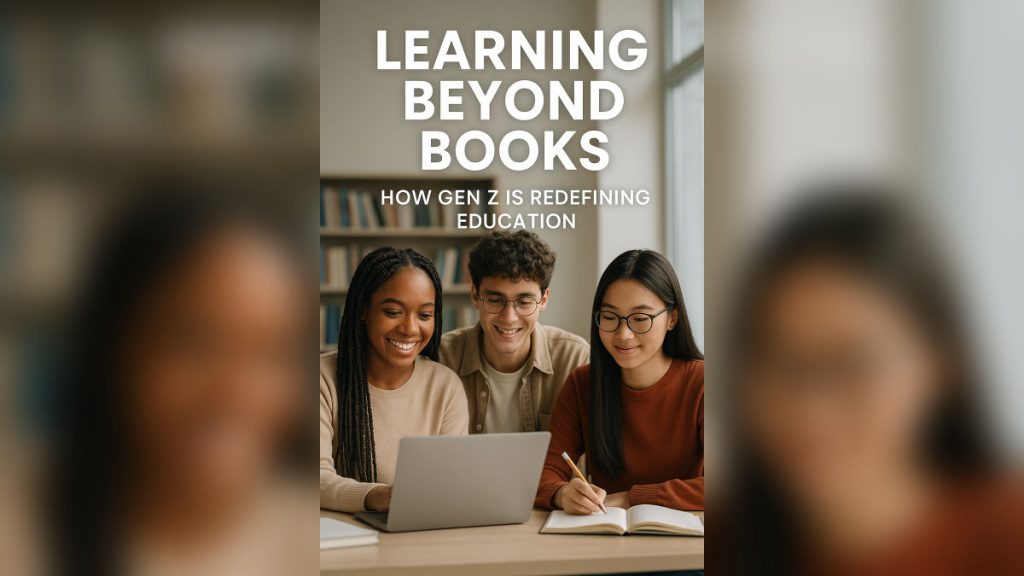
Short answer: Indian Gen Z is learning outside school more than inside it. A 2025 survey of teens aged 12-18 found 100% had picked up at least one skill on their own, 94.7% want schools to focus on real-life skills, and 89.5% want innovation labs and creative spaces. Hands-on, visual, project-based. That’s the brief.
The classroom has left the building. In 2025, India’s Gen Z is tossing the rulebook and writing a new one, filled with self-taught skills, midnight coding sessions, and the kind of curiosity no syllabus ever asked for.
These kids, aged 12 to 18, aren’t waiting for school bells. They’re learning guitar from YouTube, editing videos on their phones, and joining online communities that fuel whatever they’re into. Education has gone personal. Flexible. Emotional, more than anything else.
This isn’t a trend. It’s a transformation.
How is Gen Z learning differently in 2025?
Meet Riya, a 15-year-old from Pune. She taught herself to code on a free platform, not for marks or applause, but to build a math app for her younger sister. Just for fun. “It felt real,” she said. “Way more fun than school ever was.”
And she’s not alone. According to a 2025 survey of Indian Gen Z students:
- 100% of respondents said they’ve learned at least one skill outside school.
- Skills ranged from video editing and robotics to cooking, storytelling and gaming.
- 94.7% believe schools should focus more on real-life skills.
This generation isn’t just learning. They’re designing their own education.
Why does Gen Z learn? Passion over pressure
What fuels their hunger for knowledge?
- 45.6% said they wanted to “become smarter.”
- 22.8% wanted to “solve real-world problems.”
- 19.3% were thinking long-term: “better jobs.”
Here’s the thing. A real chunk of them said they were learning “just for fun” or “to build cool stuff.” That’s the emotional edge, learning that excites rather than exhausts. For Gen Z, the joy of getting something new is reward enough.
How is technology reshaping how Gen Z learns?
Learning has shifted from notebooks to newsfeeds, from classrooms to creator platforms.
- 66.7% have already explored digital skills like coding, video editing, and game design.
- Another 12.3% are eager to begin but unsure how.
Yet here’s the catch: only 22.8% say their schools actively support tech learning. Nearly a quarter feel schools “don’t really” support it at all.
That gap is both a red flag and a golden opening. In an AI-driven world, tech literacy isn’t useful, it’s survival. Schools, ed-tech brands, and creators all have a role in bridging it.
The system isn’t clicking anymore
While Gen Z pushes boundaries, schools often look stuck in the past.
- Only 12.3% of students believe their education is “definitely” preparing them for life.
- 28% responded with “not really.”
- A sobering 10.5% said “No.”
There’s a growing emotional rift between what Gen Z feels they need and what they’re actually getting. It isn’t about ditching school. It’s about redefining what school means.
How does Gen Z prefer to learn? Visual, hands-on and fun
Let’s be honest. Blackboard lectures don’t cut it anymore.
- 52.6% of students prefer hands-on learning.
- 19.3% love video-based content.
- 12.3% want game-based experiences.
Books still matter. They’re no longer the centerpiece, though. This generation grew up watching tutorials, attending virtual classes, and making their own content, and if a lesson isn’t visual or interactive or immersive, it probably won’t stick in their heads at all.
A 14-year-old respondent put it best: “When I watch a video and try it myself, I actually remember it. School doesn’t work that way.”
Learning spaces and mentors: the missing pieces
The demand for skill-based, creative spaces is overwhelming.
- 89.5% of students want more access to innovation labs, storytelling clubs, coding bootcamps, and design workshops.
- 80.7% said they’d happily attend weekend programmes that teach such skills.
But who’s guiding them? Surprisingly, many students said “no one really” encourages them to explore beyond the classroom. Not teachers. Not even parents.
This mentorship vacuum opens the door for creators, influencers and brands. Picture a YouTuber leading a weekly storytelling class. Or a tech company running teen-focused innovation challenges. For Gen Z, the most inspiring teachers might not wear formal titles, they might wear hoodies and hold cameras.
The emotional payoff: pride, power and possibility
What do Gen Z students feel when they learn on their own?
“When I built my first website, I felt like I could actually do something.”
That wasn’t pride. It was empowerment. Learning outside the system gives them a confidence schools rarely manage to instill, and that shift colours how they see themselves and what they think they can pull off next.
And there’s frustration too. Many expressed disappointment at schools that don’t allow creativity or exploration. The disconnect is real. It’s reshaping how Gen Z defines success.
Learning as identity, not obligation
For Gen Z, learning is no longer something you do. It’s who you are.
It’s how they express creativity, build their passions, and shape their futures. Whether they’re building an app, writing fan fiction, or starting a YouTube channel, they’re proving that education in 2025 isn’t about what’s inside textbooks, it’s about what’s possible outside them.
So what now? If you’re an educator, a creator, a policymaker or a brand, listen up. This generation isn’t asking for permission. They’re already building the classrooms of the future, one project at a time.
Stop asking Gen Z to fit into the system. Reshape the system to fit Gen Z.
Because in 2025, learning is more than academic. It’s emotional. It’s personal. And it’s unstoppable.
FAQs about Gen Z learning
What percentage of Indian Gen Z students learn skills outside school?
According to a 2025 survey of Indian Gen Z students aged 12-18, 100% of respondents said they had learned at least one skill outside school. Skills ranged from video editing and robotics to cooking, storytelling, and gaming.
Why do Gen Z students want schools to teach real-life skills?
94.7% of surveyed students believe schools should focus more on real-life skills, and only 12.3% feel their current education is “definitely” preparing them for life. They want learning that connects to actual jobs, problem-solving, and self-expression rather than rote memorisation.
How does Gen Z prefer to learn in 2025?
52.6% prefer hands-on learning, 19.3% prefer video-based content, and 12.3% want game-based experiences. They favour visual, interactive, immersive formats over traditional lectures and textbooks.
What kind of learning spaces do Gen Z students want?
89.5% of students want more access to innovation labs, storytelling clubs, coding bootcamps, and design workshops. 80.7% said they would attend weekend programmes that teach such skills, signalling strong demand for creative, skill-based environments.
Do schools support Gen Z’s interest in tech learning?
Only 22.8% of Gen Z students say their schools actively support tech learning like coding, video editing, and game design. Nearly a quarter feel schools “don’t really” support it at all, leaving a gap that creators and ed-tech brands can fill.