
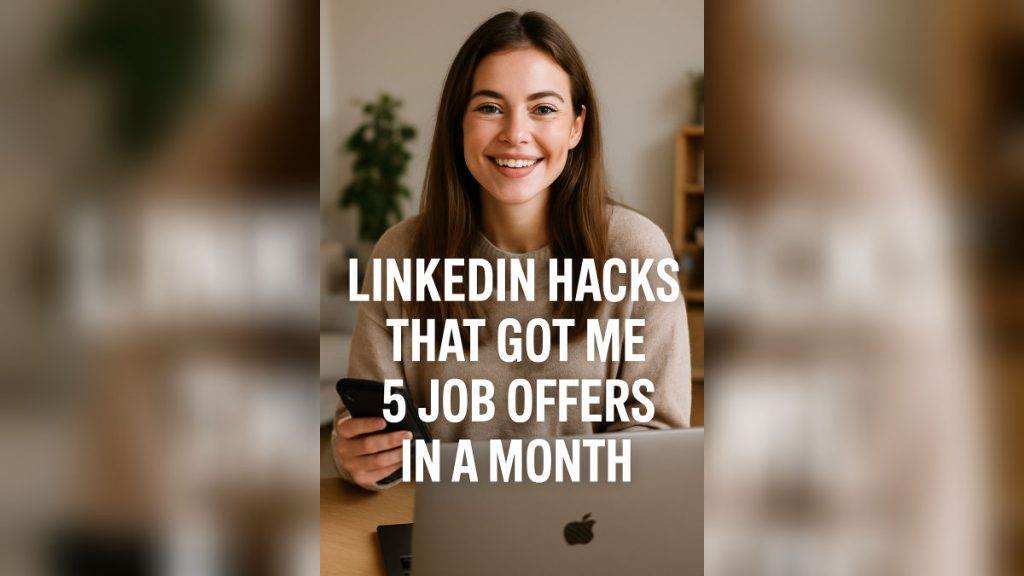
Short answer: Five job offers in a month came from treating LinkedIn like a personal brand, not a digital résumé. Keyword-smart profile, story-led About section, professional headshot (88% of hiring managers say it influences perception, per a 2023 LinkedIn study), three weekly posts of value, strategic connections with personalised notes, and a Featured section full of proof.
If someone had told me a year ago that I’d be juggling five job offers in a single month, I might have laughed it off. But that’s exactly what happened. And I credit LinkedIn. No Ivy League degree. No tech wizardry. Definitely not 10 years of experience. What I did have was a clear strategy and an understanding of how to turn LinkedIn into more than just a digital résumé.
Whether you’re job hunting, pivoting careers, or just want recruiters to notice you, these LinkedIn hacks worked for me. They might work for you too.
How do you optimise your LinkedIn profile for recruiters?
Keyword smart equals search smart
Think of LinkedIn as a search engine for professionals. Like SEO on Google, keyword optimisation helps your profile get found by recruiters.
Instead of “Marketing Graduate,” I revised my headline to: “Digital Marketing | SEO & Content Strategist | Helping Brands Grow Online”. I sprinkled relevant keywords like “Google Ads,” “social media strategy,” and “email campaigns” throughout my profile. Tools like Jobscan and LinkedIn’s own job listings helped me identify high-impact keywords.
Pro tip: use job descriptions in your target roles as a goldmine. If “data-driven” or “cross-functional collaboration” appears often, work those phrases in. Authentically, of course.
How do you write a LinkedIn About section that sells?
Most people either skip this section or copy-paste their résumé. Huge mistake. Instead I told my story. How I discovered my passion for marketing, the challenges I faced during internships, and the measurable impact I made.
Numbers were my best friend. “I led a social media campaign that grew engagement by 140% in 3 months.” That one line caught the attention of two recruiters. Not because it was flashy, but because it was specific and results-driven.
Why does your headshot matter so much?
Your headshot isn’t just a picture. It’s a brand statement. I upgraded from a casual selfie to a professional photo with neutral lighting and a clean background. I also designed a banner using Canva, featuring my tagline and a subtle visual of my niche (marketing, in my case). This small investment made my profile look polished and trustworthy. Something that 88% of hiring managers say influences their perception, according to a 2023 LinkedIn study.
How do you stay active on LinkedIn without being spammy?
I made a rule to post or comment at least three times a week. Not spam, not fluff. Value. I shared lessons from projects, opinions on marketing trends, and thoughtful comments on others’ content. One short post about a campaign that failed (and what I learned) unexpectedly went viral. Over 20,000 views and several DMs from recruiters.
“Being visible doesn’t mean being loud. It means being relevant and genuine.”
I also joined a few LinkedIn groups related to digital marketing and engaged in meaningful discussions. That’s how I got referred to an opening in a top startup, without even applying.
How do you build a strategic LinkedIn network?
Connection is currency. Here’s where most people go wrong. They connect randomly and expect results. I was intentional. I began by connecting with:
- Alumni from my university working in relevant industries
- Hiring managers and recruiters from companies I admired
- Thought leaders in marketing
- Professionals I met through internships and workshops
Every request came with a short, personalised note. Something like:
“Hi [Name], I noticed we both studied at [College] and work in the marketing space. Would love to connect and learn from your journey.”
The response rate? Around 70%. I also exchanged recommendations with a former intern colleague. It added social proof and boosted my credibility for recruiters scanning profiles quickly.
How do you use LinkedIn’s job tools properly?
The “Open to Work” badge — use it wisely
Instead of displaying the green “Open to Work” banner to the world, I chose the setting where only recruiters could see it. This kept my search discreet while still signaling interest to the right people.
Job alerts plus Easy Apply
I set job alerts for roles like “Content Strategist” and “Social Media Executive” in specific locations. Every morning, my inbox had a fresh batch of tailored opportunities. For roles that mattered most, I didn’t rely on “Easy Apply” alone. I found the hiring manager on LinkedIn, sent a short message introducing myself, and expressed interest. This hybrid approach — smart alerts plus human follow-up — was a game-changer.
How do you showcase your work on LinkedIn?
I used the Featured section to highlight my portfolio. Projects, blog posts, campaign results, and certifications from Google and HubSpot had a home there. Recruiters loved the “proof of work.” It made the conversation easier because they already saw what I was capable of.
Even small wins count. That time I helped a friend’s food blog grow from 300 to 1500 followers in two weeks? Featured. That certificate from a free SEO course? Featured. Your profile shouldn’t just say you’re skilled. It should show it.
Why do recent certifications matter?
Lifelong learner equals career magnet. I made sure to showcase that I was constantly evolving. I completed 3 short courses in the month I was job hunting and updated them to my profile. Recruiters want to see that you’re not static. They want growth-mindset candidates.
According to LinkedIn Learning, profiles with recent certifications get 6x more views from recruiters. That statistic alone made me invest time in upskilling. And it paid off.
LinkedIn isn’t magic, but it can work wonders
Getting five job offers in a month didn’t happen because I was lucky. It happened because I treated LinkedIn like a personal brand platform, not just a digital résumé. I optimised, I engaged, I connected with purpose, and I showed my value instead of stating it. “You don’t need thousands of followers. You need the right 100 connections, the right message, and the right moment.”
Whether you’re just starting out or stuck in a job search rut, revamp your LinkedIn. You never know which recruiter is one scroll away.
FAQs about LinkedIn job hacks
What LinkedIn hacks get the most job offers?
Keyword-optimised headline and About section, professional headshot, three weekly posts of genuine value, personalised connection requests, and a Featured section showing real work. Combine smart job alerts with direct messages to hiring managers.
How often should you post on LinkedIn to get noticed?
About three times a week. Mix original posts with thoughtful comments on others’ content. Quality beats quantity, and one post sharing a real lesson from a failed campaign can outperform a month of generic content.
Does the LinkedIn profile photo really matter?
Yes. A 2023 LinkedIn study found that 88% of hiring managers say a professional headshot influences their perception of a candidate. A clean photo plus a custom banner from Canva can transform how recruiters view your profile.
How do you write a LinkedIn connection request that gets accepted?
Keep it short and personalised. Mention something specific — shared university, a post they wrote, or a common industry. A note that opens with shared context gets a response rate of around 70%.
Do LinkedIn certifications actually help with job searches?
Yes. According to LinkedIn Learning, profiles with recent certifications get 6x more views from recruiters. Even short courses signal that you’re actively upskilling.