
Short answer: Rest is the new productivity because your brain’s default mode network — active when you do nothing — powers memory, emotion, and creative problem-solving. A 2024 Deloitte survey found 77% of Gen Z professionals feel burned out “often” or “always,” and Harvard and Stanford studies show quiet breaks lead to 40% more original ideas.
In a world obsessed with constant motion, doing nothing has become a radical act. The idea of rest — real, intentional rest — gets dismissed as laziness or wasted time. A quiet shift is happening among young people who see rest not as the opposite of work, but as the foundation for creativity, clarity, and mental health.
The art of doing nothing isn’t about idleness. It’s about reclaiming the pauses that our hyper-connected, over-scheduled lives have stolen.
Why is Gen Z burning out?
Millennials and Gen Z are growing up in an era where productivity is glorified and busyness has become a badge of honour. Between side hustles, content creation, and endless digital engagement, we’ve normalised exhaustion as ambition. According to a 2024 Deloitte survey, nearly 77% of Gen Z professionals report feeling burned out “often” or “always.”
We live by our calendars and notifications. The moment we stop, the silence feels uncomfortable, as if we’re doing something wrong. This unease, known as “productivity guilt,” keeps us trapped in cycles of doing more even when our bodies and minds beg for stillness.
Here’s the truth: your brain isn’t built for nonstop output. It needs idleness to make connections, to imagine, to process emotions. Doing nothing is not a failure of productivity; it’s what makes productivity possible.
What does science say about stillness and creativity?
Neuroscience has an interesting take on boredom and rest. When the brain is at rest — daydreaming, staring at the ceiling, watching clouds — something happens. The “default mode network” activates, letting your mind wander freely. This network is crucial for memory, emotional regulation, and creative problem-solving.
In short: when you’re doing nothing, your brain is doing some of its best work.
Studies from Harvard and Stanford have shown that participants who took quiet breaks during creative tasks came up with 40% more original ideas than those who didn’t. Even walking without music or podcasts can sharpen idea generation and mental restoration.
The modern world pushes us to fill every spare moment with stimulation — scrolling, streaming, replying. But the most valuable insights surface in moments of stillness. The great thinkers of history, from Aristotle to Virginia Woolf, all understood this rhythm of activity and rest. It’s time we relearn it.

Is a digital detox realistic, or do we need digital balance?
The phrase “digital detox” gets thrown around a lot, but total disconnection isn’t realistic for most of us. What’s emerging instead is the idea of “digital balance” — using technology with intention rather than impulse.
Mindful tech habits are becoming the new wellness trend. Apps like One Sec interrupt impulsive scrolling by asking you to breathe before opening social media. Tools like Forest reward you for staying off your phone by growing virtual trees. These aren’t gimmicks — they’re small acts of resistance against an economy designed to monetise your attention.
Setting boundaries doesn’t mean rejecting technology. It means designing your digital life around your wellbeing. Turning off notifications after 9 PM, leaving your phone in another room while reading, or scheduling “tech-free Sundays” are small but powerful ways to reclaim presence.
What is slow living?
“Slow living” is more than an aesthetic; it’s a philosophy. It’s the rejection of hurry. It’s making your morning coffee without checking emails. It’s taking long walks without tracking your steps. It’s choosing to experience moments fully, without rushing to capture them for the feed.
This movement has roots in the 1980s “slow food” movement in Italy, which began as a protest against fast food culture. Today it has expanded to include slow fashion, slow mornings, and everything in between. Social media is full of creators embracing quiet content — unfiltered daily routines, analogue hobbies, ambient soundscapes — as a counter to digital overload.
The appeal lies in simplicity. In a world that glorifies hustle, rest becomes rebellion.

Why is doing nothing an act of defiance?
Capitalism thrives on productivity, and rest challenges that. Choosing to do nothing — not out of laziness, but out of self-respect — is a quiet political statement. It says, “I am not a machine. I do not exist to produce endlessly.”
For Gen Z, this resonates. Many are rejecting traditional notions of success tied to overwork and burnout. The pandemic accelerated this mindset shift: when the world stopped, people realised how much they’d been running on autopilot.
Now, young professionals are prioritising mental health days, flexible work, and creative hobbies. The conversation is moving from “How much can I do?” to “How do I want to feel?”
How do you practice the art of doing nothing?
You don’t have to meditate for hours or escape to the mountains. Doing nothing can be beautifully simple.
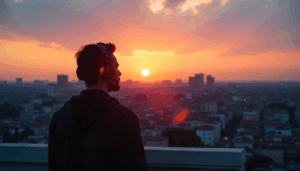
- Sit by the window and watch the light change.
- Take a walk without your phone.
- Lie down on the floor and listen to silence.
- Let yourself be bored without rushing to fix it.
These moments aren’t a waste of time. They’re how you refill your creative and emotional reserves.
Start small. Schedule five minutes of stillness a day. Gradually, those moments of nothingness will feel precious — a space where you meet yourself again.
Redefining success
If the past decade was about optimisation, the next might be about restoration. The world doesn’t need more hustle; it needs more balance.
Doing nothing teaches you presence, awareness, and calm — the very qualities we’ve lost in our race to “get ahead.” Success isn’t about speed or constant motion. It’s about sustainability: being able to show up with clarity, energy, and intention.
As society embraces mindfulness and mental wellness, perhaps rest will finally be seen not as a luxury, but as a birthright.
The power of the pause
Doing nothing is not about escape. It’s about returning — to yourself, to your senses, to your humanity. In a culture that constantly demands more, the most courageous thing you can do is stop. Rest is not passive. It’s active resistance. It’s self-preservation. It’s how you build a life that’s truly yours.
Because sometimes, the most productive thing you can do is absolutely nothing.
FAQs about rest, slow living, and doing nothing
Is doing nothing actually good for your brain?
Yes. When you stop actively focusing, the brain’s default mode network activates and handles memory consolidation, emotional processing, and creative problem-solving. Harvard and Stanford studies show quiet breaks during creative tasks lead to 40% more original ideas.
How much rest does Gen Z actually need?
There’s no single number, but a 2024 Deloitte survey found 77% of Gen Z professionals feel burned out often or always — a sign most are under-rested. Start with five minutes of daily stillness, screen-free mornings, and at least one slower day per week.
What is productivity guilt?
Productivity guilt is the unease you feel when you aren’t being productive, even during rest. It keeps people trapped in cycles of overworking. Naming it is the first step; the second is accepting that rest itself is productive work for the brain and body.
What is the difference between digital detox and digital balance?
A digital detox means fully disconnecting, which isn’t realistic for most young people who work or study online. Digital balance means using technology with intention — turning off notifications after a set time, keeping phones out of the bedroom, or using apps like One Sec and Forest to curb impulse scrolling.
Where did the slow living movement start?
Slow living traces back to the 1980s slow food movement in Italy, which began as a protest against fast food culture. It has since expanded to slow fashion, slow mornings, and a broader philosophy of rejecting hurry in favour of presence and quality.