

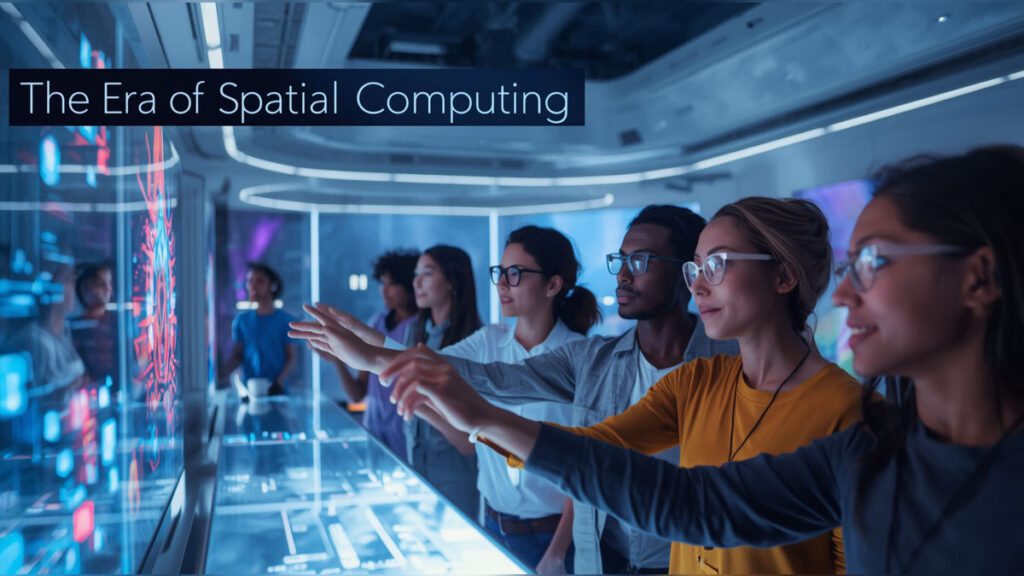
Short answer: Spatial computing blends the physical and digital worlds through augmented and mixed reality. In 2025, Apple Vision Pro, Meta Quest 3, Microsoft HoloLens, Magic Leap, and Varjo are pushing the tech into design, education, healthcare, and remote work. Analysts predict over 150 million users will engage with spatial devices by 2030.
The world is no longer confined to screens. In 2025, spatial computing, the blend of the physical and digital worlds through augmented and mixed reality, is becoming one of the defining frontiers in technology. Apple’s Vision Pro, Meta’s Quest 3, and a wave of new spatial startups are pushing us into an era where computing is not something we hold or look at. It is something we inhabit.
From design and education to gaming and remote work, spatial computing is changing how humans interact with information, each other, and the world around them.
What is spatial computing?
Spatial computing is technology that enables digital content to exist and interact in three-dimensional space, in real time. It merges sensors, AI, and 3D mapping to understand the physical world and place digital elements within it.
Imagine sitting in your living room and projecting a 3D model of a car into your space, walking around it, and customising every detail without leaving home. Or a meeting where your colleagues appear as holograms sitting across the table. That is spatial computing in action, merging reality and virtuality into a shared, interactive environment.
Which companies lead spatial computing?
The tech giants have made their moves. Apple’s Vision Pro is the most high-profile example, blending advanced eye tracking, hand gestures, and ultra-high-resolution displays to deliver an experience that feels spatial. Microsoft’s HoloLens continues to find enterprise success, especially in training and manufacturing. Meta’s focus on affordability and social presence is democratising mixed reality experiences.
Startups like Magic Leap and Varjo are pushing boundaries further, building precision-driven applications for surgery, design, and engineering. This is no longer about entertainment alone. It is about augmenting human capability.
How spatial computing is changing industries

Design and architecture
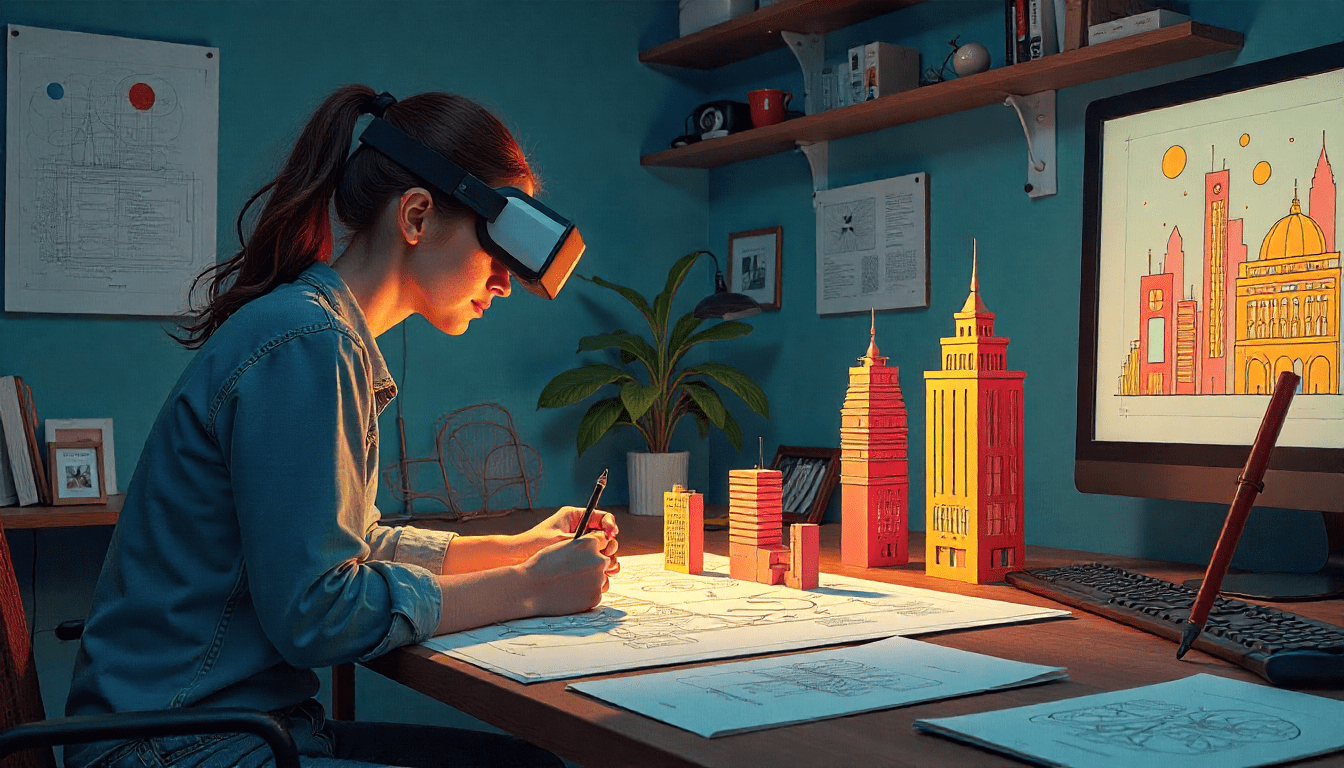
Architects can visualise entire buildings in real scale before a single brick is laid. Interior designers can walk clients through interactive, 3D environments that reflect real-world physics and lighting, leading to faster decisions and fewer revisions.
Education and learning
Spatial computing is making learning deeply immersive. Imagine a history class where students walk through ancient Rome or a biology lesson where the human body can be explored from the inside out. Turning abstract concepts into interactive experiences lifts retention and engagement.
Healthcare and surgery
Surgeons are using spatial computing to practise complex procedures in lifelike simulations. 3D holographic visualisations of patient data are improving precision in real surgeries, reducing risk and improving outcomes.
Work and collaboration
Virtual meetings are moving from flat video calls to dynamic 3D environments. Spatial computing allows teams across continents to collaborate on shared objects as if they were in the same room, a big leap for remote productivity.
What is the hardware challenge?
While the promise is immense, the technology is still expensive and heavy on hardware requirements. High-resolution displays, advanced sensors, and spatial mapping demand significant power. Apple’s Vision Pro costs thousands of dollars, which limits mainstream adoption.
Battery life, comfort, and accessibility remain hurdles. Like all transformative tech, costs will drop as innovation scales. The smartphone followed the same curve, and spatial computing will too.
What are the privacy and ethics concerns?
Spatial computing introduces a new layer of data collection. These systems track everything: eye movements, facial expressions, room layouts, and emotional responses. That raises important questions. Who owns this data? How is it stored and used?
Ethical frameworks around privacy, consent, and data transparency are still catching up. The same tech that enhances human connection could, if misused, become a surveillance tool. Striking the right balance will decide whether spatial computing becomes a utopia or a concern.
How do AI and IoT fit in?
The next evolution of spatial computing is its fusion with AI and IoT (Internet of Things). Imagine walking into a smart home where your AR glasses detect objects, adjust lighting, or pull up contextual information about your surroundings.
AI enables spatial systems to not only see your environment but understand it, predicting your intent, assisting your workflow, and learning from your habits. This synergy will blur the line between physical and digital worlds completely.
What does the spatial future look like?
By 2030, spatial computing is expected to become as ubiquitous as smartphones are today. Tech analysts predict that over 150 million users will engage with spatial devices by the end of the decade. The convergence of 5G, AI, and AR hardware will make spatial interfaces lightweight, affordable, and socially normalised.
Soon, we will not “open an app.” We will “look at” what we want. Interfaces will exist around us, responsive to gestures, gaze, and voice. This shift could redefine digital interaction more profoundly than the invention of touchscreens.

Living in the layer between worlds
Spatial computing is not another gadget trend. It is a philosophical evolution of how humans and machines coexist. It moves computing from screens into space, from observation into participation.
As we step into this hybrid world, the question is not whether spatial computing will become mainstream. It is how fast we can adapt our habits, creativity, and ethics to thrive in it.
FAQs about spatial computing
What is spatial computing in simple terms?
Spatial computing is technology that lets digital content exist and interact in three-dimensional space in real time. It uses sensors, AI, and 3D mapping to understand the physical world and place digital elements inside it, powering devices like Apple Vision Pro and Meta Quest 3.
What is the difference between AR, VR, and spatial computing?
AR layers digital content over the real world, VR fully replaces it with a virtual one, and spatial computing is the broader blend of both. Apple Vision Pro, Meta Quest 3, and Microsoft HoloLens all fall under the spatial computing umbrella.
How much does Apple Vision Pro cost?
Apple Vision Pro costs thousands of dollars, which limits mainstream adoption today. Like smartphones, costs are expected to drop as the technology scales and competition grows.
How is spatial computing used in healthcare?
Surgeons practise complex procedures in lifelike simulations, and 3D holographic visualisations of patient data improve precision during real surgeries. The result is reduced risk and better outcomes.
When will spatial computing become mainstream?
Analysts predict over 150 million users will engage with spatial devices by 2030. The convergence of 5G, AI, and AR hardware is expected to make spatial interfaces lightweight, affordable, and socially normalised by then.