
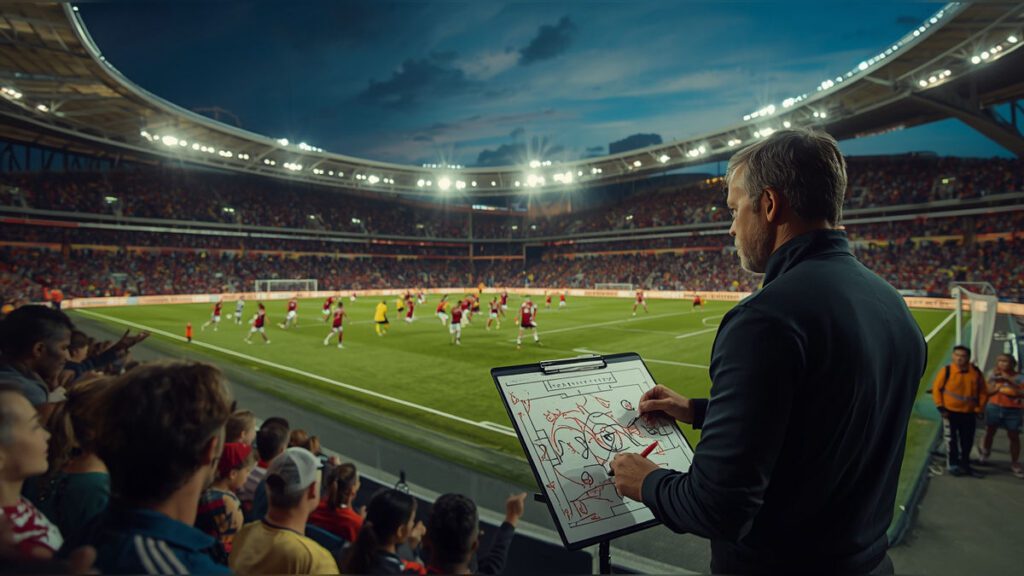
Short answer: Football tactics moved from rigid early formations like 2-3-5 and WM, to the fluid Total Football of the 1970s, to Italy’s Catenaccio, and now to data-driven systems built by Pep Guardiola, Jurgen Klopp, and Mikel Arteta. The next shift will come from AI-driven analytics, but instinct and creativity remain central.
Football has never been only about goals. It is about strategy, rhythm, and evolution. Every generation witnesses a tactical revolution that redefines how the game is played. From the rigid formations of the early 1900s to the fluid positional play of today, football’s transformation is as artistic as it is athletic.
As fans, we focus on the players: dribblers, finishers, captains. Behind every great team lies a tactical philosophy. It is what turns 11 individuals into a single machine.
What did early football tactics look like?
In football’s early years, formations like 2-3-5 (the Pyramid) and WM (3-2-2-3) dominated. The focus was on direct play: long balls, strength, and individual flair. Defences were loose, attackers plentiful, and matches often ended in high-scoring chaos.
Managers of that era prioritised raw energy over positional discipline. It was entertaining but unbalanced. As professionalism and fitness levels improved, coaches began seeking control rather than chaos.

How did Total Football change the game?
The 1970s brought one of football’s most revolutionary ideas: Total Football, led by Rinus Michels and embodied by Johan Cruyff. The concept was simple yet radical. Every player could play anywhere.
Full-backs became wingers, forwards dropped deep, and the team moved as one fluid organism. This philosophy gave birth to positional intelligence, pressing systems, and creative freedom that still influence football today.
From Ajax to Barcelona, Total Football proved beauty and structure could coexist, and that intelligence could outplay brute force.
Why was Catenaccio so influential?
As attacking systems flourished, Italy responded with tactical discipline. The rise of Catenaccio, popularised by Inter Milan’s Helenio Herrera, emphasised defensive solidity and counterattacking precision.
Critics called it “negative football,” yet it changed the game forever. The idea that defence could be an art form inspired decades of tactical innovation. Today’s pressing systems trace roots back to those early defensive shapes and transitions.
What defines modern football tactics?
The 21st century has seen football turn scientific. Coaches like Pep Guardiola, Jurgen Klopp, and Mikel Arteta have revolutionised modern tactics by combining analytics, psychology, and positional play.
Guardiola’s Positional Play (Juego de Posición): Control the game through structured chaos, possession with purpose.
Klopp’s Gegenpressing: Win the ball within five seconds after losing it, defence as the first attack.
Tuchel & Arteta’s Tactical Flexibility: Hybrid formations that change shape mid-match based on space and flow.
Today’s managers are architects as much as tacticians. They use drone analysis, heat maps, and AI-assisted scouting to craft their teams like digital blueprints.

Why is tactical intelligence now a core skill?
In modern football, intelligence matters as much as speed. Players like Kevin De Bruyne, Rodri, and Jude Bellingham thrive because they understand space. They know not only how to move but when and why.
Training sessions now involve scenario-based drills that simulate game dynamics. Football IQ is a measurable metric. The era of the robotic player is gone. Today’s footballer must think as fast as they run.
How has women’s football evolved tactically?
Women’s football has grown, and with it, tactical sophistication. Coaches like Sarina Wiegman and Emma Hayes have introduced systems rivalling top men’s clubs in precision and creativity.
The emphasis on pressing, build-up play, and structured defending has elevated the women’s game to new heights, inspiring tactical innovators across both genders.
What does the future of football tactics look like?
The next big shift in football might come from AI-driven tactics and real-time analytics. Imagine managers receiving instant data during matches to adapt strategies mid-play. Smart wearables and performance sensors are already paving the way.
One thing will never change: the human element. No algorithm can replace instinct, emotion, and creativity. The best tactics still depend on players who can think freely within structure.
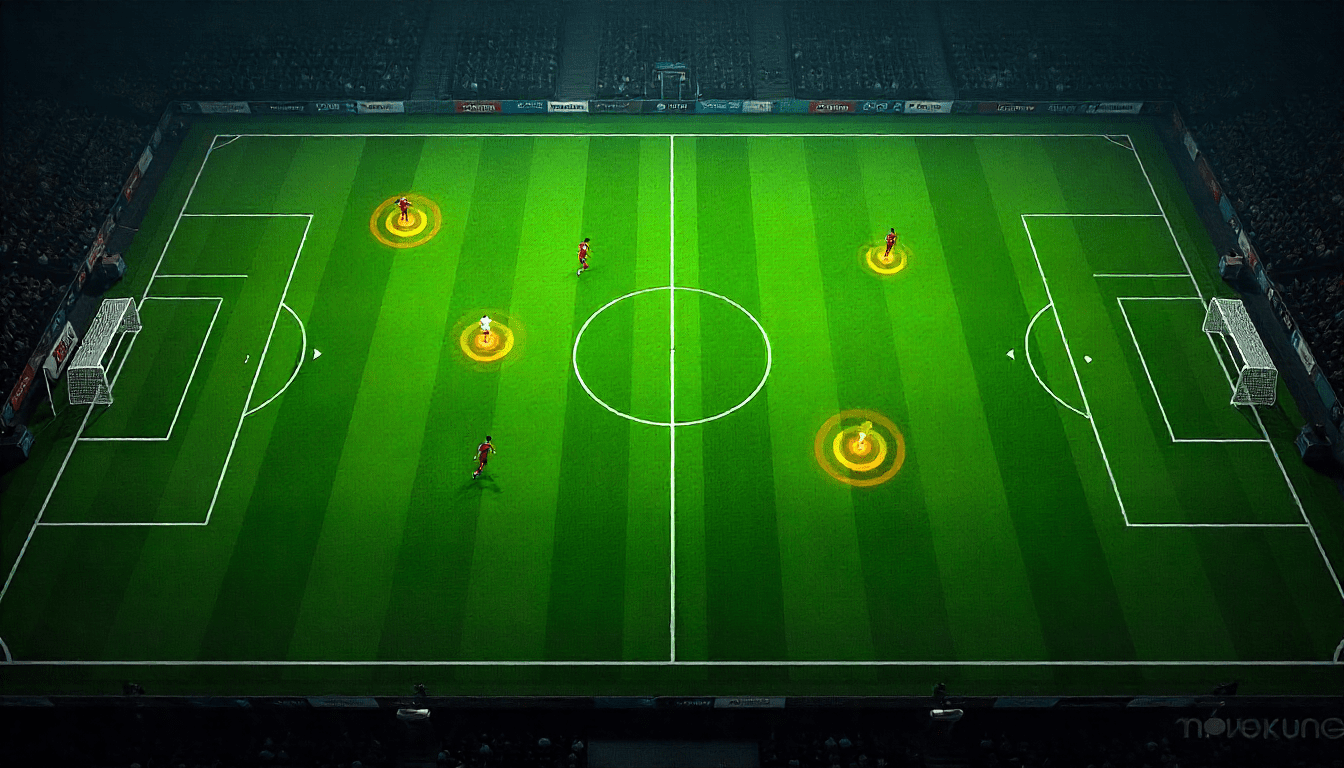
The mind behind the game
Football’s beauty lies not just in goals but in the brains behind them. Tactics are the invisible brushstrokes painting every match into art. From rigid formations to data-driven systems, the game’s evolution mirrors human creativity itself: adaptable, intelligent, and endlessly passionate.
As the whistle blows for the next generation, one thing is clear. In the modern era, the smartest teams win, not just the strongest.
FAQs about the evolution of football tactics
What were the first dominant football formations?
Early football was dominated by the 2-3-5 Pyramid and WM (3-2-2-3) formations. They prioritised direct play, long balls, and individual flair. Defences were loose, attackers plentiful, and scores often high.
Who invented Total Football?
Total Football rose in the 1970s, led by Rinus Michels and embodied by Johan Cruyff. Every player could play anywhere: full-backs became wingers, forwards dropped deep, and the team moved as one fluid unit. Ajax and later Barcelona built their identity on it.
What is the difference between Guardiola’s and Klopp’s tactics?
Pep Guardiola’s Positional Play (Juego de Posición) is about controlled possession and structured shape. Jurgen Klopp’s Gegenpressing focuses on winning the ball within five seconds of losing it, treating defence as the first attack.
How is AI changing football tactics?
Managers use drone analysis, heat maps, and AI-assisted scouting to design their teams. The next shift will be real-time analytics during matches, where coaches can adapt strategies mid-play using smart wearables and performance sensors.
Why does women’s football matter tactically?
Coaches like Sarina Wiegman and Emma Hayes have introduced systems that rival top men’s clubs in precision and creativity. Their work on pressing, build-up play, and structured defending has pushed tactical innovation across the sport.