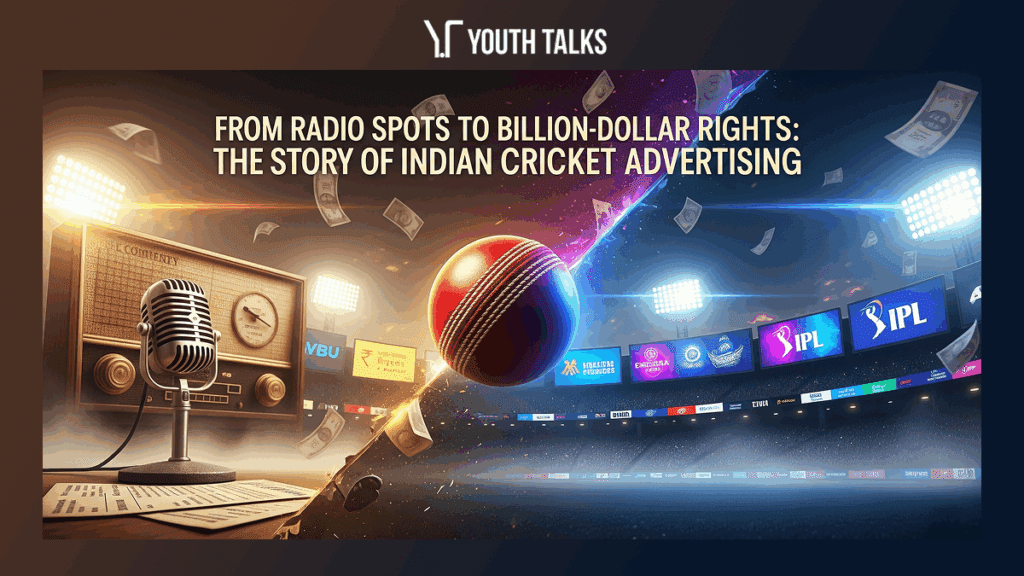
Short answer: Indian cricket advertising grew from 1940s Dalda-sponsored radio commentary, through the 1980s Doordarshan TV era, the 1990s Pepsi vs Coke cola wars, Sahara and Nike’s early-2000s jersey deals, and the IPL explosion from 2008. The 2023-27 IPL media rights alone sold for Rs 48,390 crore, placing the league among the world’s top sports properties.
Few platforms in India command attention and passion like cricket. A colonial pastime has turned into a cultural and commercial juggernaut. Advertising has followed cricket every step of the way, first through radio commentary, then dominating TV breaks, and now converging into the digital, broadcast, and on-ground ecosystem of today.
This piece traces how Indian cricket advertising evolved, from the humble Dalda radio sponsorships of the 1940s to the astronomical IPL media rights deals of the 2020s.
How did cricket advertising in India begin (1930s-1960s)?
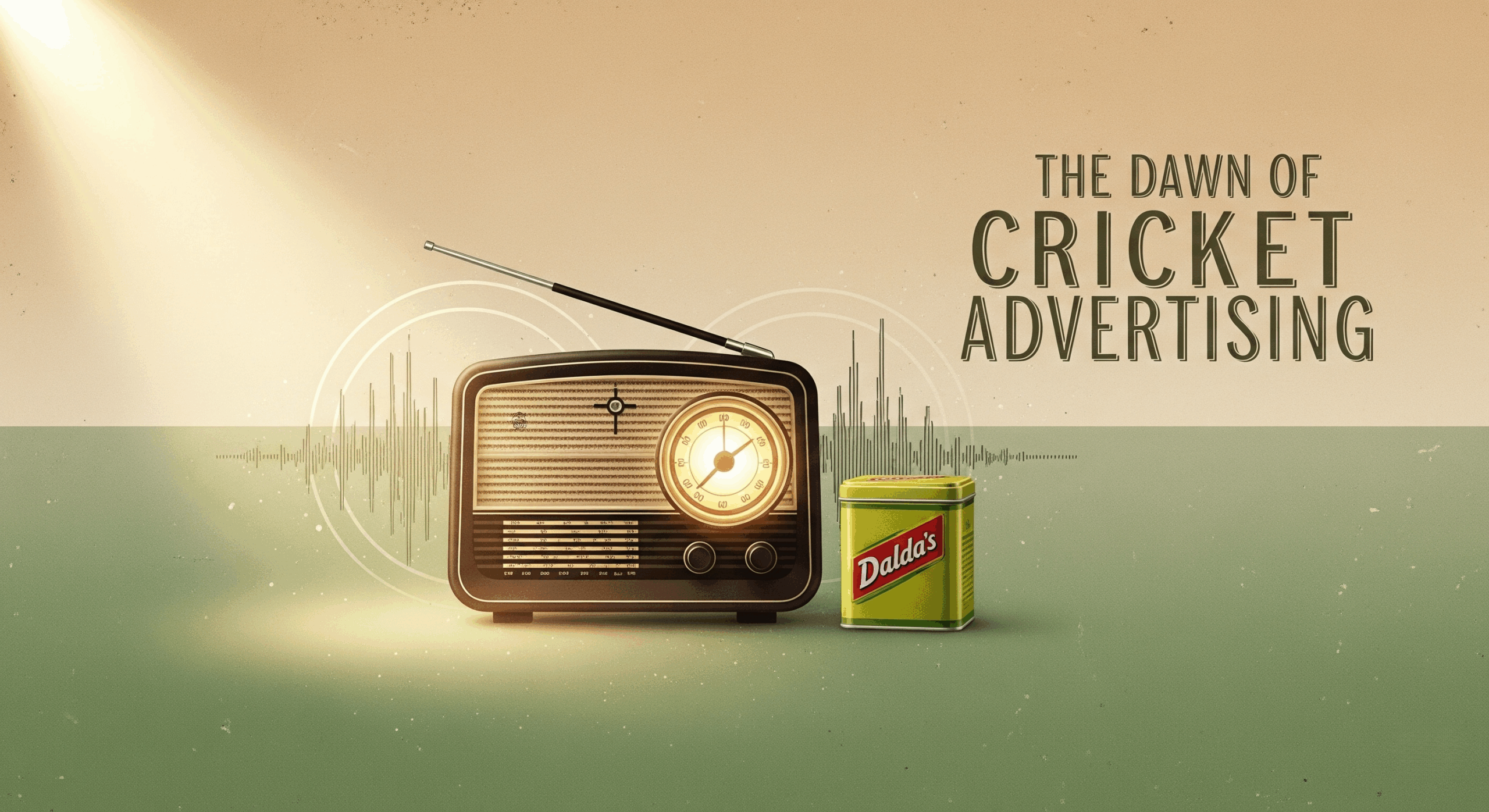
The story starts in the 1930s and 1940s, when cricket in India was consumed mainly through radio commentary. In this period Dalda, the edible oil brand, made history by becoming one of the earliest advertisers to associate with cricket. Dalda sponsored cricket commentary sessions, embedding its name in the listening experience.
For most Indians back then, “Dalda cricket commentary” became synonymous with the game itself, a sign of how early advertising wove itself into cricket’s auditory imagination.
Ad formats:
- Branded mentions by commentators.
- Radio spots during commentary breaks.
- Cross-promotion via cinema halls and print.
Revenue scale: Minimal compared to today, with no formalised rights, but brands gained unmatched recall among India’s growing cricket-loving base.
How did Doordarshan change cricket advertising in the 1980s-1990s?
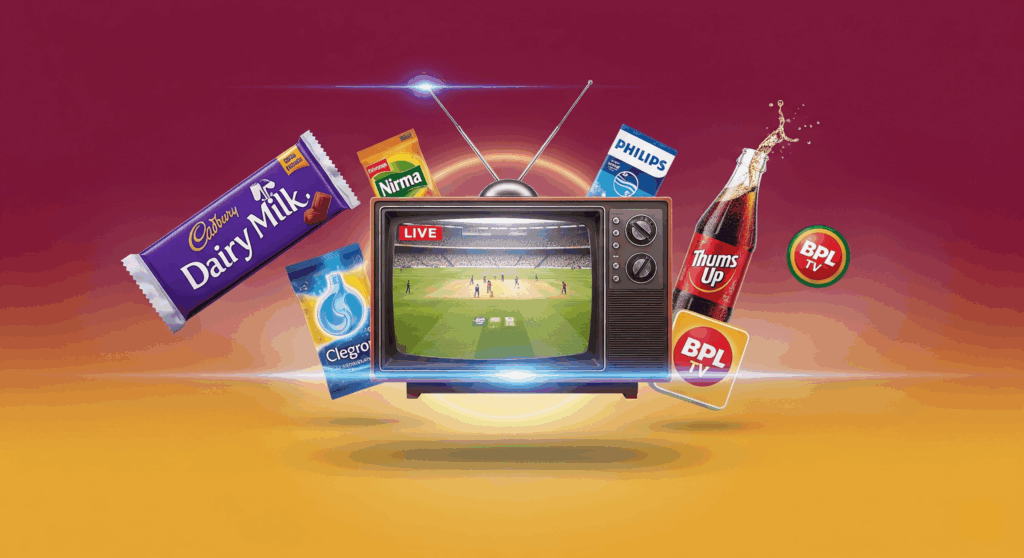
With colour television arriving in the 1980s, cricket’s reach expanded dramatically. Doordarshan began live telecasts of matches, turning cricket into a household spectacle. Brands quickly saw the power of associating with cricket on TV.
Key brands of the era included:
- Cadbury (dairy milk moments during cricket).
- Thums Up (high-energy cola linked with cricket action).
- Nirma, Philips, BPL (family consumer goods reaching cricket audiences).
Ad formats:
- 30-second TV spots during match breaks.
- Limited in-stadium signage.
- Simple “Brought to you by…” segments.
Revenue growth: Ad revenues were modest, running into crores, but this era cemented cricket as the nation’s preferred advertising stage.
How did liberalisation and the Pepsi vs Coke cola wars reshape cricket ads (1990s-2000s)?
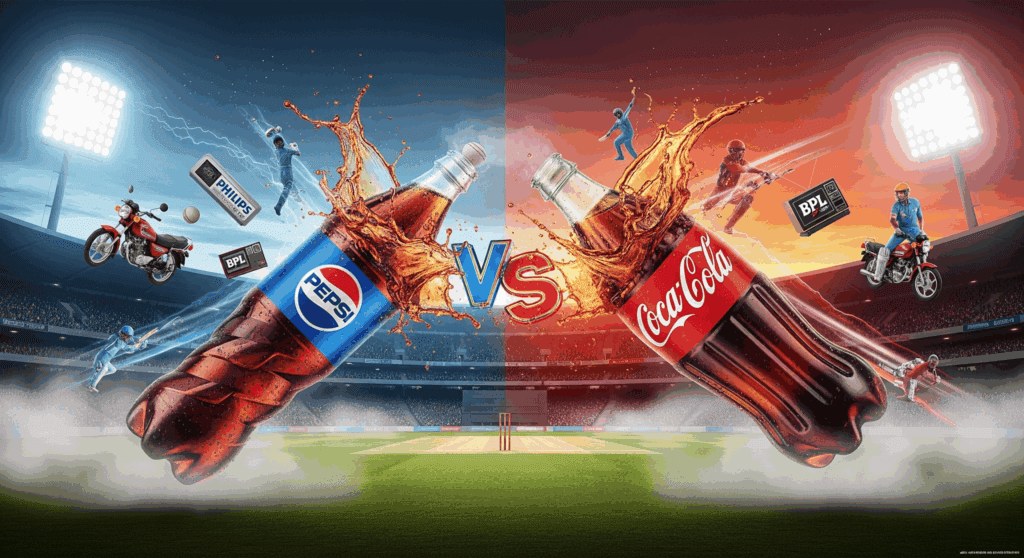
Economic liberalisation in 1991 unleashed a wave of private broadcasters and global brands. Satellite TV opened cricket to mass advertising beyond Doordarshan’s monopoly.
The Cola Wars defined this era.
- Pepsi’s “Nothing Official About It” campaign (1996 World Cup) became iconic, tapping into youth rebellion while directly challenging Coke’s global cricket sponsorship.
- Coke, Hero Honda, Philips, and BPL also entered cricket with big-ticket ad spends.
Ad clutter grew, and so did creativity. This was the time of jingles, youth-driven campaigns, and star cricketers like Sachin, Sourav, and Dravid taking on brand ambassador roles.
Revenue scale: Early BCCI rights deals began crossing hundreds of crores, a sharp jump from earlier modest sums.
What was the BCCI commercial boom with Sahara and Nike (2000s)?
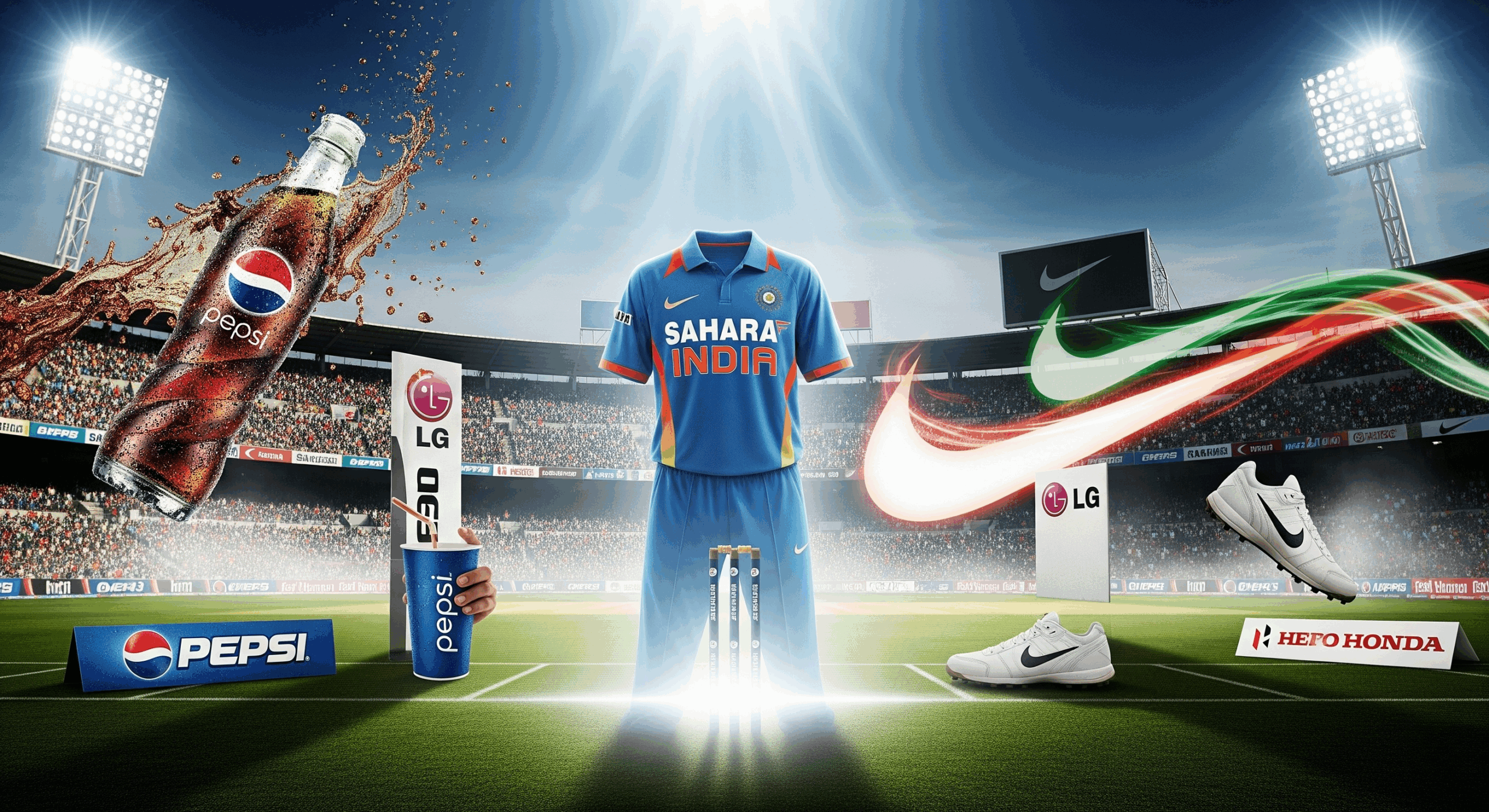
The early 2000s marked the professionalisation of cricket advertising. The BCCI sold sponsorship rights at unprecedented prices, reshaping the financial fabric of the sport.
Key highlights:
- Sahara became the Team India sponsor in 2001, paying around Rs 400 crore for its iconic jersey deal.
- Pepsi continued its dominance, sponsoring major tournaments.
- Nike entered Indian cricket with a Rs 370 crore kit deal in 2006, signalling the arrival of global sportswear giants.
Ad formats expanded:
- Team kit sponsorships.
- Ground signage and branding.
- Title rights for bilateral series.
Revenue boom: Media deals reached the Rs 1,200-1,600 crore range, laying the foundation for the IPL.
How did the IPL launch in 2008 redefine cricket advertising?
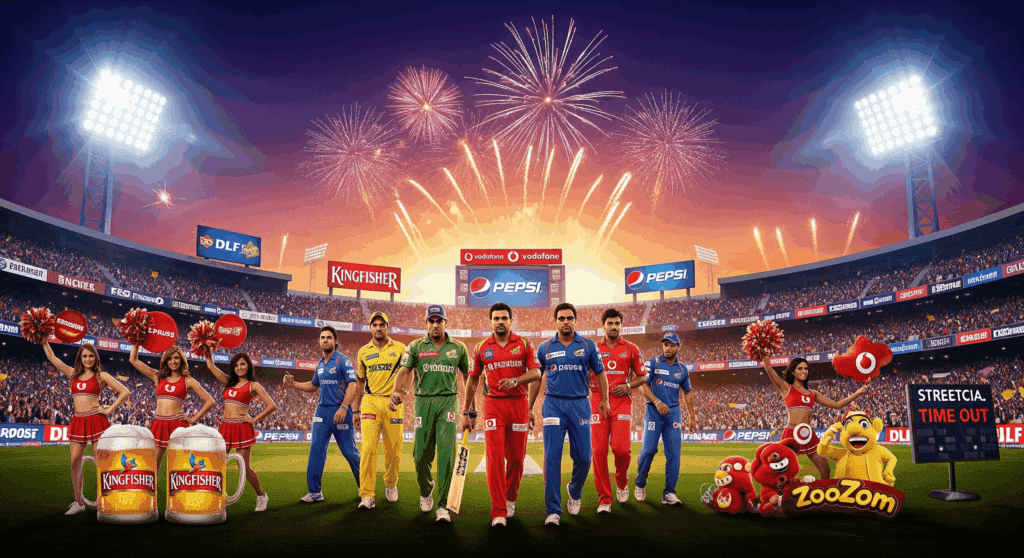
The launch of the Indian Premier League (IPL) in 2008 was a watershed moment. Cricket was no longer just a sport; it became a packaged entertainment property, complete with teams, franchises, cheerleaders, and city rivalries.
Brands like DLF, Kingfisher, Pepsi, and Vodafone became synonymous with the league. The IPL also introduced team franchise sponsorships, with companies like Muthoot, Aircel, and Gionee appearing on jerseys.
Ad formats redefined:
- Integrated franchise sponsorships.
- Title sponsorships (DLF’s Rs 200 crore / 5-year deal).
- Cheerleader branding, strategic time-outs, and product placement.
Revenue scale: The first season alone commanded Rs 350-400 crore, marking cricket’s entry into serious big-money advertising.
What happened during the IPL consolidation years (2013-2018)?
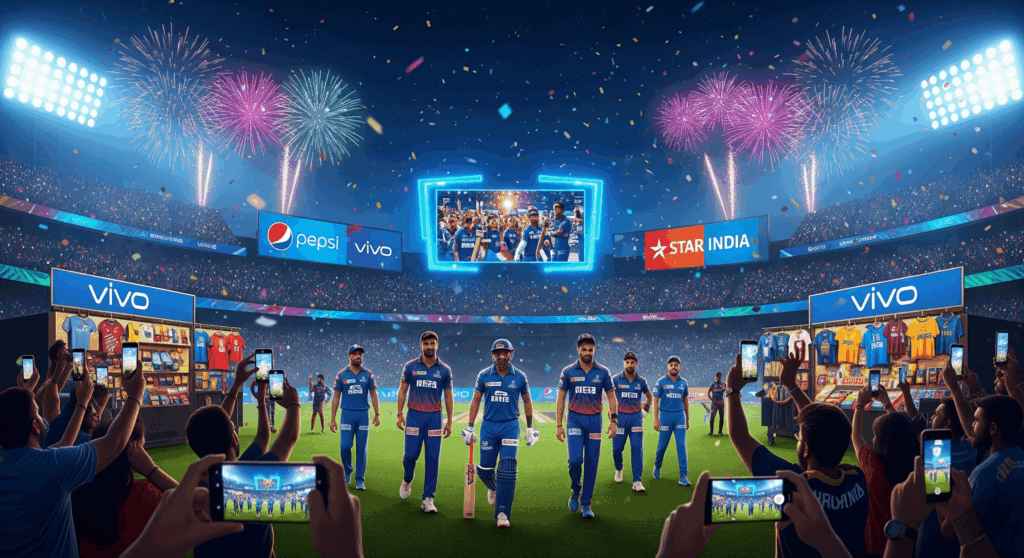
This era saw the IPL mature into a global entertainment property, with steady advertising revenues.
Key brands included:
- Pepsi, Vivo, Star India, and multiple team-level sponsors.
- Growing digital-first brands testing IPL inventory.
Ad formats:
- Integrated campaigns spanning TV and digital.
- Interactive campaigns using social media.
- Team kits and merchandise.
Revenue growth: In 2017, Star India bought IPL rights for Rs 16,347.5 crore, an unprecedented leap that shocked the global sports market.
What defined the IPL mega era (2018-2023)?
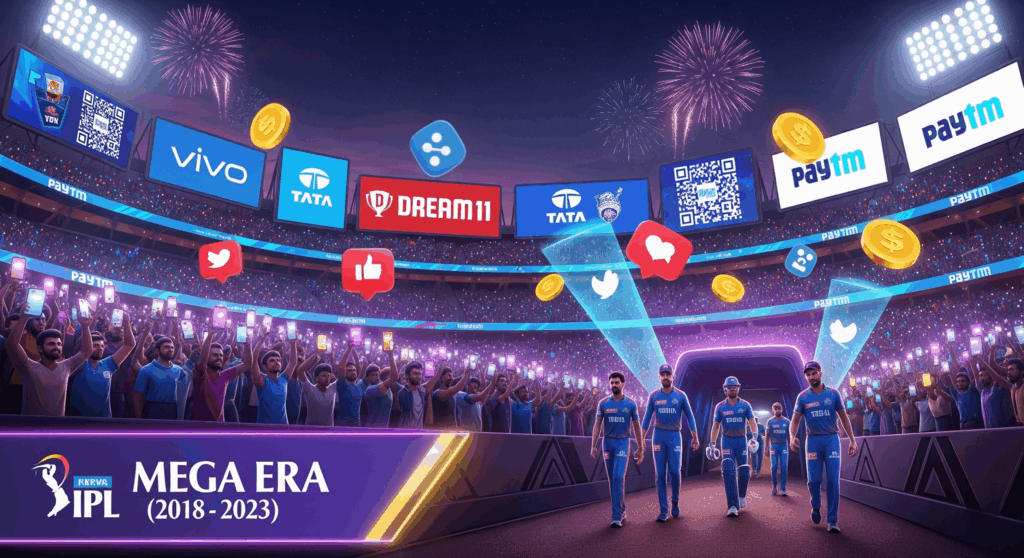
By the late 2010s, IPL was firmly entrenched as India’s biggest media property.
Brands like Vivo, Dream11, Tata, and Paytm invested heavily, competing for naming rights and front-of-shirt spots.
Ad formats expanded further:
- Cross-platform campaigns across TV, OTT, and digital.
- In-stadium activations tied to social media challenges.
- E-commerce and fintech integrations.
Revenue: BCCI’s FY23 revenue hit Rs 8,390 crore, with IPL contributing a majority share.
How much are IPL media rights worth today (2023-2027)?
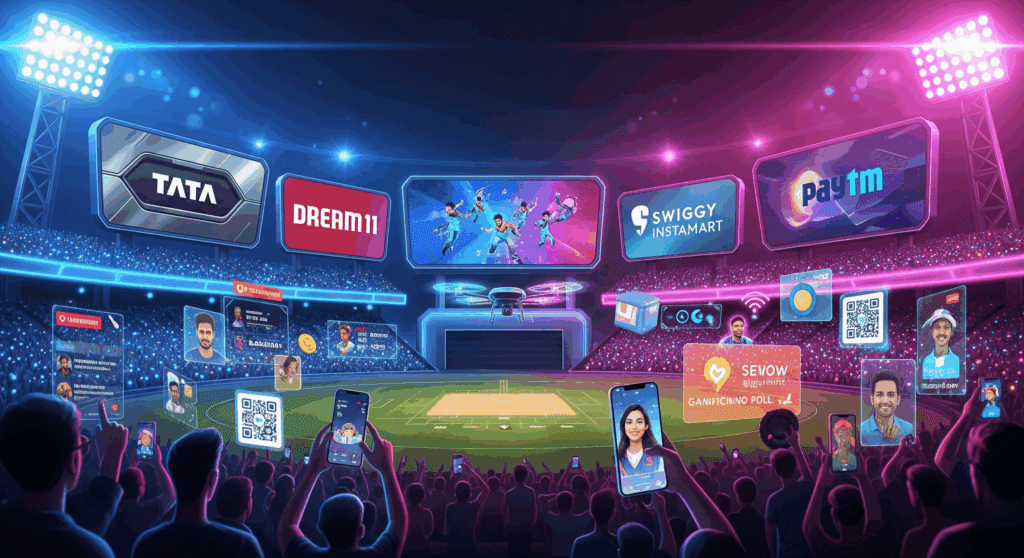
The current media rights cycle has taken cricket advertising into uncharted territory.
- The IPL 2023-27 rights were sold for Rs 48,390 crore, placing the tournament among the top global sports leagues, next only to the NFL and Premier League in per-match value.
- Tata, Dream11, Swiggy Instamart, fintech firms, and e-commerce players dominate the current brand roster.
- Digital ad formats such as OTT ads, influencer tie-ins, and interactive fan engagement are at the forefront, with advertisers chasing Gen Z audiences.
Revenue: The BCCI’s FY24 revenue touched Rs 9,741.7 crore, with IPL alone contributing Rs 5,761 crore.
Cricket as India’s biggest stage
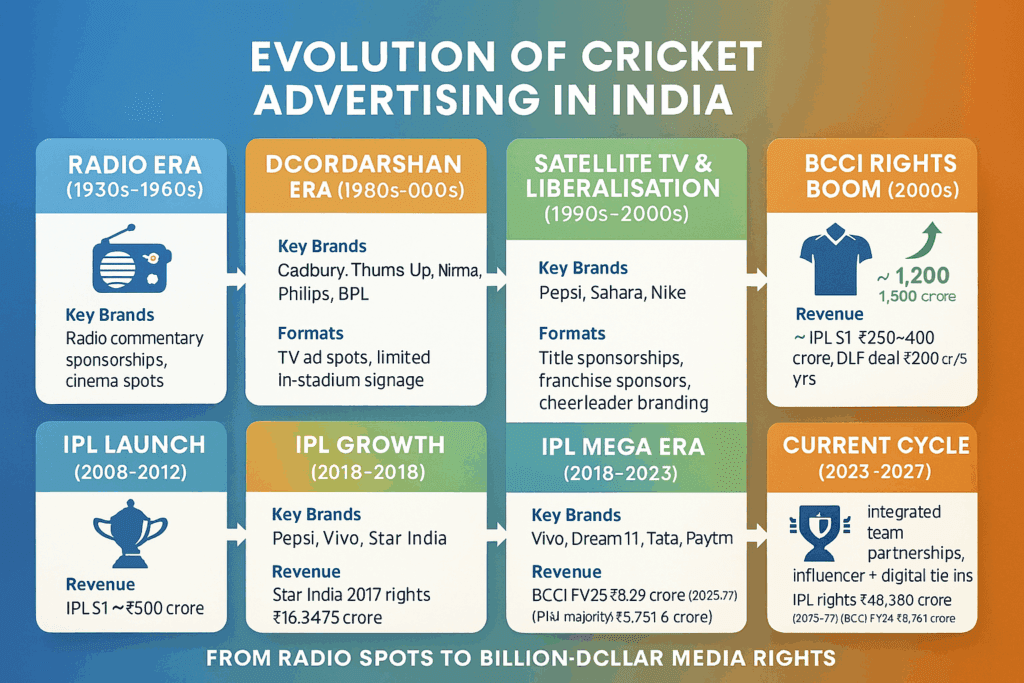
From Dalda on the radio to Tata and Dream11 on billion-dollar rights packages, cricket’s advertising journey mirrors India’s economic and cultural transformation. Each era reflects changing consumer aspirations, from FMCG staples of the 1950s, to aspirational colas in the 1990s, to today’s fintech and e-commerce disruptors.
More than a sport, cricket is India’s most powerful cultural product, a space where brands compete for emotion, loyalty, and cultural capital, not just eyeballs. With the IPL still growing, the next chapter of cricket advertising promises to be even bigger, bolder, and more digitally immersive than anything before.
FAQs about Indian cricket advertising
Which brand first advertised with Indian cricket?
Dalda, the edible oil brand, is widely credited as one of the earliest advertisers to associate with Indian cricket. It sponsored radio cricket commentary in the 1930s and 1940s, so much so that “Dalda cricket commentary” became synonymous with the game.
How much did the IPL 2023-27 media rights sell for?
The IPL 2023-27 media rights were sold for Rs 48,390 crore, placing the tournament among the top global sports leagues in per-match value, trailing only the NFL and the Premier League.
What was Pepsi’s most famous cricket campaign?
Pepsi’s “Nothing Official About It” campaign during the 1996 Cricket World Cup became iconic. It tapped into youth rebellion and directly challenged Coke’s official global cricket sponsorship.
How much were Sahara and Nike’s Team India deals?
Sahara became the Team India jersey sponsor in 2001 for around Rs 400 crore. Nike entered Indian cricket with a Rs 370 crore kit deal in 2006, signalling the arrival of global sportswear giants in Indian cricket.
What was BCCI’s revenue in FY24?
BCCI’s FY24 revenue touched Rs 9,741.7 crore, with the IPL alone contributing Rs 5,761 crore. FY23 revenue stood at Rs 8,390 crore, showing how central the IPL has become to Indian cricket’s economics.