
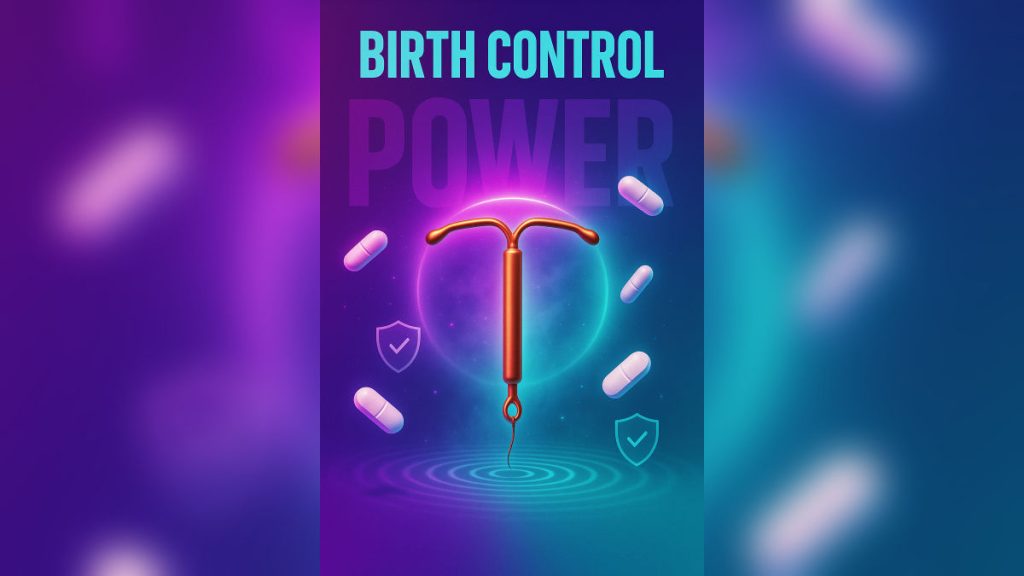
Short answer: Gen Z has more birth control options than any generation before, from matchstick-sized implants that last 3 years to copper IUDs effective for up to 12. The Guttmacher Institute reported in 2022 that over 60% of sexually active U.S. teens use some form of contraception. The best method is whichever fits your body, your routine, and your access to a healthcare provider.
Conversations about birth control with parents? Painfully awkward. Sometimes off the table entirely. Cultural taboos, generational gaps, plain old discomfort, take your pick. So Gen Z does what Gen Z does best, and turns to the internet for answers we should be getting from trusted adults. If that sounds familiar, you’re not alone, and you’re not wrong to look for information.
This is your no-judgment, straight-up, informed walkthrough. Because being informed is power. And taking charge of your reproductive health is nothing to apologise for.
Why does birth control matter more than you think?
It isn’t only about avoiding pregnancy. It’s about choice. Control over your body, your timing, your future. For a lot of people it’s also a way to manage hormonal imbalances, regulate periods, calm acne and ease cramps that would otherwise wreck a week. For Gen Z, one of the most progressive and health-conscious generations going, it’s about autonomy.
According to a 2022 report by the Guttmacher Institute, over 60% of sexually active teens in the U.S. use some form of birth control. And yet, misinformation still runs wild, and plenty of young people lean on myths or half-knowledge when making decisions about their own bodies.
What are the main birth control options?
There’s no one-size-fits-all here. What suits your friend may not suit you. Here’s a breakdown of the most common options, with the trade-offs spelled out.
1. Long-Acting Reversible Contraception (LARC)
If you’re someone who’d rather not think about a pill every day or fuss with a tracking app, LARCs might be your best bet.
- Implants: A matchstick-sized rod inserted under the skin of your upper arm. It releases hormones that prevent pregnancy and lasts up to 3 years. Wildly low-maintenance.
Personal take: “My implant took 15 minutes to insert, and I haven’t had to think about it in over a year,” says Aanya, 20, from Bengaluru. - Intrauterine Devices (IUDs): Tiny T-shaped devices placed inside your uterus.
- Copper IUDs are hormone-free and effective for up to 12 years.
- Hormonal IUDs release progestin and last between 3 to 7 years.
These options are over 99% effective. But they need a healthcare provider for insertion, and yes, the procedure can be uncomfortable, even rough. For many, the long stretch of not-thinking-about-it is worth the bad afternoon.
2. Hormonal methods
These work by stopping ovulation, and they come in a few shapes:
- Birth Control Pills: Taken daily. Some are combination pills (estrogen + progestin), others are progestin-only mini-pills.
- Patches: Stick to your skin and release hormones through it. Changed weekly.
- Rings: Inserted into the vagina, left in place for three weeks.
- Shots: Given every three months by a healthcare provider.
Pros? They’re effective when used correctly. Cons? Forget a pill or skip a shot, and effectiveness drops. Some users hit side effects, mood shifts, nausea, irregular bleeding. Not everyone, but enough that it’s worth knowing going in.
3. Barrier methods
Simple. Accessible. STI-protective.
- Male Condoms: Widely available, affordable, solid protection against pregnancy and STIs both. Effectiveness is about 87% with typical use.
- Female Condoms: Less common, still available, comparable protection.
- Spermicide and Sponges: Used with or without condoms, but not as effective on their own.
Stacking condoms with another method (the pill, an IUD) is what’s called dual protection, a smart play for blocking pregnancy and STIs at the same time.
4. Permanent methods
For people 100% sure they don’t want kids. Ever.
- Vasectomy (for men) and Female Sterilization are surgical procedures. They’re over 99% effective but irreversible in most cases. Not the right call for anyone who might change their mind down the line.
What won’t your parents tell you about birth control?
A lot of us grew up in homes where sex ed was either skipped, sugar-coated, or built around fear. Let’s straighten a few things out:
- Birth control does NOT make you “promiscuous”. It makes you prepared.
- You have the right to confidential healthcare. In most countries, doctors can’t share your information without your consent, even with your parents.
- Side effects are real, but not guaranteed. Talk to a provider about your health history to find what suits you.
- Emergency contraception exists. It’s a backup, not a plan. Pills like Plan B can prevent pregnancy if taken within 72 hours after unprotected sex, but shouldn’t be used regularly.
How can you actually get birth control?
Depending on where you live, some methods need a prescription while others sit on a pharmacy shelf. Here’s how to take action:
- Visit a healthcare provider: General doctors, gynecologists, and clinics like Planned Parenthood can walk you through your options and even insert LARCs.
- Check out youth-friendly platforms:
Many of these services offer sliding-scale fees or free consultations for students or low-income individuals.
Myths, busted
“You can’t get pregnant the first time.”
False. You absolutely can.
“Pulling out is enough.”
Nope. Pre-cum can still contain sperm, and this method is only around 78% effective.
“You’ll gain tons of weight on the pill.”
Maybe. But not everyone does, and any changes are usually mild and manageable.
“Only girls need to think about birth control.”
Birth control is everyone’s responsibility. If you’re part of the equation, you’re part of the planning.
Final thoughts: own your health, own your future
Navigating contraception as a young person, especially without open conversations at home, can feel like walking blindfolded through a maze. The more you know, the more empowered you become. Strange how that works.
You’re not “too young” to learn about your options. You’re not “irresponsible” for being curious. Wanting to protect yourself and make educated decisions is one of the most grown-up things a person can do.
So here’s the call to action: get curious, get informed, get the birth control that fits your life, not someone else’s idea of what’s right. And if you can’t talk to your parents? That’s okay. Talk to a professional, talk to a peer, talk to yourself. But talk.
You deserve answers. You deserve autonomy. You deserve to feel safe in your own body. Always.
FAQs about Gen Z and birth control
What is the most effective birth control for teenagers?
LARCs (long-acting reversible contraception) like implants and IUDs are over 99% effective and don’t require daily action. The implant lasts up to 3 years, copper IUDs up to 12 years, and hormonal IUDs between 3 and 7 years, making them the lowest-maintenance options on the market.
Can I get birth control without my parents knowing?
In most countries, you have the right to confidential healthcare, which means doctors can’t share your information without your consent, even with your parents. Clinics like Planned Parenthood, plus platforms such as Scarleteen and Advocates for Youth, are built specifically to help young people access reproductive care discreetly.
Do birth control pills cause weight gain?
Maybe, but it’s not a guarantee. Some people on the pill notice mild changes; many notice none at all. Any shift is usually manageable, and if it bothers you, a provider can switch you to a different formulation.
How long does Plan B work after unprotected sex?
Emergency contraception pills like Plan B can prevent pregnancy if taken within 72 hours after unprotected sex. They’re a backup, not a primary method, and shouldn’t be used as routine birth control.
Why do guys need to think about birth control too?
Because pregnancy and STI prevention aren’t a one-person job. Condoms remain about 87% effective with typical use, and combining them with a partner’s method is called dual protection. If you’re part of the equation, you’re part of the planning.