Short answer: Mental health apps help, with limits. They’re useful for mild to moderate stress, sleep and self-tracking, and they’re cheaper than therapy. They can’t replace a clinician for serious conditions, and the privacy gap on many apps is real. Pick clinically-backed ones, treat them as a supplement, and you’ll get genuine value.
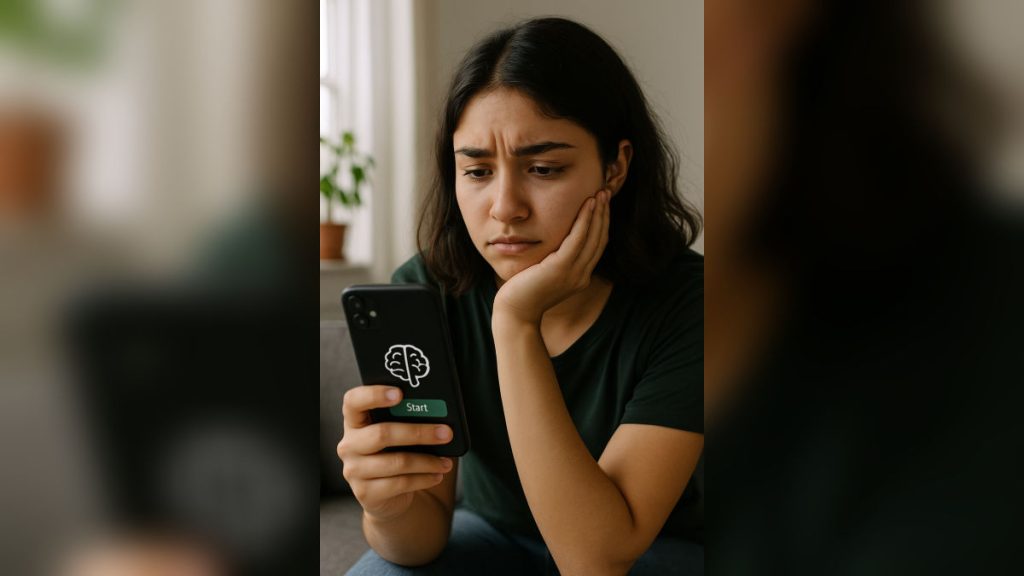
In a world where there’s an app for nearly everything, sleep tracking, food orders, even bubble tea queues, it’s no surprise mental health apps have exploded. For Gen Z, raised alongside smartphones and social feeds, these tools promise convenience, anonymity and support at a tap.
But amid thousands of meditation reminders, mood charts and AI chatbots playing therapist, one question won’t go away. Do mental health apps actually make a difference? Let’s unpack the truth, no sugarcoating.
The rise of digital wellness
Mental health apps are booming. According to a Statista report, the global mental wellness app market was valued at $4.2 billion in 2023 and is projected to grow exponentially. For a generation that’s online by default, the appeal is obvious. Therapy in your pocket. Self-care on demand. Mindfulness one tap away.
The options are vast. From Calm and Headspace on the lifestyle end, to therapeutic platforms like Wysa, Woebot and BetterHelp on the clinical side. That breadth is both a blessing and a problem.
Why does Gen Z turn to mental health apps?
1. Accessibility and affordability
Traditional therapy is expensive. In India and the U.S., private sessions can run anywhere from Rs1,000 to Rs5,000 (or $50 to $200) an hour. For a student or early-career professional, that’s out of reach most months. Apps offer free or low-cost alternatives, a daily mindfulness session, a mood tracker, even a chatbot delivering basic CBT, all without burning a hole in your wallet.
“I couldn’t afford therapy in college, so I used a journaling app and meditation guides to manage my anxiety. It wasn’t perfect, but it helped me get through my exams,” shares Aanya, 22, from Delhi.
2. Reducing the stigma
Awareness has grown, but stigma around mental health still hangs around, especially in close-knit or conservative communities. Apps offer a layer of privacy that lets users seek help without being judged. No explanations to family. No commute to a clinic. No stranger across a desk. Open the app, and you’re in the driver’s seat.
3. Flexibility that fits modern life
Between school, internships, social demands and the steady mental load of being online, Gen Z doesn’t always have a free Tuesday afternoon for therapy. Apps offer on-demand care. A three-minute breathing drill before a class presentation. A late-night journal prompt when anxiety hits at 2 a.m.
What these apps do well
1. Self-management tools
Many apps are built to help you take charge of your own well-being. Features like:
- Mood and habit tracking
- Guided meditations
- Gratitude journaling
- Breathing exercises
- Daily affirmations
Together, these build emotional awareness and small daily habits that compound over time. Apps like Moodpath and Reflectly shine here, helping users spot emotional patterns that can support personal growth or feed into therapy sessions.
2. Supplementing therapy
If you’re already seeing a therapist, apps can act as a bridge between sessions. You might practise CBT exercises your therapist introduced, or note patterns to bring up next week. Platforms like Talkspace and BetterHelp connect you to licensed professionals for virtual sessions, which makes it easier to stay consistent with treatment.
3. AI-powered interventions
Chatbots like Wysa and Woebot simulate conversation to help users sit with thoughts and feelings. They aren’t a stand-in for human therapists, but they do offer empathetic responses and techniques like reframing negative thoughts or surfacing coping strategies in real time.
But here’s the flip side
1. Not all apps are created equal
One real issue is the lack of clinical validation. A 2022 review in JMIR mHealth and uHealth found that many popular mental health apps had limited scientific backing or didn’t disclose their methodologies clearly. Top of the App Store doesn’t equal safe or effective.
“There’s a lot of noise in the mental health app space. Some apps are well-designed with input from psychologists. Others are just wellness-themed products trying to make a profit,” warns Dr. Aarti Kapoor, a Mumbai-based clinical psychologist.
2. Limits with severe conditions
Apps work best for mild to moderate issues, day-to-day stress, anxiety, mood swings. For severe conditions, major depression, PTSD, suicidal ideation, they can’t offer the depth or nuance the situation needs. That’s the territory of trained professionals, in person.
3. Privacy and data security
Let’s be honest. Mental health data is sensitive. Some apps hold the line on data policies, others sell user data to third parties for advertising. Huge red flag. Before downloading, read the privacy policy, properly. Look for end-to-end encryption and clear data usage rules.
4. Engagement drops over time
User fatigue is the other catch. People start strong, then taper off after a few days or weeks. Without consistent engagement, the benefits fade. It’s gym membership logic, owning the card doesn’t build muscle unless you actually show up.
How to make the most of mental health apps
So how do you tell if a mental health app is right for you? A few rules of thumb:
- Look for clinical backing: choose apps developed with input from psychologists or backed by research
- Be realistic: use apps as a supplement, not a replacement, especially for serious issues
- Protect your privacy: read reviews, ratings, and the data policy before signing up
- Combine with real-world strategies: sleep well, stay active, build community, apps are one piece of the puzzle
- Consult a professional: when in doubt, talk to a counsellor or doctor for personalised recommendations
Tech can’t replace human connection
Mental health apps are powerful, but they’re tools. Just tools. They can guide, support, sometimes comfort. They can’t replace the healing power of human connection, empathy or professional insight. For Gen Z, they offer an entry point, a bridge to better understanding their own minds. To genuinely thrive, though, you need tech plus community plus self-awareness plus the courage to ask for help.
“I started using a meditation app during lockdown, and it helped me sleep better,” says Rohan, 20. “But it was only when I started therapy that I really began to understand what I was feeling.”
Mental health isn’t a destination you download. It’s a journey, one that asks for compassion, curiosity, and sometimes a little help from both humans and apps.
FAQs about mental health apps
Do mental health apps actually work?
For mild to moderate stress, anxiety, sleep issues and mood tracking, yes, especially when used consistently and paired with offline habits like exercise, sleep and real social connection. For severe conditions like major depression or PTSD, apps aren’t enough on their own.
Which mental health apps are most trusted?
Apps with clinical backing and psychologist input tend to be the safest bets. Wysa and Woebot use CBT-based AI conversations. Calm and Headspace are strong for meditation. Talkspace and BetterHelp connect users to licensed therapists. Always check whether the app cites research or clinical advisors.
Are mental health apps safe with my personal data?
It depends entirely on the app. Some have strict privacy controls and end-to-end encryption. Others have been flagged for sharing or selling user data to advertisers. Read the privacy policy before you sign up, and check independent reviews if you’re unsure.
Can a chatbot like Wysa replace a therapist?
No. Chatbots are useful for in-the-moment coping, journaling prompts and CBT exercises, but they can’t read body language, hold long-term context, or handle clinical risk. Treat them as a support layer, not a replacement.
How much does mental health support cost in India compared to apps?
Private therapy sessions in India typically run Rs1,000 to Rs5,000 an hour. Most mental health apps cost a fraction of that, or are free at the basic tier, which is a big part of why Gen Z reaches for them first.