
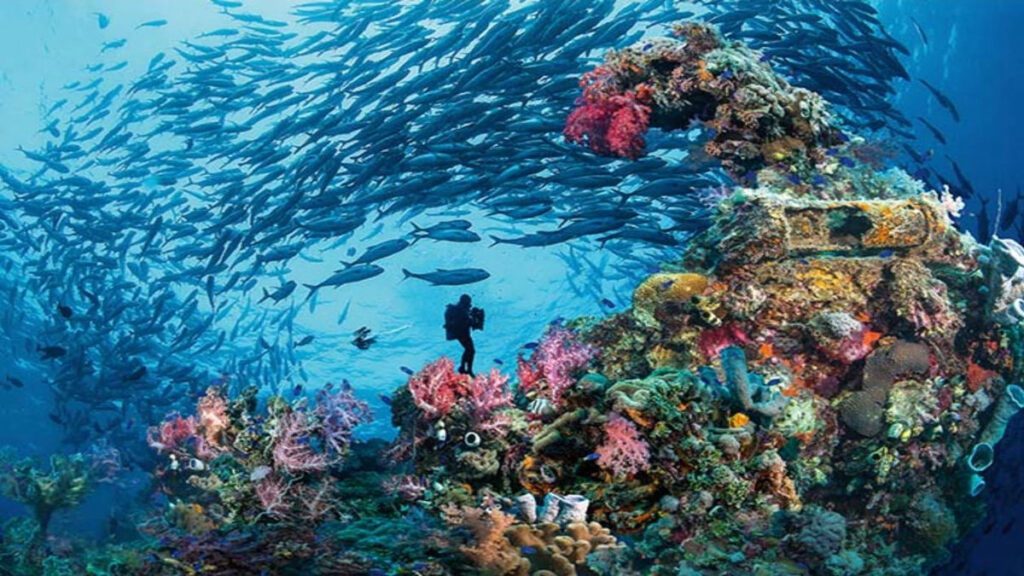
Short answer: The deep sea covers more than half the planet and includes the mesopelagic, abyssal and hadal zones below 3,000 metres. Life there survives without sunlight through bioluminescence and chemosynthesis around hydrothermal vents. Modern ROVs and submersibles keep revealing new species, and surface appearances of deep-sea animals usually trace back to environmental disturbance, oxygen shifts or human impact, not mystery.
The deep ocean, the vast dark realm below the sunlit surface, remains one of Earth’s last great frontiers. It covers more than half the planet and hosts ecosystems that defy everyday intuitions about life: organisms that glow in the dark, communities that thrive without sunlight, and geological processes that create oases of life on an otherwise barren seafloor. This article summarises the current scientific picture of the deep sea, highlights recent discoveries, explores why unusual deep-sea events sometimes reach the surface, and explains why exploring and protecting this realm matters.
What exactly is the “deep sea”?
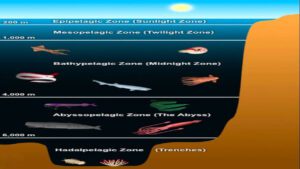
Oceanographers divide the water column into zones. The mesopelagic (twilight) zone lies below the sunlit layer. Beyond that, the abyssal and hadal zones extend from around 3,000 metres down to the deepest trenches. These zones are characterised by near-freezing temperatures, crushing pressure and complete darkness. Sunlight does not penetrate, so photosynthesis is impossible. Life persists through alternative energy pathways and remarkable adaptations.
What strange adaptations define deep-sea life?
Many deep-sea animals produce their own light through bioluminescence, used for luring prey, communicating or confusing predators. A very large share of animals living in the deep ocean are bioluminescent, and that trait dominates life in the “midnight” zones. Others rely on chemosynthesis: microbial communities convert chemical energy from hydrothermal vents into biomass, forming the base of complex ecosystems that include giant tubeworms, specialised crustaceans and other oddities.
What recent discoveries are reshaping the picture?
Exploration technology has produced surprising results. Remotely operated vehicles, specialised submersibles and improved sampling gear have let scientists document richer-than-expected biodiversity even in hadal trenches, new species with novel morphologies and behaviours, and ecosystems living within cracks and cavities of the ocean crust adjacent to vent systems. That extends our idea of where life can persist. Such findings show the deep sea is more dynamic and biologically productive in some niches than previously believed.
Why do deep-sea creatures sometimes appear near the surface?
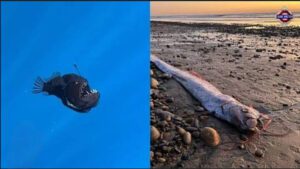
Reports of unusual deep-sea animals showing up at or near the surface happen periodically. Causes are typically ecological or physical rather than supernatural:
Environmental disturbance: Strong storms, changes in current patterns, or seismic activity can displace organisms from their usual depths.
Oxygen and temperature shifts: Anomalies such as warming events or local oxygen depletion may force species to move vertically in search of survivable conditions.
Food-web disruptions: Changes in prey availability can trigger unusual foraging behaviour, occasionally bringing deep dwellers upward.
Human impacts: Pollution, deep-sea mining exploration, or bycatch from fishing can also displace or injure deep-sea animals, making them more visible near the surface. Understanding the root cause in any specific event requires sampling and environmental data, which is why integrated observation systems (ocean sensors, satellite data and targeted expeditions) are so important.
Why do these discoveries matter?
Fundamental science: Deep-sea research informs questions about the limits of life on Earth and, by extension, habitability elsewhere. Icy moons that may host subsurface oceans are one example. Recent findings, including nanostructures and unique chemistries around vents, feed into origin-of-life research.
Biodiversity and ecosystem services: Deep ecosystems cycle nutrients, store carbon and influence fisheries. Losing them would have knock-on effects for coastal communities.
Economic and ethical questions: Advances in interest for seabed minerals and bioprospecting raise urgent policy questions about sustainable use, access rights and ecological risk.
Early warning for change: Unusual deep-sea events (mass strandings, surface appearances, sudden blooms or die-offs) can act as indicators of larger ocean changes, including climate-driven shifts.
What are the main challenges to progress?
Access and cost: High-quality deep-ocean exploration requires expensive ships, submersibles and long observational campaigns.
Data gaps: Vast areas remain unsampled, and many species are known only from a handful of specimens.
Conservation lag: Policy and management often trail scientific discovery. Mineral exploration can move forward before full ecological assessments are completed.
Misinformation: Dramatic findings sometimes attract sensational claims. Careful, peer-reviewed science is essential to separate real patterns from noise.
How can exploration and policy stay responsible?
Scientists, governments and industry are starting to adopt better collaborative practices: pre-expedition impact assessments, open data sharing, and the precautionary principle for activities like seabed mining. International bodies (regional fisheries management organisations and the UN processes for biodiversity beyond national jurisdiction) are central platforms where science must inform regulation. Integrating long-term monitoring with rapid response teams can help researchers investigate surface-stranding events or sudden changes in near-real time.
Bottom line on the deep sea mystery
The deep sea remains a place of genuine mystery, but it is no longer unknowable. Technology and coordinated science are rapidly filling gaps in our knowledge and revealing ecosystems of surprising complexity. Those discoveries bring both wonder and responsibility. As human pressures extend into deeper waters, the choices we make now will shape the health and knowledge of this planet-spanning biome for decades to come.
FAQs about the deep sea mystery
How deep is the deep sea?
The abyssal and hadal zones begin at around 3,000 metres below the surface and extend to the deepest ocean trenches, well beyond 10,000 metres at places like the Mariana Trench. Near-freezing temperatures, crushing pressure and complete darkness define these depths.
What is bioluminescence and why is it so common in the deep sea?
Bioluminescence is light produced by living organisms through chemical reactions. In the deep sea’s “midnight” zones it is extremely common because there is no sunlight. Animals use it to lure prey, communicate with mates or confuse predators.
How do life forms survive without sunlight around hydrothermal vents?
Through chemosynthesis. Microbial communities convert chemical energy, often from sulphur compounds released by hydrothermal vents, into biomass. This supports giant tubeworms, specialised crustaceans and other vent ecosystems.
Why are deep-sea fish sometimes washed up on shore?
Storms, shifting currents, seismic activity, warming events, local oxygen drops, food-web changes, pollution and fishing bycatch can all push deep-sea animals upward or ashore. A single stranding usually needs sampling and data to pin down the real cause.
Why should deep-sea mining concern scientists?
Deep ecosystems cycle nutrients, store carbon and influence fisheries, yet many species are known from only a handful of specimens. Mineral exploration can move faster than ecological assessment, so the precautionary principle and pre-expedition impact reviews matter.