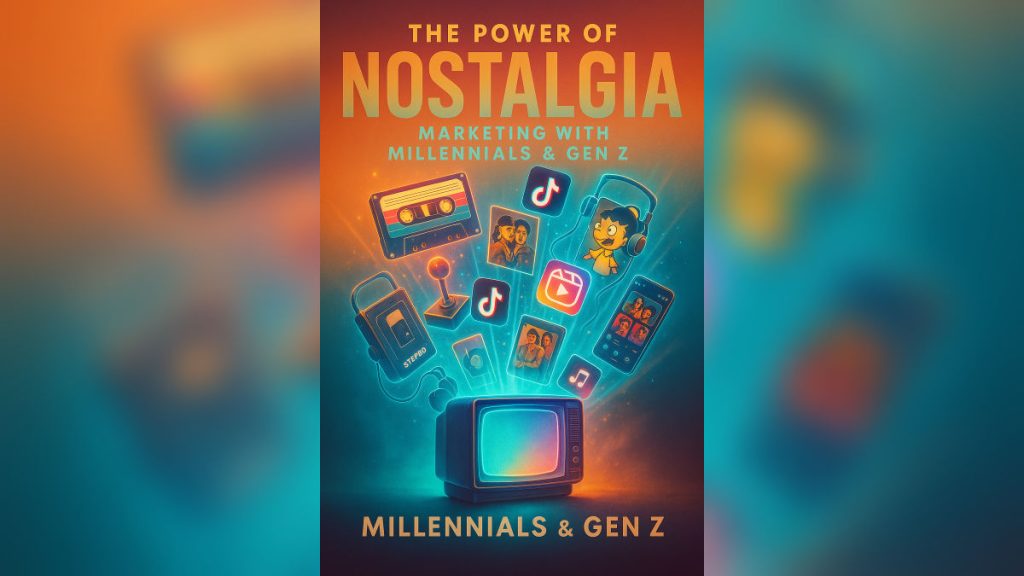
Short answer: Nostalgia marketing works on millennials and Gen Z because it offers emotional comfort, signals authenticity, and stops the scroll. Studies show nostalgic content can drive up to 70% more engagement than non-nostalgic content, and a 2020 Frontiers in Psychology study found nostalgic shoppers spend more. Paperboat, McDonald’s Adult Happy Meals and Netflix’s Stranger Things are textbook examples.
Digital noise. Trends that flip overnight. In all that chaos, nostalgia marketing offers something rare, a refreshing pause. It isn’t a stroll down memory lane. It’s a strategy, and a powerful one. For millennials and especially Gen Z, nostalgia isn’t just sentimentality, it’s a tool for emotional connection, identity-formation and (yes) escape.
Whether it’s Paperboat reminding us of aam panna afternoons, or Netflix dragging us back to the neon-lit ’80s in Stranger Things, nostalgia marketing has become a smart way to win hearts, conversations and wallets. But why does it land so well, especially with a generation that never even lived through some of the eras they idolise?
Let’s dig in.
Why does nostalgia work for millennials and Gen Z?
1. Emotional comfort in a fast-paced world
Growing up amid climate anxiety, digital overstimulation and socio-political churn, Gen Z and millennials are no strangers to chaos. Nostalgia offers comfort, like a soft blanket of familiarity that points to “simpler times,” even if those times were really only seen through reruns and retro filters.
A simple ad showing Parle-G biscuits with a cup of chai can send a 28-year-old back to her grandmother’s house in Jaipur. Or a ’90s ringtone remix can instantly remind someone of their dad’s old Nokia 3310. These aren’t just memories. They’re anchors.
As Dr. Constantine Sedikides, a leading nostalgia researcher, notes, “Nostalgia increases feelings of social connectedness, optimism, and meaning in life.” For brands, that emotional trigger is marketing gold.
2. Authenticity and cultural trust
For Gen Z, authenticity isn’t optional. It’s the bare minimum. This is a generation that can sniff out forced brand messaging in seconds. When nostalgia is handled with care and cultural awareness, it doesn’t feel like a gimmick, it feels like shared history.
Think of Paperboat’s storytelling. Animations of paper boats in puddles, school tiffin boxes, holi water fights, none of these sell a drink. They sell a feeling. And the feeling actually feels real.
“I don’t care much for sugary drinks,” says Ankush, a 23-year-old from Bengaluru, “but I’ll pick Paperboat over anything else because it reminds me of my childhood holidays.”
It’s not about product features anymore. It’s about emotional features. Big difference.
3. A way to stand out in a crowded feed
Attention spans are shrinking. Scroll speeds are climbing. Cutting through the digital noise has never been harder. Nostalgia gives marketers an edge because familiarity breaks resistance, the brain stops on something it recognises before it even decides to.
A meme using Shaktimaan, a reel sound inspired by DDLJ, packaging that mimics the 1998 Cadbury wrappers, these aren’t just quirky. They’re scroll-stoppers.
Studies show nostalgia can increase content engagement by up to 70% compared to non-nostalgic content (source: Journal of Consumer Research, 2021). It’s the emotional recognition that makes people pause, smile and often hit “share.”
4. Bridging generational gaps
One fascinating quirk of nostalgia, it isn’t exclusive to those who actually lived through a particular era. Gen Z is obsessed with retro aesthetics they never personally experienced, cassette tapes, disposable cameras, Y2K fashion, even dial-up sounds.
There’s an aspirational quality to the past. It feels slower, more romantic, less filtered. Which opens up real opportunities for brands to connect cross-generationally, the same campaign can pull in three age cohorts at once if the references are layered right.
Take Stranger Things on Netflix. For Gen X and millennials who remember the ’80s, it’s nostalgic. For Gen Z, it’s an exciting escape into an analog world that feels exotic and tactile compared to their entirely digital lives.
5. Nostalgia makes people spend more
Nostalgia doesn’t just make us feel good. It makes us more willing to spend.
A 2020 study by Frontiers in Psychology found people who felt nostalgic while shopping showed a notably higher willingness to pay for products. The emotional connection outweighs the logical reasoning, every time.
Which is why McDonald’s Adult Happy Meals, with their collectible toys, created a frenzy. People didn’t want the food. They wanted to relive a memory.
Which brands have actually pulled this off?
Paperboat: bottling memories
Perhaps no Indian brand has nailed nostalgia like Paperboat. With drinks like Aamras, Jaljeera and Neer More, it taps directly into sensory childhood experiences, the taste of summer, the smell of a Nani’s kitchen. Their ad campaigns focus on storytelling, not selling, rainy afternoons, school uniforms, stolen mangoes. The result? A premium price point in a commodity category, and a fiercely loyal consumer base.
McDonald’s: Happy Meals for adults
In a world of calorie counters and diet plans, McDonald’s revived its iconic Happy Meal, only this time for grown-ups. The move was wildly successful, especially with millennials and Gen Z, sparking nostalgia for playgrounds and plastic toys. It generated massive buzz on social media, proving that playfulness never really goes out of style.
Stranger Things: the retro revival
Stranger Things didn’t just resurrect ’80s nostalgia, it commercialised it. Fashion brands launched capsule collections. Burger King rolled out an upside-down Whopper. And digital creators flooded the internet with synthwave aesthetics. It was a 360-degree nostalgia ecosystem, and Gen Z loved every bit of it, even those born two decades after the show was set.
How do brands use nostalgia without sounding fake?
So how do you tap into nostalgia without coming across as a try-hard? Here’s what brands need to keep in mind.
1. Be authentic
Don’t force a nostalgic reference. Know your brand history. Know your audience’s emotional anchors. Speak to memories that genuinely matter to them, not the ones that look good in a moodboard.
2. Blend the old with the new
A campaign that feels stuck in the past may alienate modern consumers. Combine retro visuals with contemporary messaging, old-school aesthetic, current values. The mix is what makes it land.
3. Understand nostalgic touchpoints
Not every demographic relates to the same past. Millennials might connect with Doordarshan and Maggi, while Gen Z leans toward Disney Channel India shows or early 2000s YouTube stars. Different anchors, different decades.
4. Create experiences, not just ads
Nostalgia is a feeling, not a format. Limited-edition packaging, immersive pop-ups, collectible merch, retro games, all of these turn the feeling into something tangible and shareable. And shareability, in the end, is the whole game.
The past has a future
Nostalgia isn’t just a flashback. It’s a strategy rooted in psychology, emotion and storytelling. For millennials and Gen Z, who often feel unmoored in today’s fast-paced world, the past offers a comforting reference point. And smart marketers are realising that tapping into that emotion can build brand love that genuinely lasts.
But nostalgia must be handled with care. When used authentically and creatively, it can turn a simple ad into an emotional experience, a product into a story, a campaign into a community.
So the next time you’re crafting a marketing strategy, ask yourself, what memory does your brand want to bring back?
Because in a world chasing the next big thing, sometimes the smartest move is to bring back what was once loved.
FAQs about nostalgia marketing
What is nostalgia marketing?
Nostalgia marketing is a strategy that uses references to the past, like retro packaging, vintage music, throwback visuals or culturally familiar moments, to trigger emotional connection with consumers. It works by tying a brand to memories that feel personal, comforting or culturally shared.
Why does nostalgia marketing work so well on Gen Z?
Gen Z is drawn to retro aesthetics they never personally lived through, like Y2K fashion, cassette tapes and dial-up sounds, because the past feels slower, more romantic and less filtered than their digital reality. Nostalgia gives them an aspirational escape, plus the authenticity their generation prizes.
Which Indian brand uses nostalgia marketing best?
Paperboat is widely considered the gold standard. Its drinks like Aamras, Jaljeera and Neer More are paired with storytelling around childhood summers, holi water fights and school tiffin boxes, which lets the brand command a premium price point in a commodity category.
Does nostalgia really make people spend more?
Yes. A 2020 study published in Frontiers in Psychology found that people who felt nostalgic while shopping showed significantly higher willingness to pay for products. Emotional connection consistently outweighs logical reasoning at the point of purchase.
How can brands avoid sounding fake when using nostalgia?
Stay authentic to your brand’s actual history, blend retro visuals with contemporary values, and make sure the nostalgic references match the right generation’s anchors. Building experiences (limited-edition packaging, pop-ups, collectible merch) instead of just ads also helps the strategy feel real.