
For years, social media platforms rewarded visibility.
The more people saw you, liked you, shared you, or commented on your posts, the more valuable your online presence appeared to become. Instagram, in particular, perfected this formula. Carefully curated feeds, aesthetically pleasing cafés, travel dumps, coordinated outfits, trending audio clips, and algorithm-friendly reels slowly became part of digital culture. An entire generation grew up believing that social media was about presentation.
But somewhere along the way, younger audiences began to feel exhausted.
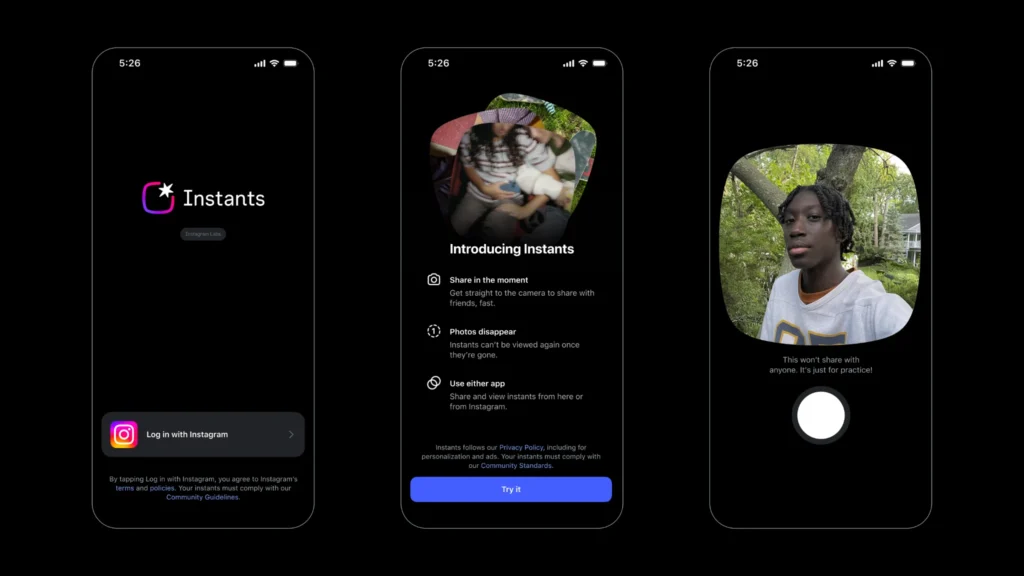
And now, quietly but very noticeably, Indian Gen Z is beginning to move away from public validation and toward smaller, more private digital spaces. Meta’s latest Instagram feature, “Instants,” is perhaps the clearest indication yet that the company understands this cultural shift better than most people realize.
At first glance, Instants may look like another attempt by Instagram to borrow ideas from Snapchat or BeReal. Yet beneath the surface, the feature represents something far more significant: a transformation in how young people want to interact online.
The End Of “Perfect Instagram”
For nearly a decade, Instagram trained users to perform their lives publicly.
People didn’t simply go on vacations anymore — they documented them for social media. Cafés became photo opportunities. Concerts became content. Even friendships slowly became filtered through the lens of online visibility.
But Gen Z, particularly in India’s urban and semi-urban circles, appears to be moving in the opposite direction now.
Many younger users still spend hours on Instagram every day, yet their feeds remain almost empty. Some have hundreds of followers and zero visible posts. Others archive old content or share updates exclusively through Close Friends stories, private groups, or disappearing messages.
This behavioral trend has increasingly been referred to as the “Posting Zero” era. According to a report by Indiatimes, Gen Z users are choosing temporary and selective interactions over permanent public posting.
The reason is simple: public social media has become emotionally tiring.
Every post today feels evaluated. Algorithms determine visibility. Engagement metrics silently influence self-worth. A casual picture uploaded online no longer feels casual when compared against influencers, creators, celebrities, and carefully crafted aesthetics.
For many young users, social media stopped feeling like a conversation. It started feeling like performance.
And that is exactly why Instants matters.
What Is Instagram’s “Instants” Feature?
Instagram’s Instants feature focuses on quick, disappearing photo sharing between smaller groups of people. The content is designed to feel spontaneous rather than polished.
Unlike traditional Instagram posting, Instants emphasizes:
- temporary sharing
- minimal editing
- private interaction
- close-circle communication
- low-pressure engagement
Meta describes the feature as a way for users to share “authentic moments as they happen.”
That language is important.
For years, Instagram optimized for aspirational content. Instants represents a noticeable shift toward emotional authenticity and casual interaction.
The platform is no longer only trying to be a public stage. It wants to become a more intimate social space.
And in many ways, this shift reflects broader changes already happening among Gen Z and Gen Alpha audiences in India.
The Rise Of The “Private Internet”
One of the most fascinating changes in internet culture today is the growing importance of private digital spaces.
Young users increasingly prefer:
- Close Friends stories
- DMs over comments
- private meme groups
- disappearing chats
- selective communities
- “finsta” accounts
- small trusted circles
The internet is slowly becoming private again.
Ironically, while social media platforms once encouraged people to broadcast their lives publicly, younger audiences are now gravitating toward smaller, emotionally safer environments.
A college student in Delhi may share only one or two stories publicly each month while sending dozens of private reels to close friends daily. Another teenager in Bengaluru may avoid posting on the main feed entirely while remaining extremely active inside group chats.
These behaviors may seem small individually, but together they reveal a massive cultural transition.
The desire for visibility is being replaced by the desire for comfort.
And platforms are adapting accordingly.
Why Instants Could Work Particularly Well In India
India is one of Instagram’s largest and most influential youth markets. From metro cities to Tier 2 and Tier 3 regions, Instagram is deeply integrated into entertainment, identity, networking, and creator culture.
However, Indian youth behavior online is evolving rapidly.
Younger audiences are increasingly:
- using Instagram like a messaging app
- sharing content privately instead of publicly
- maintaining selective digital identities
- prioritizing emotional safety over broad visibility
Public feeds are slowly becoming professional portfolios or social resumes, while real personality exists in private conversations.
This is especially relevant for Gen Alpha users who are entering social media environments after already witnessing the downsides of hyper-public online culture. Unlike older generations, they are growing up with an awareness of online pressure from day one.
As a result, “private-first” social behavior feels more natural to them.
That is where Instants may find enormous traction.
Meta’s Real Advantage Is Not Innovation — It Is Scale
The comparisons between Instagram and Snapchat are inevitable. Snapchat pioneered disappearing content culture long before Instagram embraced it.
But Meta’s biggest strength has never been invention.
It has been distribution.
Instagram already owns the audience. Users already spend hours there every day. Creators already build communities there. Brands already advertise there.
This gives Meta a massive advantage.
If Instagram successfully integrates private, low-pressure sharing into an ecosystem users already rely on, people have fewer reasons to move elsewhere.
We have already seen this strategy succeed before:
- Stories challenged Snapchat
- Reels countered TikTok
- Threads competed with X
Instants follows the same pattern.
Meta observes behavioral shifts, absorbs them into its ecosystem, and scales them globally.
Early Signals Show Younger Audiences Are Curious
Although Instants is still in its early phase, online discussions already indicate strong curiosity around the feature.
Young users are experimenting with spontaneous sharing, creators are discussing early engagement opportunities, and internet communities are actively exploring how the feature works.
This matters because social media history repeatedly shows that early adopters often benefit the most.
When Instagram launched Reels, creators who embraced the format early experienced massive growth before the space became crowded. The same happened with Stories.
Instants may follow a similar trajectory.
For creators and digital-first brands, ignoring early behavioral trends can become costly later.
Why Creators Should Pay Attention
For creators, Instants could become less about content production and more about relationship building.
That distinction is critical.
Public content builds reach. Private interactions build loyalty.
In a world overflowing with polished AI-generated videos, perfectly edited reels, and algorithmic trends, audiences increasingly crave something that feels human.
Instants creates opportunities for:
- behind-the-scenes access
- raw reactions
- personal updates
- intimate creator communities
- exclusive moments
- limited-time engagement
Imagine a podcast creator sharing backstage footage moments before recording an interview. Or a fashion creator revealing unreleased designs exclusively to close followers. Or a musician sharing late-night studio snippets privately instead of publicly.
These interactions feel personal.
And personal connection is becoming the most valuable currency on the internet.
Brands Need To Rethink Their Approach
Brands should avoid treating Instants like another advertising slot.
That would completely misunderstand the psychology behind the feature.
Instants is not designed around broadcasting. It is built around access.
The brands likely to succeed in this environment will focus on:
- exclusivity
- intimacy
- spontaneity
- community-driven interaction
- real-time storytelling
This could include:
- surprise product drops
- flash discount codes
- backstage event access
- creator-led private moments
- invite-only experiences
Disappearing content creates urgency naturally. Users know the moment will not stay forever, which increases emotional engagement and attention.
And for brands competing in an oversaturated digital landscape, attention is becoming harder to earn than ever before.
Social Media’s Next Era May Be Smaller, Not Bigger
Perhaps the most interesting thing about Instants is not the feature itself, but what it represents.
For years, social media companies competed to make platforms louder, larger, and more public. Virality became the ultimate goal.
But younger audiences increasingly seem to want the opposite.
They want:
- smaller circles
- emotional comfort
- selective visibility
- temporary interaction
- authentic communication
The internet is shifting from “look at me” culture toward “here’s what I’m sharing with people I trust.”
And Meta knows it.
Instants may not replace Instagram feeds overnight. It may not eliminate Snapchat. It may not become the next standalone billion-dollar platform.
But culturally, it reflects something profound.
It signals that the future of social media may belong not to the most polished platforms, but to the most personal ones.