

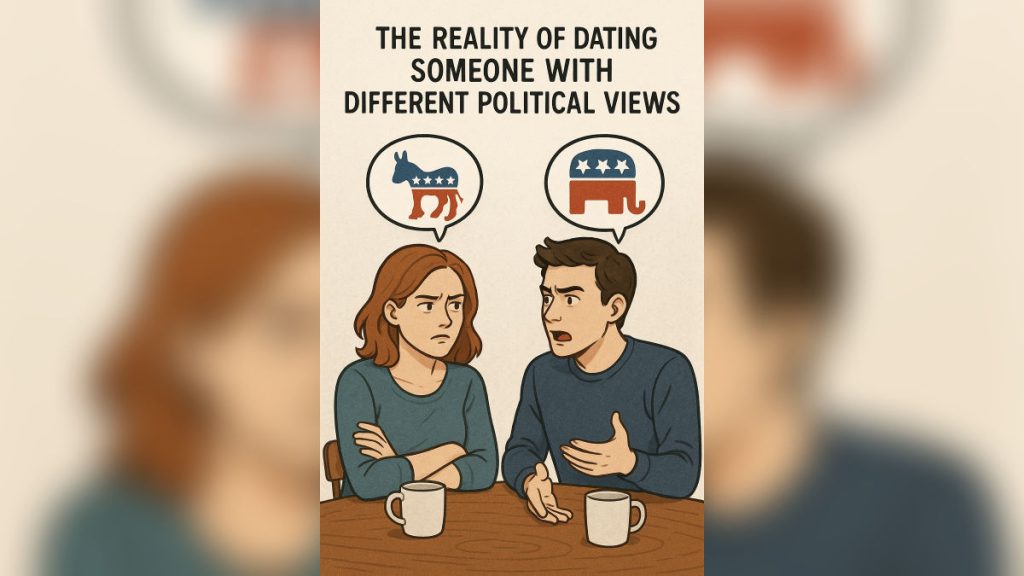
Short answer: Dating someone with different political views can work for Gen Z, but only with intentional communication and clear limits. A 2022 Pew Research Center survey found roughly 47% of Gen Z women won’t date someone with opposing politics, compared to about 30% of Gen Z men. The relationships that survive aren’t built on agreement, they’re built on respect, curiosity and walking away when a partner’s stance attacks your identity or safety.
In today’s hyper-connected, hyper-aware world, dating isn’t just about chemistry or shared hobbies anymore. For Gen Z, a generation deeply invested in activism, identity and progressive values, politics isn’t a topic at the dinner table. It’s often the filter through which everything else is judged, including love. So what happens when sparks fly, but ideologies clash?
Dating someone with different political views is no longer an abstract dilemma. It’s a real, emotional, and often complicated part of modern relationships, especially for Gen Zers navigating love in an era of polarisation.
Why does politics feel so personal for Gen Z?
More than opinions, they’re identity markers
Unlike previous generations, Gen Z doesn’t separate politics from personality. Political stances are often read as reflections of one’s character, empathy and worldview. Whether it’s climate change, LGBTQ+ rights, gender equality or racial justice, political beliefs feel personal, and deeply tied to values.
“I remember matching with someone on a dating app,” shares Rhea, a 22-year-old from Mumbai. “We got along great until he said he didn’t believe in feminism. I unmatched instantly. It wasn’t just a disagreement, it felt like a red flag.”
For many young people, opposing views on such issues aren’t minor differences. They’re dealbreakers.
What does the current political polarisation look like in dating?
Tensions are higher than ever
Studies from the American Psychological Association show that political stress is at an all-time high, and it’s seeping into our personal lives. Arguments about elections, protests or policies aren’t confined to Twitter threads. They show up at dinner dates and in WhatsApp chats.
A 2022 Pew Research Center survey found that roughly 47% of Gen Z women would not date someone with opposing political views, compared to about 30% of Gen Z men. The data points to a growing gender divide and underlines how political perspectives now shape dating decisions.
And that’s no surprise. Gen Z women tend to lean more liberal, while Gen Z men, particularly online, are showing a trend towards conservatism. The dating pool feels more fragmented than ever.
Do political differences always mean disaster?
Values vs voting choices
While many Gen Zers feel politics is too core to ignore, others are learning to draw a line between a person’s voting choices and their underlying values.
“You can be with someone who votes differently but still believes in kindness, fairness, and equity,” says Tanmay, 24, from Bengaluru. “It’s about their reasoning, not just the result.”
Experts agree. Relationship counsellors note that compatibility isn’t built on political alignment alone. Emotional safety, respect, shared life goals and conflict-resolution skills can outweigh ideological differences, if both partners are open and mature in their conversations.
The power of respect and active listening
The most successful relationships across political lines share a common thread: respect. Not the surface-level “agree to disagree” kind. The deeper, empathetic kind, where both people feel heard even if they don’t feel agreed with.
One couple in Delhi, Mira (a climate activist) and Karan (an economics graduate), credit their five-year relationship to intentional communication. “We talk a lot, sometimes for hours,” Mira says. “When we disagree, we ask ‘why’ instead of jumping to judgment. That helps.”
That emotional safety net allows space for difficult discussions without turning them into battlegrounds.
How do you actually navigate political differences in a relationship?
1. Have the talk early and honestly
If politics matter to you, don’t tiptoe. Have the conversation early. Ask questions not to interrogate, but to understand. Are their views shaped by fear, tradition, upbringing or lived experience? Context matters.
Framing questions like “What matters most to you about this issue?” instead of “How can you believe that?” opens dialogue rather than triggering defensiveness.
2. Set boundaries, not ultimatums
Boundaries are essential. If a topic is too sensitive or leads to disrespectful behaviour, it’s okay to pause or step away from it. Boundaries protect the relationship’s emotional core.
But remember, boundaries are different from walls. They’re flexible, not rigid, and built on mutual respect, not control.
3. Focus on shared goals
If you and your partner both value compassion, community and fairness but differ on the methods to get there, you may share more than you think. Identifying common values can bridge a political gap.
It’s helpful to ask: “Do we want the same things for our future? Do we treat people with the same level of dignity? Do we solve conflict the same way?”
Often, the answers to those questions weigh more than a single policy stance.
4. Know when to walk away
Sometimes, differences aren’t about opinion, they’re about fundamental human values. If a partner’s political stance actively invalidates your identity or safety, it’s okay, even necessary, to walk away.
Love shouldn’t feel like a constant debate or a quiet compromise on your core beliefs.
A personal perspective
Back in college, I dated someone whose political ideology was vastly different from mine. We debated everything, from affirmative action to climate policy, but always circled back to one thing: we respected each other deeply. What kept us going wasn’t agreement, it was curiosity. We didn’t try to convert each other. We listened, challenged, and sometimes chose to disagree with love.
Eventually we grew apart, but not because of politics. Ironically, we still remain close friends today, bonded by our respect and our ability to engage without tearing each other down.
That experience taught me political differences don’t have to be a relationship death sentence, but they do need to be navigated intentionally.
Conclusion: love in the time of divides
Dating someone with different political views is a complex journey, especially for Gen Z, who wear their values proudly and live them out loudly. It isn’t easy, and it shouldn’t be sugarcoated. Political alignment matters, especially when it’s tied to human rights, empathy and shared futures.
But in a world increasingly defined by echo chambers and online outrage, choosing to love someone across ideological lines is a radical act of empathy. It takes emotional maturity, clear communication, and unwavering respect.
So whether you’re currently dating someone with opposing views or contemplating it, remember this: it’s not always about agreeing, it’s about understanding. Sometimes that can be more powerful than being politically identical.
FAQs about dating across political differences
Can a relationship survive when partners have opposing political views?
Yes, but only with intentional communication and respect. Successful couples, like Mira and Karan in Delhi, focus on understanding each other’s reasoning rather than winning arguments. Compatibility relies more on emotional safety, shared goals and conflict resolution than on identical voting choices.
Why are Gen Z women less likely to date conservative men?
A 2022 Pew Research Center survey found roughly 47% of Gen Z women won’t date someone with opposing political views, compared to about 30% of Gen Z men. Gen Z women tend to lean more liberal while Gen Z men, particularly online, are trending more conservative, which makes the dating pool feel more fragmented than ever.
How do you talk politics with your partner without fighting?
Ask open questions like “What matters most to you about this issue?” instead of “How can you believe that?” Listen to understand context, whether their views come from fear, tradition or lived experience, and set boundaries around topics that turn disrespectful.
When should you walk away from a politically incompatible partner?
When their stance invalidates your identity, your safety, or your basic dignity. Boundaries are different from walls, but if a partner’s politics actively harm who you are, it’s okay, and often necessary, to leave.
Are political differences always a dealbreaker for Gen Z?
Not always. Some Gen Zers, like 24-year-old Tanmay from Bengaluru, distinguish a partner’s voting choice from their underlying values. Others see opposing views on issues like feminism, LGBTQ+ rights or racial justice as immediate red flags. It depends on which beliefs feel non-negotiable to you.