
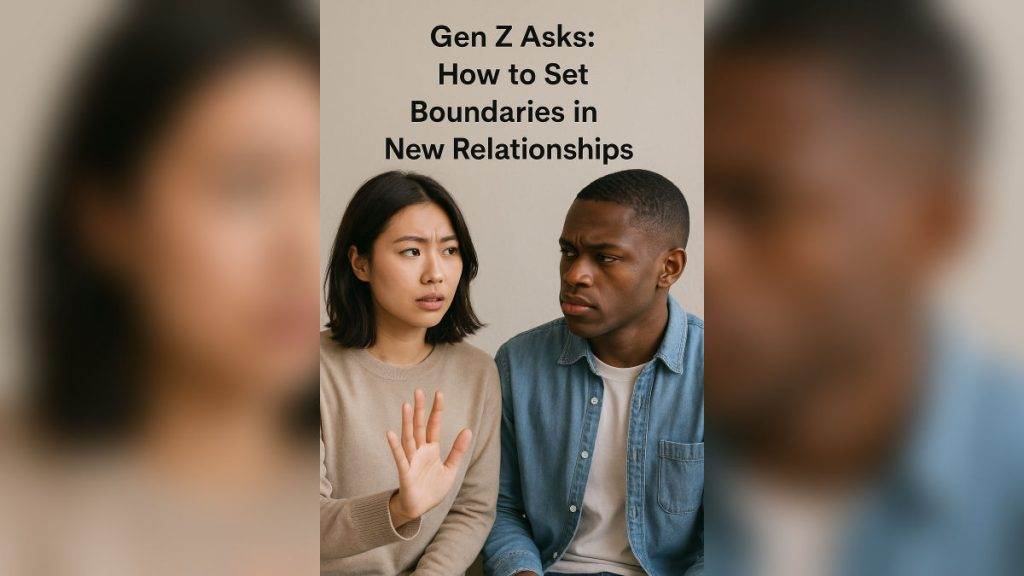
Short answer: Setting boundaries in a new relationship means knowing your own limits, naming them early with “I” statements, and holding the line even when it’s uncomfortable. For Gen Z, that’s a love language, not a red flag.
In the age of “soft life” and self-care Sundays, Gen Z is rewriting the rulebook on love, dating and emotional well-being. Setting boundaries isn’t a self-help buzzword for this generation, it’s an essential life skill, especially in the messy landscape of modern relationships.
Whether it’s your first situationship, a college romance, or a connection built through endless late-night DMs, defining personal limits can be the difference between emotional safety and emotional burnout. So how do you actually do it? Let’s dig in.
Why do boundaries matter, especially for Gen Z?
Unlike previous generations who often equated love with sacrifice, Gen Z approaches relationships with a more balanced perspective. According to a Psychology Today article, Gen Z values emotional intelligence, autonomy and open communication more than any generation before. They’re quicker to leave toxic dynamics and slower to compromise their mental health for romance.
Boundaries, in this context, aren’t walls. They’re bridges that connect two people while still honouring each one’s identity.
“Setting boundaries is not about shutting people out,” says therapist Dr. Mona Sharma. “It’s about choosing what gets to come in.”
Step 1 — Start with self-reflection
Know yourself before you know “us”
Before stepping into a new relationship, spend time with the most important person in the equation: you. Ask yourself what you value, what you need to feel secure, and where your limits actually sit.
- What behaviours make you feel respected?
- Are you someone who needs alone time to recharge?
- Do you prefer texting over calls?
- How do you define loyalty, intimacy and privacy?
Jotting your thoughts in a journal, or talking them through with a close friend, can be surprisingly illuminating. As one 20-year-old student from Bengaluru shared, “I realized I hated constant texting. But I never said anything until I burned out. Now, I make that clear early on.”
Own your right to boundaries
A crucial mindset shift: you deserve to have your boundaries respected. It’s not “too much,” “dramatic” or “clingy” to ask for emotional space, honesty, or exclusivity, if that’s what aligns with your values.
Boundaries aren’t about control. They’re about clarity and mutual respect.
Step 2 — Communicate clearly, kindly, and confidently
Use “I” statements
One of the simplest, most powerful tools in boundary-setting is the “I” statement. It helps you communicate your needs without sounding accusatory. For example:
- Instead of “You always interrupt me,” try “I feel unheard when I get interrupted.”
- Rather than “You never let me hang out with my friends,” try “I need time with my friends to feel balanced.”
This language invites dialogue, not defensiveness.
Set boundaries early
You don’t have to wait for a boundary to be crossed before you express it. If physical intimacy is moving too fast, or you want to define the relationship early on, just bring it up. Doing so from the start sets the tone for openness and honesty.
As Ayush, a 22-year-old engineering student, puts it, “It’s better to be awkward early than to be resentful later.”
Practice saying “no”
“No” is a complete sentence. It doesn’t need an essay or an apology. Learning to say “no” with grace and without guilt is a major flex, especially in a world that romanticises over-accommodation.
Try simple phrases like:
- “I’m not comfortable with that.”
- “I need to think about it.”
- “That doesn’t work for me.”
Step 3 — Stay consistent, even when it’s hard
Don’t waver on what matters
Once you’ve set a boundary, reinforce it. If you said you won’t tolerate ghosting, don’t keep entertaining someone who only texts at midnight. If you asked for emotional honesty, don’t ignore the red flags just because the chemistry is great.
Consistency helps others understand your standards, and helps you respect your own.
Expect some pushback
Not everyone will celebrate your boundaries right away. Some people will test them, especially if they’re used to operating without limits. That’s not a reflection of your worth — it’s a reflection of their comfort with entitlement.
Pushback isn’t your cue to give in. It’s your cue to stand firm.
Walk away if you must
If someone repeatedly disrespects your boundaries despite clear communication and effort, it might be time to re-evaluate the relationship. Prioritising your peace isn’t selfish, it’s smart.
As the old saying goes, “When someone shows you who they are, believe them.”
Step 4 — You don’t have to do it alone
Seek support
Setting boundaries can feel lonely or confusing, especially if it’s new territory. Talking to trusted friends, siblings, or a therapist can help you process your thoughts and strengthen your confidence.
Group therapy, mental health workshops, even peer support groups in colleges can offer a safe space to explore your feelings. Per a 2023 American Psychological Association study, over 60% of Gen Z respondents sought mental health support within the last year, a clear sign of growing proactive emotional care.
Use professional tools
Apps like BetterHelp, Wysa and MindPeers offer guided tools for relationship management, while professionals can offer customised strategies for your specific situation.
Real talk: boundaries make relationships better
Setting boundaries isn’t about being cold or unapproachable. It’s the opposite. It lays the groundwork for deep trust and genuine connection. When both people know the rules of emotional engagement, the relationship stops being a guessing game and starts being a place to grow.
Healthy boundaries:
- Protect your emotional bandwidth
- Strengthen communication
- Prevent resentment
- Promote mutual respect
As therapist and author Nedra Glover Tawwab says, “Boundaries are the distance at which I can love you and me simultaneously.”
Final thoughts: boundaries are a form of love
In a world filled with blue ticks, ghosting, situationships and viral couple goals, it’s easy to lose sight of what you really need. But Gen Z is reshaping relationships with clarity, courage, and care.
Setting boundaries in new relationships isn’t about being difficult, it’s about being deliberate. It’s a quiet declaration that you value your peace, your time and your emotional health.
FAQs about setting boundaries in new relationships
What are some examples of healthy boundaries in a new relationship?
Examples include needing alone time, asking for a slower physical pace, requesting honesty about exclusivity, or limiting late-night texting. The point is to protect your emotional bandwidth without controlling your partner.
How do I set boundaries without sounding controlling?
Use “I” statements framed around your needs, not their behaviour. Say “I need quiet time on weeknights” instead of “You text too much.” Tone and timing matter more than wording.
When is the right time to bring up boundaries?
Earlier than feels comfortable. As Ayush, the engineering student quoted above, puts it, “It’s better to be awkward early than to be resentful later.” The first few weeks are often the easiest moment to name expectations before patterns set in.
What if my partner doesn’t respect my boundaries?
First, restate the boundary calmly and check whether it was understood. If it’s still ignored after clear communication, that’s data, not drama. A pattern of disrespect is usually a sign the relationship isn’t safe enough to continue investing in.
Are boundaries the same as ultimatums?
No. A boundary is about what you’ll do; an ultimatum is about what they must do. “I won’t stay without honesty” is a boundary. “Stop texting your ex or I’ll leave” is an ultimatum. The first centres your agency.