Short answer: Gen Alpha (born after 2010) dreams of a perfect world built on kindness, climate action, mental health, equal access to tech, and real human connection. They aren’t waiting to inherit the world — they’re already shaping it through their choices, conversations, and values.
Ask a member of Generation Alpha — those born after 2010 — what a perfect world looks like, and their answer might surprise you. Unlike past generations who imagined flying cars and robot maids, Gen Alpha’s vision is human and grounded.
Raised in an era shaped by climate anxiety, digital revolution, and social movements, their dreams blend technology with compassion and sustainability. In 2025, these kids aren’t waiting to inherit the world. They’re imagining how to fix it.
1. What kind of planet does Gen Alpha want?
Gen Alpha wants a planet that breathes again. Climate change isn’t abstract for them. It’s part of everyday conversation.
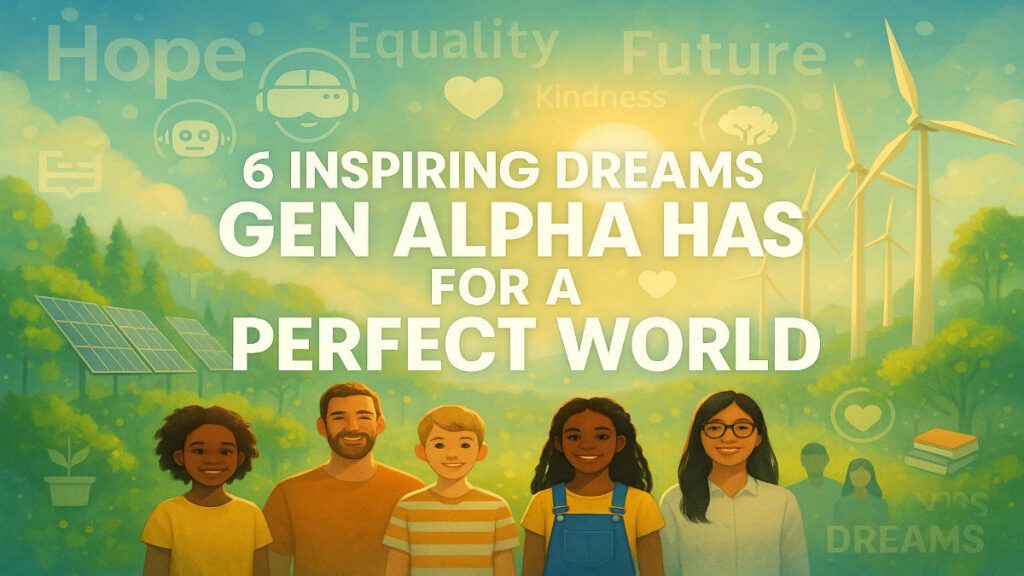
In their perfect world, air is clean, oceans sparkle, and forests flourish. Cities are covered in vertical gardens, bikes outnumber cars, and energy comes from the sun, wind, and waves. They imagine schools powered by solar panels and homes built with recycled materials.
Brands are held accountable for their environmental footprint. As one 11-year-old in my neighbourhood put it: “If a company pollutes, I won’t buy from them — even if it’s cool.” Their values are already shaping consumer behaviour.
2. How does Gen Alpha define a fair society?
For Gen Alpha, equality isn’t a goal. It’s the baseline. Their version of a perfect world has no room for racism, sexism, or bullying. Every person, no matter their race, gender, ability, or identity, is treated with respect.
Diversity is celebrated, not just accepted. Schools teach empathy, social media is a safer space, and leaders reflect the range of voices in society. Gen Alpha doesn’t want to “fit in.” They want to belong, and they want everyone else to feel that too.
3. How does Gen Alpha want to use technology?
You’d expect a digital-native generation to dream of high-tech futures, and they do. But for Gen Alpha, technology isn’t about escape. It’s about empowerment.
In their perfect world, AI helps solve climate change, VR makes learning immersive, and everyone — regardless of income — gets access to the tools to learn and grow. The digital divide closes.
They imagine metaverses for learning, games that teach empathy, and robots that assist rather than replace. Tech should always be used ethically and inclusively.
4. Why does mental health matter so much to Gen Alpha?
Unlike older generations that often hushed emotional struggles, Gen Alpha treats mental health as essential. They want a world where it’s okay to cry, to ask for help, and to talk about feelings without shame.
Mental health education begins in kindergarten. Therapy is normal. Stress isn’t brushed off. A 2024 survey by KidsHealth found that 63% of children aged 8–12 said they want adults to take their feelings more seriously.
Happiness isn’t measured by grades or achievements. It’s measured by connection, balance, and inner peace. There are more playgrounds than pressure.
5. What does Gen Alpha want from education?
For Gen Alpha, traditional classrooms don’t cut it. They imagine schools without rigid rows and boring lectures, where learning is interactive and relevant.
They want to build robots in science, write climate action campaigns in English, and learn mindfulness in gym class. Education should prepare them for real-world challenges, not just exams.
Their perfect world values curiosity over compliance and celebrates every kind of intelligence. Learning doesn’t end with school. Growth should last a lifetime, whether through YouTube tutorials, community workshops, or virtual internships.
6. How does Gen Alpha view human connection?
Despite their digital upbringing, Gen Alpha longs for real, heartfelt connections. In their ideal world, communities are tight-knit, friendships run deep, and families have time to sit down and talk.
They want genuine conversations over followers, and careers that align with their purpose. Success isn’t about wealth or fame. It’s about making a meaningful impact.
In a time when loneliness has become a global epidemic, they crave belonging, and they’re determined to build a world that offers it freely.
Building the world Gen Alpha deserves
Gen Alpha’s vision isn’t a far-off fantasy. It’s a blueprint for a better tomorrow. They’re thoughtful, sensitive, and fiercely hopeful — imagining a future where technology lifts people up, diversity is strength, and the planet is cherished rather than consumed.
And they aren’t waiting for adults to build it. They’re already leading the way through conversations, actions, and choices that reflect their values.
So the question isn’t what does a perfect world look like for Gen Alpha? It’s this: are we willing to help them make it real?
FAQs about Gen Alpha and the future
Who is Gen Alpha?
Gen Alpha is the generation born after 2010. They are the first cohort raised entirely with smartphones, social media, and AI. In 2025, the oldest Gen Alpha kids are 15.
What do Gen Alpha kids care about most?
Climate action, mental health, diversity, inclusive technology, and honest human connection top their list. They value kindness, purpose, and authenticity more than wealth or fame.
How does Gen Alpha feel about mental health?
They treat mental health as essential, not optional. A 2024 KidsHealth survey found that 63% of children aged 8–12 want adults to take their feelings more seriously. They want therapy to be normal and emotions to be openly discussed.
Do Gen Alpha kids really influence buying decisions?
Yes. Even at age 11, Gen Alpha kids pay attention to brand ethics. One child in the article put it bluntly: “If a company pollutes, I won’t buy from them — even if it’s cool.” Their values are already steering family purchases.
How can parents and teachers support Gen Alpha’s vision?
Give them space to talk about climate, identity, and mental health without dismissing their concerns. Encourage curiosity-led learning, model empathy, and involve them in decisions at home and at school. They want to be taken seriously.