
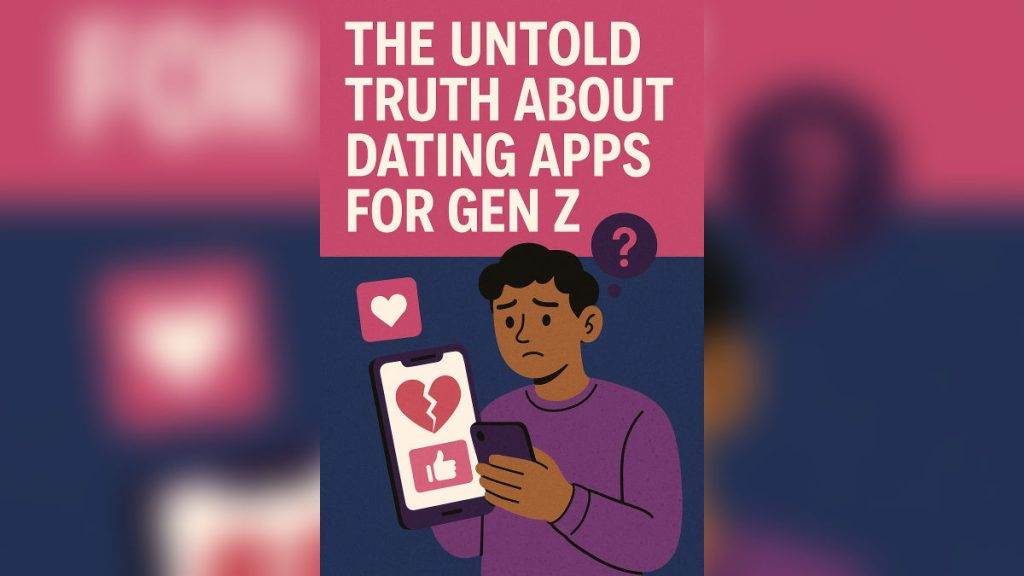
Short answer: Dating apps for Gen Z look frictionless on the surface, but the lived reality is swipe fatigue, ghosting, body-image hits, and emotional burnout. A 2023 Ofcom study found a growing share of Gen Z is quitting these platforms entirely, not because they’ve stopped wanting love, but because the apps themselves have stopped delivering it.
Dating apps are now woven into how Gen Z meets, flirts, and sometimes falls in love. With a swipe, an entire story can begin or end. But while the glossy surface of Tinder, Bumble, and Hinge suggests dating has never been easier, the lived reality is messier. Beneath the convenience sits a world of emotional burnout, fleeting connection, and a quiet longing for something more real.
This piece unpacks the hidden side of dating apps for Gen Z, the part nobody really says out loud.
The allure and exhaustion of swiping
The hook of endless possibilities
At first glance, dating apps promise excitement. You can meet people outside your social bubble, explore preferences, and curate your romantic life at your own pace. That autonomy is genuinely empowering, especially for a generation raised on digital freedom.
But with great power comes great fatigue.
Burnout is real
Many Gen Z users report feeling emotionally drained after extended time on dating apps. There’s a name for it now, swipe fatigue. The repetitive cycle of matching, chatting, ghosting, repeat, gets exhausting fast.
“It started to feel like a chore,” says Aanya, 22, a design student in Mumbai. “I’d match with someone, talk for a few hours or days, and then nothing. It left me feeling weirdly empty.”
A 2023 study by Ofcom found a growing share of Gen Z users are quitting dating apps entirely, not out of disinterest in romance, but out of exhaustion with the emotional labour these platforms demand.
Rejection, anxiety, and the loneliness paradox
When connection becomes transactional
Ironically, despite being designed to foster connection, dating apps often produce the opposite, more disconnection. The gamified design encourages a “shop-the-shelf” mentality. With infinite options at your fingertips, it’s easy to start treating people as profiles rather than complex humans with their own messy lives.
And with that mindset comes rejection sensitivity.
One minute you’re mid-conversation, the next you’re unmatched without warning. Ghosting, now etched into modern dating vocabulary, breeds anxiety, dents self-esteem, and makes people feel disposable. Cheap, almost.
According to a 2022 report from the Pew Research Center, 42% of Gen Z dating-app users said they felt worse about themselves after spending time on these platforms.
The body image battle
Dating apps are visual by design. Filtered selfies, careful angles, image curation, all part of the unwritten rulebook. That constant comparison can wreck body image, especially for younger users still figuring out who they are.
“I started doubting how I looked,” admits Zaid, 20, from Delhi. “Everyone seemed perfect, and it made me feel less than.”
Ghosting, catfishing, and other digital dangers
The disappearing act
Ghosting has become so normalised that it’s almost expected. That doesn’t make it any less hurtful. Vanishing without explanation leaves the other person questioning themselves and the entire interaction. For Gen Z, who genuinely value openness and emotional honesty, this silent rejection cuts deeper than older cohorts realise.
Love bombing and false fronts
Some users encounter love bombing, where someone showers you with affection and attention early on, only to manipulate or vanish later. Add catfishing (misleading photos or fake identities) into the mix and trust takes a serious beating.
In the words of Priyanka, 24, “You don’t know if the person you’re talking to is real or just playing a role. It gets tiring after a while.”
Superficiality over substance
Instant gratification replaces emotional investment
Apps reward speed. Match now, chat now, maybe meet tomorrow. But building something real takes time, and many Gen Z users are realising the apps rarely allow that depth.
The algorithmic logic leans toward the impulsive. If someone doesn’t immediately wow you, swipe them away in search of someone better. The result? Surface conversations that rarely lead to lasting connection.
Conversations without chemistry
Digital dialogue strips away the nuances of human interaction, tone, body language, even timing. Misunderstandings are common, and even promising matches can fizzle the moment they hit real life. Awkward, often.
A return to authenticity
The quiet shift away from apps
There’s a subtle movement underway. Increasingly, Gen Z is preferring offline connection, the kind made at events, through mutual friends, or while doing something shared like art classes, gaming nights, or volunteering.
“After two years on apps, I met someone at a book club,” says Tanya, 21. “It felt refreshing to not start with a bio and a profile pic.”
This isn’t surprising. Gen Z is arguably the most mental-health-aware generation yet. Many are stepping away from dating apps not out of cynicism, but out of a genuine desire to protect their emotional well-being and prioritise self-growth.
Community over consumption
Instead of swiping in solitude, more Gen Z users are showing up to community-based interactions. Local events, hobby meetups, activist circles. They’re finding more meaningful ways to meet people who share their values, not just their aesthetics.
Apps may still serve a purpose. But for many, they’re no longer the primary or most trusted path to love.
So, what now?
Dating apps aren’t inherently bad. They offer convenience and have produced some genuinely amazing love stories. But for Gen Z, the honeymoon phase is over.
If you’re using dating apps, go in with awareness. Set emotional boundaries. And don’t be afraid to take a break. The search for love doesn’t need to start with a swipe. Sometimes it starts at a coffee shop, or a college fest.
Final thought
In a world where connection is a tap away, real intimacy stays rare and sacred. Gen Z is waking up to that truth. And they’re redefining what modern love looks like, not curated, not filtered, but raw, honest, and human. So maybe the most revolutionary thing we can do in the age of dating apps is look up from our screens.
FAQs about dating apps for Gen Z
Why is Gen Z quitting dating apps?
Most Gen Z users cite swipe fatigue, repeated ghosting, and the emotional exhaustion of low-quality matches as the main reasons for quitting. A 2023 Ofcom study confirmed a growing share are stepping away, not from romance itself, but from the platforms that promised it.
Are dating apps bad for Gen Z mental health?
They can be. A 2022 Pew Research Center report found 42% of Gen Z dating-app users felt worse about themselves after using these platforms. Body-image pressure, ghosting, and rejection sensitivity are the most cited harms.
What’s swipe fatigue?
Swipe fatigue is the emotional burnout that builds up from the repetitive cycle of matching, chatting, and being ghosted on dating apps. It often shows up as boredom, low mood, or a sudden urge to delete every app on your phone.
How is Gen Z dating differently from millennials?
Gen Z is more open about boundaries, mental health, and emotional safety in dating, and noticeably more willing to walk away from low-quality apps. Many are returning to offline meet-cutes through hobby groups, book clubs, college events, and community spaces, instead of relying solely on Tinder, Bumble, or Hinge.
Are dating apps still worth using in 2024?
For some people, yes. They still work for those who go in with realistic expectations, set emotional limits, and treat the app as one channel among many rather than the only one. For others, the cost to mental health outweighs the convenience.