Short answer: Royal Enfield is aspirational for Indian Gen Z because it sells legacy, community and self-expression at a price that’s actually reachable. Models start around ₹1.8 lakh and stop near ₹3.5 lakh, which puts a premium-feeling bike inside the reach of college grads and first-jobbers. The brand sold 912,732 motorcycles in FY24 (up 9% year-on-year), exports crossed 77,000 units, and Eicher Motors stock hit ₹5,058.90 in July 2024. Plus, events like Rider Mania and the Himalayan Odyssey turn ownership into belonging.
One thump. Two wheels. A whole identity. That’s the Enfield equation.
There’s a particular magic in the unmistakable thump of a Royal Enfield motorcycle. For older generations, it pulls up nostalgia, slower roads, raw riding, the smell of two-stroke fumes on a winter morning. For Indian Gen Z though, Royal Enfield stands for something else entirely: freedom, authenticity, self-expression, and a ticket to a lifestyle that breaks the algorithm. It isn’t just about riding a bike. It’s about riding a legacy.
Despite being a brand with over a century of history behind it, Royal Enfield has found a fresh, beating heart in India’s youngest demographic. But what exactly makes this classic machine aspirational for a generation known for modern ideals, fast trends and digital-native instincts? Let’s ride into it.

How did Royal Enfield go from relic to icon?
From rusty past to cultural symbol
Royal Enfield’s roots reach back to 1901, making it one of the oldest motorcycle manufacturers still in production. Its Indian journey actually began in 1955, when it partnered with Madras Motors. The Bullet soon became shorthand for ruggedness and a certain kind of masculine pride.
By the late ’90s though, the brand was losing the plot. Japanese motorcycles were sleeker. Faster. More reliable. Royal Enfield looked like a relic.

And then enter Siddhartha Lal, a 26-year-old with a vision and almost nothing to lose. Appointed CEO in 2000, he transformed the brand from rusty underdog to cultural phenomenon. By re-engineering the engines, doubling down on retro-modern design, and shifting the focus from specs to feel, he revived a dying brand into an aspirational one, especially for a generation that hadn’t yet been born when the Bullet first rolled out.
Why does the design click with Gen Z?
Vintage that feels fresh
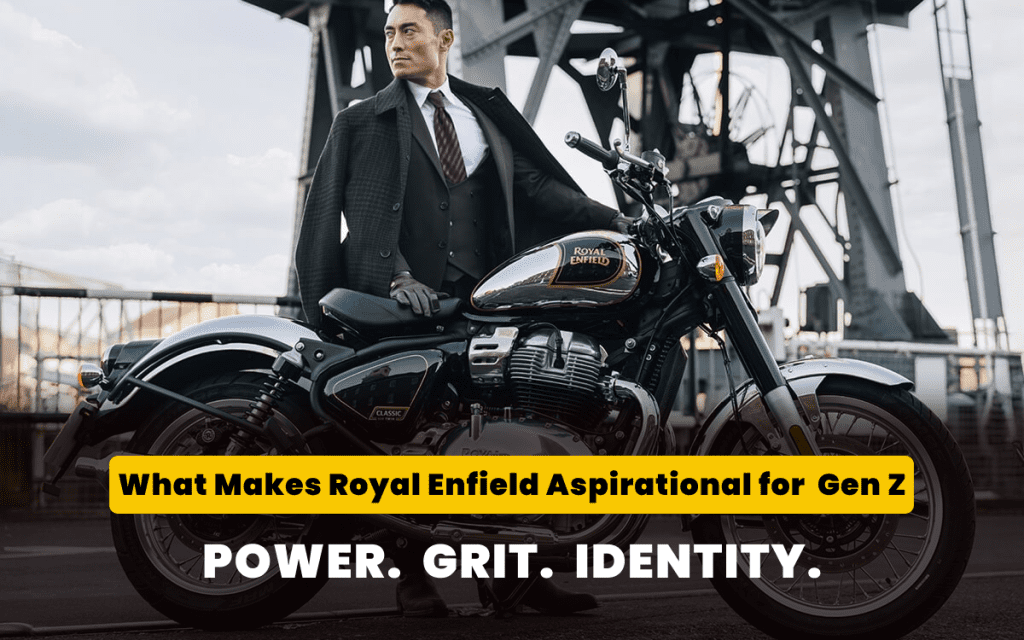
Royal Enfield’s design philosophy is a visual contradiction that somehow works. Rounded headlamps. Teardrop fuel tanks. Minimalist paintwork. Matte finishes. The bikes carry a retro charm that stands out sharply in a market full of futuristic-looking sports bikes.
In an age of digital overload, simplicity is luxury. Gen Z doesn’t just want speed, they want character. And Royal Enfield offers exactly that, timeless appeal with a modern sensibility. As 22-year-old rider Aryan from Pune puts it:
“My Classic 350 feels like a piece of history I get to ride every day.”

What’s the riding experience really like?
Experience over engine specs
Gen Z is less interested in horsepower numbers and more interested in feel. Royal Enfield delivers a raw, minimalist riding experience that’s hard to describe and harder to forget. It isn’t the fastest bike on the road, and it doesn’t really need to be.
The unique engine thump, the slight vibration under the seat, the upright riding posture, all of it connects the rider to the road in a way modern superbikes simply don’t. Which is why models like the Himalayan and Meteor are wildly popular among young adventurers and solo travellers, the kind who’d rather take three days to do a six-hour route.

Why is the Royal Enfield community so strong?
Belonging to a brotherhood
Maybe the most underrated part of Royal Enfield’s appeal is its community. Rider clubs in tier-2 cities. Nationwide events like Rider Mania. Epic tours like the Himalayan Odyssey. They offer Gen Z something beyond ownership, a chance to belong.
It’s about shared road stories, breakdowns turned into bonding moments, dhabas in places you’d never put on a map, hidden trails discovered with people who get it. Unlike a lot of modern products that push isolated usage, Royal Enfield celebrates collectiveness, which is surprisingly powerful in an age of hyper-individualism.
Is a Royal Enfield actually affordable?
Premium identity, real-world price
Luxury is aspirational, but only if it’s reachable. Royal Enfield hits the sweet spot. With models priced between ₹1.8 lakh and ₹3.5 lakh, it offers Gen Z premium identity without premium pricing. Compared to international brands like Harley-Davidson or Triumph, Royal Enfield feels achievable, yet just exclusive enough to feel elite.
That pricing strategy, paired with iconic status, has made it the go-to for college graduates and first-jobbers wanting to make a statement. As one Bengaluru-based software engineer put it:
“My Bullet 350 isn’t just my first bike, it’s my reward to myself.”
How do riders make their Enfield their own?
Customisation as self-expression
One of Royal Enfield’s biggest advantages is how easily it can be personalised. Matte black paint jobs. Vintage leather seats. Custom decals. Exhaust swaps. Young owners love turning their Enfields into reflections of their own personalities.
This DIY ethos mirrors Gen Z’s approach to identity, fluid, expressive, unapologetically unique. Royal Enfield offers the canvas. The rider brings the art.

How does Royal Enfield play on social media?
Instagram-worthy adventures
Let’s not ignore the elephant in the digital room. Royal Enfield is incredibly Instagrammable. Sunrises in Ladakh. Roadside dhabas in Kerala. The bike becomes a photogenic partner in every adventure. Hashtags like #BulletLovers, #RE350 and #RidePure carry thousands of posts, turning ordinary riders into part-time content creators.
For a generation raised on reels and vlogs, a Royal Enfield isn’t just a mode of transport, it’s a lifestyle prop with a built-in soundtrack.
What about new tech and EVs?
New tech, same soul
While it stays rooted in tradition, Royal Enfield has steadily upgraded the engineering. Fuel injection systems, ABS, better suspension, all standard on most models now. Its upcoming EV sub-brand, Flying Flea, signals that the company isn’t shying away from the future either, or rather, it’s finally acknowledging that the future is electric.
This blend of old-world charm and modern performance hits the right notes with Gen Z, tech-savvy yet nostalgic, digital but yearning for real-world depth.

What do the sales numbers say?
The numbers tell their own story. Royal Enfield sold 912,732 motorcycles in FY24, up 9% from the previous year, with exports crossing 77,000 units. Eicher Motors’ stock hit an all-time high of ₹5,058.90 in July 2024.
Even as its Indian market share dipped slightly to 88.3% (from 96.3% in FY19), the brand’s emotional grip hasn’t loosened. If anything, competition has only sharpened its cult status among younger riders.
More than a machine
For Gen Z, Royal Enfield isn’t just a bike. It’s a quiet rebellion against the ordinary. It’s about choosing the scenic route over the shortcut, real experiences over virtual likes, and nostalgia over novelty.
From its timeless aesthetics to its community-driven culture and personalisable nature, Royal Enfield resonates with a generation craving authenticity and adventure.

As the brand keeps evolving, whether through electric models or international expansion, it stays rooted in what made it aspirational in the first place: soul.
So the next time you hear that signature thump rolling through the streets, know this. It isn’t just an engine starting. It’s a young dreamer chasing freedom on two wheels.
FAQs about Royal Enfield and Indian Gen Z
Why is Royal Enfield popular with Indian Gen Z?
Royal Enfield combines retro design, raw riding feel, a strong rider community and a price tag (₹1.8 lakh to ₹3.5 lakh) that’s reachable for college graduates and first-jobbers. The brand sells legacy and identity, not just transport, which lines up with Gen Z’s appetite for authentic, story-driven products.
How much does a Royal Enfield cost in India?
Royal Enfield models in India are priced between ₹1.8 lakh and ₹3.5 lakh, depending on the variant. That’s significantly cheaper than international brands like Harley-Davidson or Triumph, which is why it’s positioned as accessible premium for younger Indian riders.
What is the Royal Enfield rider community like?
The community is one of the brand’s biggest assets. It includes local rider clubs across cities, nationwide events like Rider Mania, and long-distance tours like the Himalayan Odyssey. The culture is built around shared road stories, breakdowns turned into bonding moments, and discovering hidden trails together.
How many Royal Enfield motorcycles were sold in FY24?
Royal Enfield sold 912,732 motorcycles in FY24, a 9% rise over the previous year. Exports crossed 77,000 units, and parent company Eicher Motors saw its stock hit an all-time high of ₹5,058.90 in July 2024.
What is Flying Flea?
Flying Flea is Royal Enfield’s upcoming EV sub-brand, signalling the company’s move into electric motorcycles. It’s how the brand is keeping its retro identity while preparing for an electrified future.