
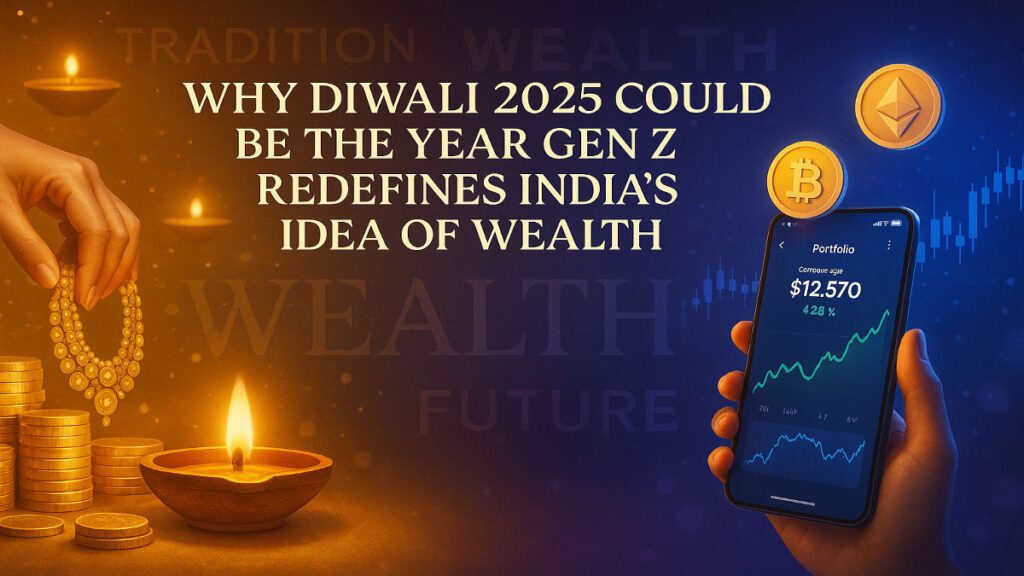
Each Diwali, India’s generational differences in wealth management become especially visible. For most parents, favorable investing remains buying a gold coin or tying money up in a fixed deposit, affirming old practices of safety and physical value. Gen Z, on the other hand, is inclined toward digital-first strategies, with many starting a Systematic Investment Plan (SIP) in a mutual fund through a few clicks on a fintech app. This is not just a personal choice of lifestyle but a part of a broader money movement nationwide. New investors are redefining wealth in terms of greater risk appetite, diversified asset classes consisting of stocks, digital gold, and even cryptocurrencies, and financial independence. By doing so, they are consciously overturning the old conservative models and altering the picture of prosperity into the future.
The Classic Playbook: FDs, Gold, and Guaranteed Returns

For previous generations, safety and surety were the bedrocks of investment. Regular middle-class portfolios were built largely on guaranteed-return products. Fixed deposits (FDs), with their guaranteed interest, were essentially a default option. Public Provident Fund (PPF) accounts, post office schemes, and endowment life insurance policies were the standard fare, providing steady if unexciting growth over long periods of time. And of course, there’s gold, the ultimate old-school asset in India. Gold is not an investment for them; it is married with religion and culture, particularly at Diwali. The purchase of gold on Dhanteras (the first day of Diwali) has been a symbol of prosperity for ages. It’s no wonder that older generations poured savings into gold and considered it a safe store of value.
Gold’s emotional pull on the older generation cannot be overstated. For them, gold equates to wealth and security you can hold in your hand. But there’s evidence this love affair is fading with the youth. World Gold Council (WGC) surveys show a clear generational divide: Even during Diwali, many Gen Z buyers hesitate at soaring gold prices above ₹1 lakh per 10g. Gold jewellery demand actually fell 17% by volume in the past year, as prices hit record highs. Older generations, however, remain as enamored as ever.
The Gen Z Portfolio: Technological and Diversified

Now comes Gen Z, growing up in a very different India. With booming stock exchanges, fintech apps in every pocket, and a firehose of financial content online, young Indians are building portfolios that would be unfamiliar to their elders. Market-linked investments are center stage now. Gen Z isn’t waiting for the family broker’s advice; they’re DIY investors, learning from YouTube explainers and reddit threads, and they expect to execute trades with a swipe on their phone. A key characteristic of the way Gen Z invests is an increased risk appetite in search of growth. Surveys confirm what many parents suspect: their kids are far more comfortable with equities and other volatile assets. In a large 2025 survey of 50,000 new investors, 45% of Indians under 30 chose equities as their main investment, and many of these Gen Z investors have allocated over 70% of their entire portfolio to stocks. That level of concentration in equities would be unthinkable for most older investors.
Mutual funds via SIPs are particularly popular with the youth. Instead of putting lump sums in FDs, Gen Z is systematically investing small amounts each month. The outcome: historic SIP volumes. The Association of Mutual Funds of India stated SIP collections reached an all-time high of ₹26,000+ crore in May 2025, while 5.9 million fresh SIP accounts had been opened during that month alone. Young earners are powering this trend predominantly. It reflects a mindset shift from guaranteed returns to inflation-beating returns. While older generations liked fixed deposits and gold, Gen Z prefers mutual funds, ETFs, REITs, and even global stocks. Within a decade, mutual fund investing among young Indians has quadrupled, rising from the low teens to nearly 40% participation. Beyond domestic stocks and funds, Gen Z is exploring new frontiers that barely existed in their parents’ time. Cryptocurrency is a prime example. To the average parent, crypto sounds like an unstable gamble (or an outright scam). But to many Gen Z investors, digital assets are a fascinating new asset class, one that may potentially pay off with high returns and fit their tech-savvy worldview. In a survey of Indian millennials versus Gen Z, cryptocurrency was among Gen Z’s most popular investments, while it did not even feature in the older generation.
Gen Z is not only changing what they invest in but how as well, with the whole process moving to online platforms. In contrast to their parents, who used paper applications, bank office visits, or brokerages, the young investors of today anticipate convenient, mobile-centric services and many look to YouTube or Instagram “finfluencers” for education in finance, 62% reference YouTube as their primary source of financial guidance, a significant figure compared to family counsel. Their aspirations are also greatly different: whilst earlier generations were concerned with long-term security like retirement or children’s weddings, most Gen Z investors are concerned with financial freedom, lifestyle choices, and even the “FIRE” (Financial Independence, Retire Early) movement or mini-retirements, with 85% of investors supporting career breaks to enhance quality of life. But this shift does not translate to them overlooking safety; instead, conventional assets are now being redefined.
Redefining Risk and Reward

Behind these differences lies a change in outlook towards risk and reward. Previous generations tended to identify wealth with security, the aim was to leave enough secure assets so that one’s family was provided for, regardless of what happened. Risk was to be minimized because the consequences of a bad bet could be devastating in a world without many fallbacks. Gen Z, however, largely equates wealth with opportunity, the chance to elevate one’s lifestyle, achieve independence, and even retire early. To seize these opportunities, they know they must take calculated risks.
This doesn’t mean Gen Z is gambling away their future, it means they define “prudence” differently. To a Gen Z investor, it may appear foolish to not put money into equities or leave compounding to one’s 20s. They have heard “higher the risk, higher the reward” all their lives and seen fortunes being made by investing early in technology stocks or cryptocurrencies. So, diversified risk-taking is seen as a positive strategy, not a foolhardy one. Our parents, having seen bank failures, scams, and 15% inflation in their day, often instinctively prize capital preservation. They might lose a bit in real terms to inflation, but they sleep well knowing their principal is safe.
A New Wealth Ethos This Diwali

While diyas glow bright in homes this Diwali, they not only mark but also underscore an increasing generation gap between perceptions about wealth. The traditional generation’s portfolios, based on gold, fixed deposits, and government-backed schemes, represent caution, trust in physical assets, and steady, gradual accumulation. Gen Z’s portfolios, diversified among equity mutual funds, direct stocks, digital gold, and even cryptocurrency, reflect ambition, internet sophistication, and experience with calculated risk. This generation applies ageless lessons of saving and diversification to the tools of modern finance such as mobile apps, global markets, and real-time data. In the end, despite differing instruments, both generations are pursuing the same ultimate objective which Diwali represents: prosperity and security for their families by means shaped by the values and exigencies of their eras.